



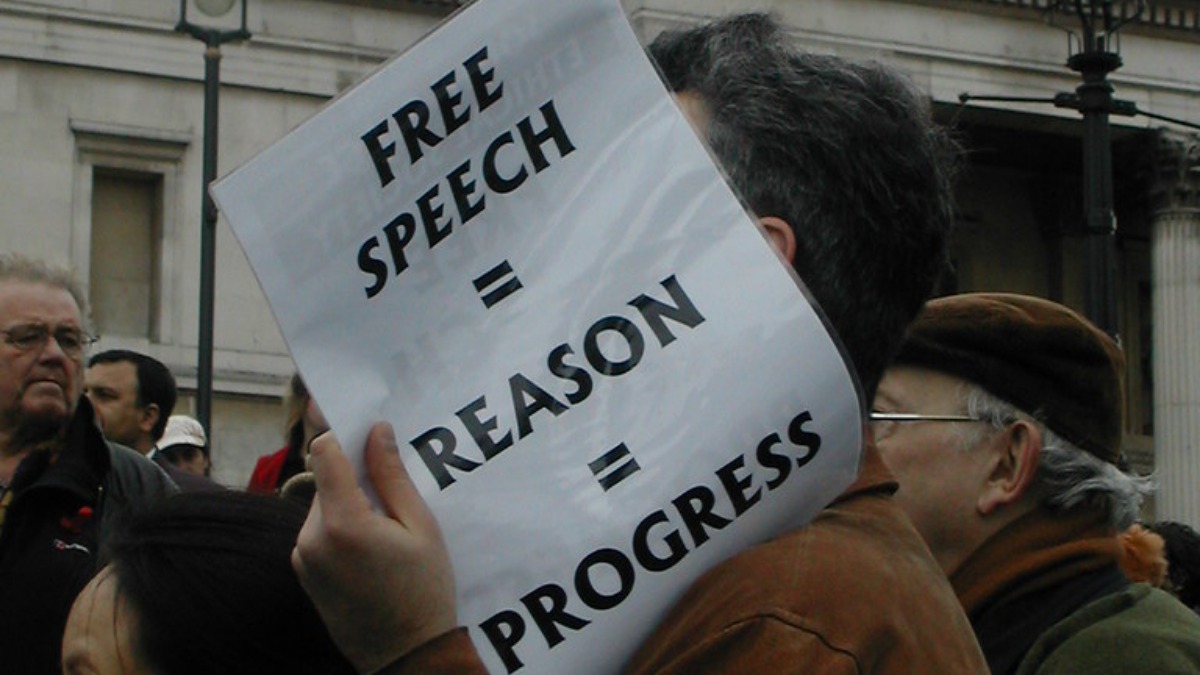

A brand-new free speech complaints system for staff at England’s universities is set to launch for the upcoming academic year. As detailed by the BBC and the UK Government, the move aims to tackle what some have called a “culture of fear” on campuses.
Under the new system, academics and other university staff will have a direct route to raise concerns about free speech breaches with the Office for Students (OfS), the independent regulator for higher education in England. Previously, academics often had to resort to employment tribunals to get their issues heard.
From April 2027, institutions found to be failing their duty to protect free speech could face fines of up to £500,000 or 2% of their annual income. Given that a medium-to-large university can have an annual income starting around £500 million, those fines could easily run into the millions.
Universities are already getting hit with costly free speech penalties
The University of Sussex was fined £585,000 in March 2025, primarily due to a transgender and non-binary inclusion policy the regulator found had a “chilling effect” on free speech. Sussex disputed the ruling and challenged the fine in the High Court, with judgment still pending.
Initially, the OfS will not issue large fines immediately. The regulator will begin by reviewing how incidents have been handled, directing universities to change their processes, and ordering compensation payments to affected individuals. The long-term threat of substantial fines is still expected to prompt swift institutional change.
Education Secretary Bridget Phillipson stated that “freedom of speech is the foundation of every university’s success,” while acknowledging too many cases have contributed to “an unacceptable culture of fear and stifling the pursuit of knowledge.” Shadow education secretary Laura Trott added that universities had “been left exposed to censorship with no clear route of redress,” resulting in research being “silenced” and “controversial work was shelved.”
Notably, the new complaints system will not be open to students. Students will continue raising concerns directly with their university and, if needed, escalating them to the Office of the Independent Adjudicator (OIA).
The Higher Education (Freedom of Speech) Act 2023 came into force in August 2025, though the staff complaints element has been delayed until now. The Act was initially proposed under the last Conservative government and is being introduced in amended form by the current Labour government. One key amendment was removing a provision that would have allowed individuals to take legal action against universities in civil courts, scrapped for being “overly burdensome” and risking large legal costs that could divert funding away from students.
The lack of a dedicated complaints system has already produced high-profile cases. In 2024, Professor Jo Phoenix won an unfair dismissal case against the Open University over a failure to defend her gender-critical views. Earlier this year, amid wider scrutiny of institutional accountability in higher education, Trinity Laban reached an out-of-court settlement with jazz musician Martin Speake after he criticized Black Lives Matter and critical race theory. Professor Alice Sullivan has also begun legal action against the University of Bristol.
The Free Speech Union reported that nearly one in 10 of the more than 5,700 cases it has handled over the past six years involved universities “failing to protect free speech.” While the OfS would theoretically have power to remove a university’s right to provide higher education, that is expected to remain a last resort. Universities UK emphasized the importance of using new powers “fairly, transparently and proportionately,” and Professor Malcolm Press, Vice Chancellor of Manchester Metropolitan University, noted that “protecting free speech while preventing harassment, hate speech, and radicalisation are complex tasks involving finely balanced decisions.”
The Act was initially paused in July 2024 over concerns it could lead providers to overlook the safety of minority groups, including Jewish students, by prioritizing the protection of harmful speech. Ministers subsequently met with providers, academics, unions, and minority groups to refine the legislation. Beyond the complaints system, the Act also bans the use of non-disclosure agreements to silence victims of bullying, harassment, or sexual misconduct, and requires universities to maintain robust codes of practice protecting free speech. Arif Ahmed will continue as Director for Freedom of Speech and Academic Freedom at the OfS, amid ongoing government debate over regulatory overreach.
Universities also face concerns about foreign influence, particularly from China, given the financial importance of international tuition fees. A past row over human rights research at Sheffield Hallam University brought these issues into the public eye. The government is working on a Foreign Influence Registration Scheme covering universities across the UK, and the Department for Education is reviewing whether the OfS’s existing powers to request information on foreign funding need strengthening.
Reform’s Suella Braverman argued the fines should be even greater to deter what she called a “culture of censorship,” while the Lib Dems’ Ian Sollom emphasized that any complaints scheme is only as effective as the regulator enforcing it, calling for clear guidance from the OfS. The Green Party was approached for comment. This new system will not apply to historic cases.







Published: Apr 19, 2026 07:00 pm