



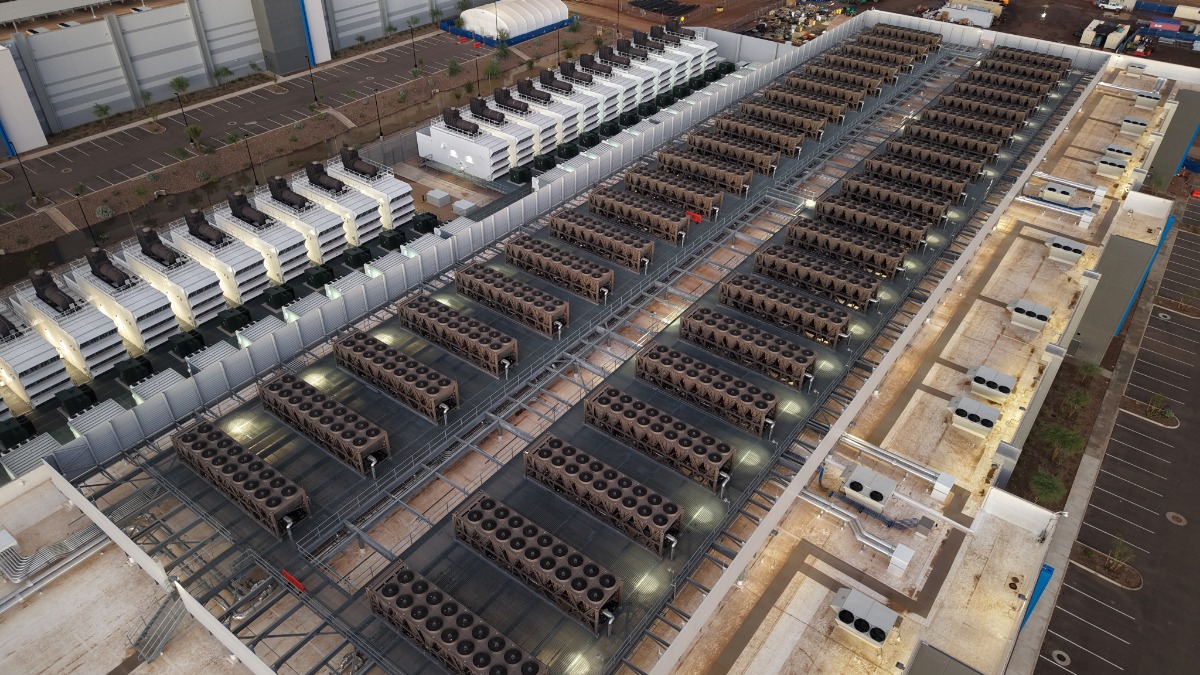

Federal intelligence agencies and domestic law enforcement have set their sights on a new, broad target, and if you have concerns about the rapid proliferation of artificial intelligence or the massive data centers popping up in your neighborhood, you might just find yourself on their radar. Recently obtained documents, totaling more than 1,000 pages of unpublished reports from the Department of Homeland Security, the FBI, and various fusion centers, reveal a significant national shift toward monitoring what officials are now labeling “anti-technology extremists.”
This surveillance effort comes as the federal government ramps up its investment in AI technology, creating a tense environment where questioning that trajectory can get you flagged as a potential threat. This new focus on “anti-technology extremism” stems from a mix of administration directives and intelligence assessments.
President Donald Trump issued National Security Presidential Memo 7, which instructs the Department of Justice to focus on individuals holding “anti-American,” “anti-Christian,” or “anti-capitalism beliefs.” Furthermore, the administration’s counterterrorism strategy, released by counterterrorism czar Sebastian Gorka earlier this month, identifies left-wing extremists as one of the top three counterterrorism priorities for the United States. When you combine these mandates with the government’s heavy reliance on AI infrastructure, it is clear that the domestic surveillance apparatus is being used to monitor speech and assembly that challenges the ideology of the White House.
Whether you are an AI skeptic or just someone who doesn’t want a massive data center built in your backyard, the current climate suggests that you are being watched more closely than ever
One of the most striking findings in these documents is a report from the New York Intelligence and Counterterrorism Bureau, which introduces the term “anti-tech violent extremism.” The report warns that the chaotic atmosphere potentially caused by AI development over the next five years could lead to large-scale protests and civil unrest, particularly in major urban centers like New York City.
This specific terminology does not appear in any previous, publicly available DHS or FBI guides, suggesting that officials are creating a novel category to group together a wide range of ideologies. The bureau is also keeping a close eye on anyone with what it describes as paranoid views regarding AI, specifically pointing to followers of the extreme rationalist Ziz Laota as a potential source of ideological inspiration for others.
It is worth noting that while some extremist groups have been linked to actual violence, the lines between legitimate concern and criminal activity are becoming increasingly blurred. Spencer Reynolds, senior counsel at the NAACP Legal Defense Fund, points out that these intelligence reports often follow a long tradition of agencies identifying protest or even simple expressions of strong opinion as precursors to violence.
According to Reynolds, Suspicious Activity Reports are often incredibly unreliable, relying on vague or innocent behavior that allows officers to inject their own biases into the process. The Northern Virginia Regional Intelligence Center, for instance, has flagged activities such as photography, observation, or even the expression of an implied threat as suspicious, which could easily ensnare peaceful protesters.
The reach of this surveillance is quite extensive, as eighty fusion centers now act as go-betweens for federal intelligence and local law enforcement. These centers are actively gathering intelligence on perceived threats to data centers, often framing them as critical infrastructure essential to the US economy.
A report from a Western Pennsylvania fusion center even suggested that adversarial actors could exploit the strategic importance of these facilities for things like cryptocurrency mining. Meanwhile, other reports have monitored constitutionally protected events, including Tesla Takedown protests and gatherings organized by groups like Eject Elbit. Even local civic events, such as budget meetings in Arlington or Fairfax County, have been documented by intelligence analysts because residents have used these forums to voice their opposition to local data center construction.
Private intelligence firms are also playing a role in this expansion. In January 2025, SITE Intelligence circulated bulletins to fusion centers alleging that conversations in a neo-Luddite Discord server had turned violent. While Rita Katz, the founder of SITE, maintains that their reports focus on communities with proven links to real-world harm, critics like Reynolds argue that such firms often promise to perform an impossible job by mining anonymous social media posts for intent.
In one concerning instance from April 2025, an open-source report from SITE flagged a video from the nonprofit More Perfect Union that discussed the destructive effects of a data center in Georgia. Despite the fact that the video contained no calls for violence, the group was circulated among intelligence agencies as a potential threat vector.
Ultimately, the goal appears to be the securitization of AI and emerging technologies. While extremism researcher Mauro Lubrano, who has authored work on the rise of anti-technology sentiment, acknowledges that anti-technology violence is unacceptable, he also cautions against using these frameworks to silence those who are critical of the current technological trajectory. As it stands, the government is increasingly treating dissent as a security issue.







Published: May 28, 2026 05:45 pm