



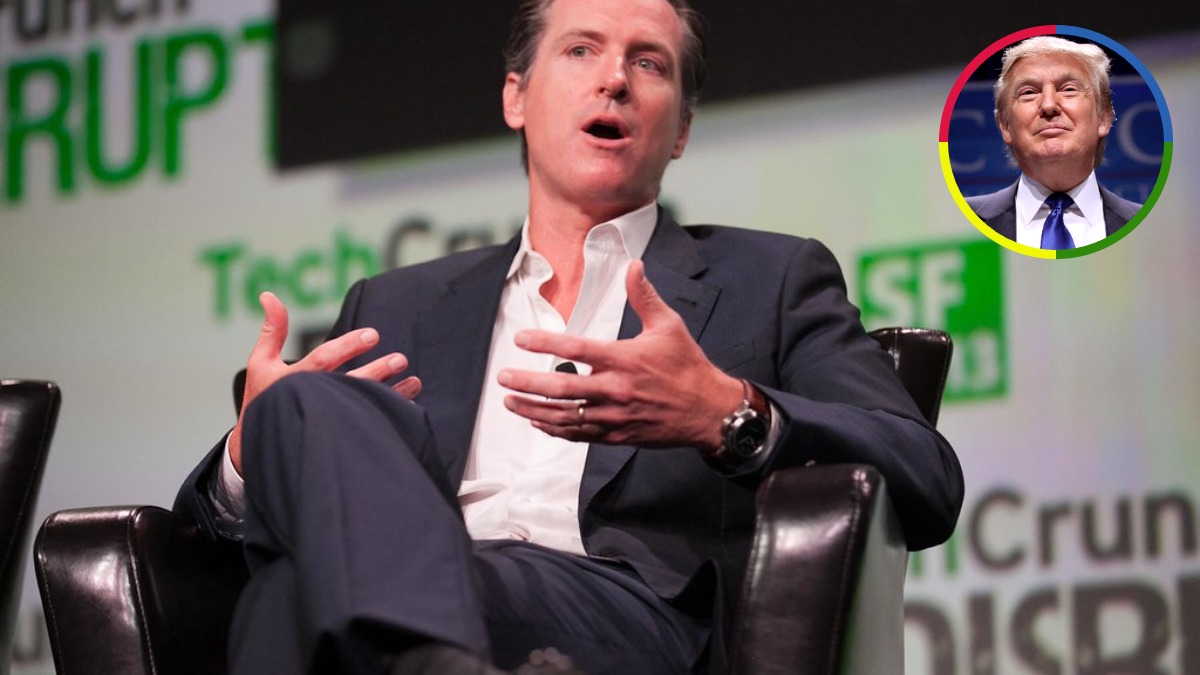

California Governor Gavin Newsom is looking to impose a full 100 percent tax on any payouts California residents might receive from Donald Trump’s substantial $1.776 billion “anti-weaponization fund,” The Guardian reported. This isn’t just a political jab, it’s a direct legislative counter-punch, and it’s certainly got people talking.
This fund, which President Trump announced, is the result of a settlement between him and the Internal Revenue Service, an agency he sued over the public leaking of his tax returns. The Department of Justice, or DoJ, officially unveiled the fund in May, stating its purpose is to compensate alleged “victims of lawfare and weaponization.” It’s still pretty unclear who exactly qualifies under that broad category, which is where a lot of the controversy comes in.
Governor Newsom, among other critics, hasn’t held back, slamming the fund as nothing short of a “boondoggle” and a “slush fund.” He’s convinced it’s designed to funnel money directly to President Trump’s allies. There’s been a lot of speculation, for instance, that potential benefactors could include individuals who were arrested during the January 6, 2021, events at the US Capitol.
The Trump administration has even described these individuals as patriots and has pardoned many of those charged in connection with the attack
Newsom made his feelings crystal clear in a Wednesday post to X, right after he announced his plan at a news conference. He wrote, “People who assault cops and overthrow democracy don’t deserve a taxpayer-funded payday.” He’s really not holding back on his view that this money could be going to folks who definitely don’t deserve it, especially if it’s coming from taxpayer funds.
The mechanism for this $1.776 billion fund involves five people appointed by the US attorney general, who will oversee its distribution. This money will actually be pulled from a fund typically reserved for paying court judgments. Todd Blanche, the acting US attorney general, characterized the fund as a way “to make right the wrongs that were previously done.”
The DoJ plans to send quarterly reports to the attorney general, detailing who has received monetary relief and how much. There’s a deadline, too: claims won’t be processed after December 1, 2028, and any remaining funds will simply go back to the federal government.
The DoJ, for its part, didn’t immediately respond when asked for comment on how it plans to address Newsom’s proposed tax. That silence speaks volumes, at least for now. This whole situation is just the latest chapter in a really long and bitter feud between Newsom and President Trump, one that’s been playing out in the press and all over social media for quite some time. They’ve traded plenty of jabs and are constantly at odds over a bunch of issues in California, including the federal deployment of ICE agents, how healthcare fraud is handled, and even election integrity.
Newsom’s pledge to tax these payouts isn’t happening in a vacuum, either. Democratic lawmakers in other states are actually ramping up similar efforts to counter President Trump on this measure. For instance, New York Democrat Alex Bores, who’s both a state assemblymember and a House candidate, unveiled legislation earlier this week that would also assess a 100 percent tax on payouts from this fund. It seems like a coordinated effort to prevent these funds from benefiting individuals in their respective states.
Newsom reinforced his position during a press conference in his office, telling reporters, “Anyone from California that receives any of those funds, we want to tax 100 percent of those proceeds.” He made no bones about calling the settlement a “slush fund.”
This idea is gaining traction quickly. Democratic state lawmakers in New York are already pushing for a vote by next week to fully tax these payouts. Queens state Senator Mike Gianaris mentioned in an interview that his own measure was in the process of being introduced in the Democratic-dominated Legislature. He believes there’s a lot of agreement on this issue.
Gianaris said, “There’s widespread, bipartisan agreement that this is baldfaced corruption at its worst and if we have the ability in New York to combat it by ensuring that none of this money benefits anyone in our state’s borders, I’d expect there’d be widespread support for that idea.”
Bores, in a text message on Wednesday night, confirmed he’s also working hard to get his bill up for a vote next week. Time is definitely of the essence in Albany, where lawmakers are scheduled to wrap up their legislative session late next week and have a packed schedule of bills to approve.
Down in New Jersey, a Democrat Senator Andrew Zwicker, who’s a member of his chamber’s Budget committee, told a reporter in an interview, “I think it’s brilliant, because the slush fund is completely corrupt and utterly appalling.” He even went on to say, “I think it’s a brilliant counter move to Trump’s corruption.”
Both Democrats and even some Republicans have criticized the fund. President Trump reportedly didn’t consult lawmakers before announcing it, and he’s refused to rule out payouts to individuals who were convicted of crimes related to the January 6, 2021, Capitol events. Congressional Democrats have even proposed their own legislation to counter the fund, showing that this isn’t just a state-level issue.
President Trump, on the other hand, defended the fund just last week. He characterized it as restitution for people he believes were “badly abused by an evil, corrupt, and weaponized Biden Administration.”




Published: May 28, 2026 04:15 pm