



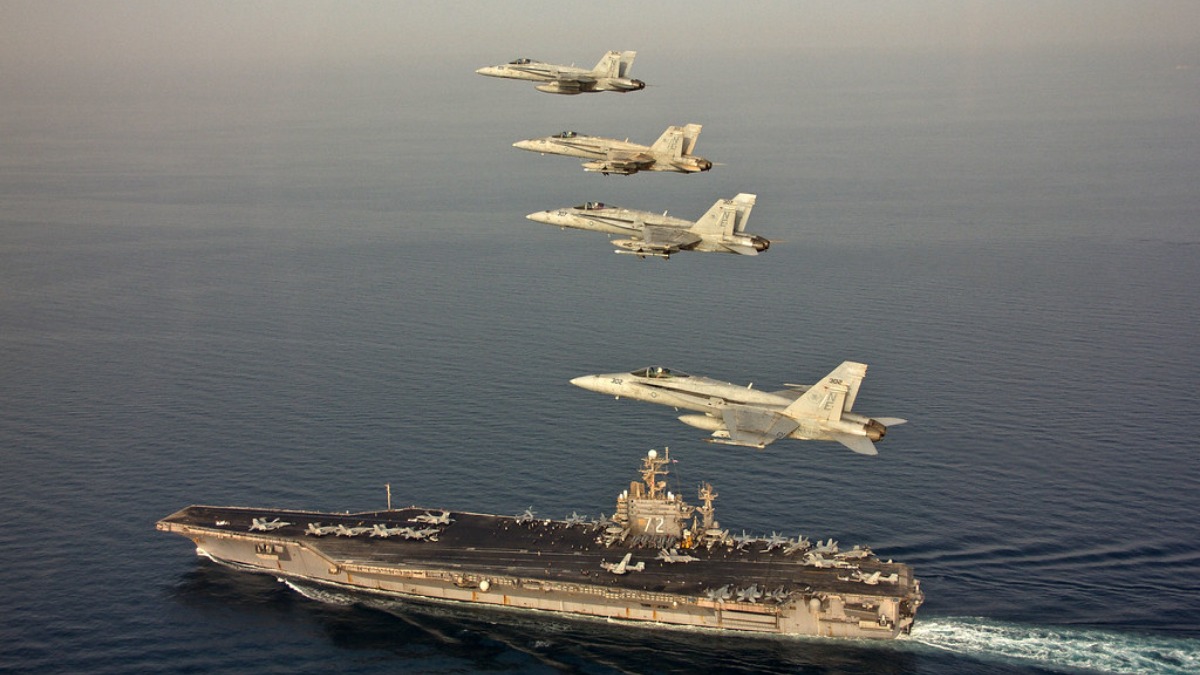

Families of sailors and Marines serving on the USS Abraham Lincoln say their loved ones are dealing with moldy showers, broken laundry machines, and shortages of basic items like toothpaste, soap, and deodorant. The aircraft carrier is now in its ninth month at sea and its fifth straight month of combat operations against Iran.
MS NOW spoke with a dozen family members who said they are worried about the morale, safety, and living conditions on the ship. They described a crew that is under heavy strain from a deployment that has lasted far longer than expected, as President Donald Trump continues to extend the military campaign against Iran.
Families said they have not been told when their loved ones will return home. The deployment, which is normally seven months long for the more than 5,000 crew members, appears to have been extended for a second time.
Crew has had only two days off the ship since leaving San Diego
Most sailors are working very long shifts, and depending on their job, some rarely get a day off, family members said. One father, a Navy veteran, said his son described seeing holes worn into the ship’s flight deck.
The flight deck of an aircraft carrier is already considered one of the most dangerous places in the military. Fast-moving aircraft, spinning propellers, and the loading and unloading of bombs and missiles all carry risk of injury or explosion. The work is also done outdoors in wind, rain, heat, and cold, and the constant engine noise can cause hearing loss.
The Lincoln’s crew has had only two days off the ship since it left its home port in San Diego in November. There was a short stop in Guam in December, and then no other stop until July 7, when the ship pulled into Oman after 208 straight days at sea. That is described as a modern-day record for a Navy aircraft carrier.
Brett Snow, a Navy veteran whose son serves on the Lincoln, said long workdays with few breaks can lead to accidents. “It’s the most dangerous place in the world already, and now you’re grinding it out, day in and day out, with no breaks,” he said. “It’s an environment that’s ripe for accidents.”
Bonnie York, whose stepson is on the Lincoln, said morale on board is low. “The morale is not good. Apparently, the ship’s doctor or therapist said they need to hit port soon or people are going to start, you know, losing their minds,” she said. The long deployment comes as Trump faces limited options for claiming an Iran victory, according to officials in his own administration.
Cmdr. Joseph Hontz, spokesperson for the Navy’s 5th Fleet, confirmed the Lincoln’s deck has handled more than 10,000 aircraft launches and landings over the past eight months. He said there are no holes in the flight deck and that crews have been able to repair normal wear and tear. “Though more than 250 days on deployment is challenging for the crew and their equipment, they remain resilient and ready to accomplish any tasking given to them,” Hontz said.
Hontz added that sailors have access to fitness classes, mental health and chaplain support, and internet access to contact family “when the tactical situations allow.” Most family members said they can currently message their service member daily, though that has not always been the case. Several described their family members reporting non-working toilets, moldy showers, laundry facilities that were broken for weeks, and long stretches without hot water.
In April, several news outlets published photos from Lincoln families showing very small food portions described as inedible. Some attributed the shortages to supply difficulties caused by the long deployment. At the time, Defense Secretary Pete Hegseth and Adm. Daryl Caudle, chief of naval operations, disputed the reports, with Hegseth calling them “fake news.”
Families told MS NOW those reports were accurate and that they remain concerned about their service members’ nutrition. They said their loved ones have described food shortages, waits of an hour or more at the ship’s store, and a lack of basic supplies like toothpaste, soap, and deodorant. Families also said there have been times when food portions on the ship were rationed.
Nicole Conrad’s son is serving on the Lincoln, and she has not seen his face in seven months. She said he has told her about days when the showers and laundry were closed, and about a meal that consisted of half a cup of rice and two tortillas. “Go visit. If you want to sit here and you want to say that Trump is taking care of the soldiers, go yourself,” Conrad said, addressing Hegseth directly.
Hontz said supply challenges have come from over 250 days on deployment, combined with regional operations and geography. “They have occasionally run low on certain supplies for brief time periods, but Abraham Lincoln and all ships in theater currently have an adequate supply of food and supplies to sustain operations,” he said, adding that fresh fruits and vegetables are especially hard to deliver before they spoil.
Hontz also said meal and service lines do occasionally build up on a ship carrying thousands of people, and that leadership has adjusted hours and assigned different days for squadrons to visit the ship’s store. He acknowledged occasional water issues that were addressed quickly, and said sailors are responsible for cleaning their own bathrooms.
Rep. Sara Jacobs, D-Calif., who represents the Lincoln’s home port of San Diego, said she is concerned about the long stretch at sea without an extended port call. “I’m deeply worried about their exhaustion and mental health, because history has shown it can lead to serious consequences, including increased risk of suicide,” Jacobs said.
She called for the war to end and for troops to come home. The strain from the war has also shown up elsewhere, as Trump’s threat to pull troops from Germany followed comments from Germany’s chancellor about the war’s toll on America’s standing.
York said she voted for Trump partly because he said he would not start new wars, and said she hopes the deployment “was worth it.” Snow said he has noticed carrier deployments getting longer over time, which he believes could affect the Navy’s ability to retain sailors and could impact operational safety.








Published: Aug 9, 2026 01:00 pm