



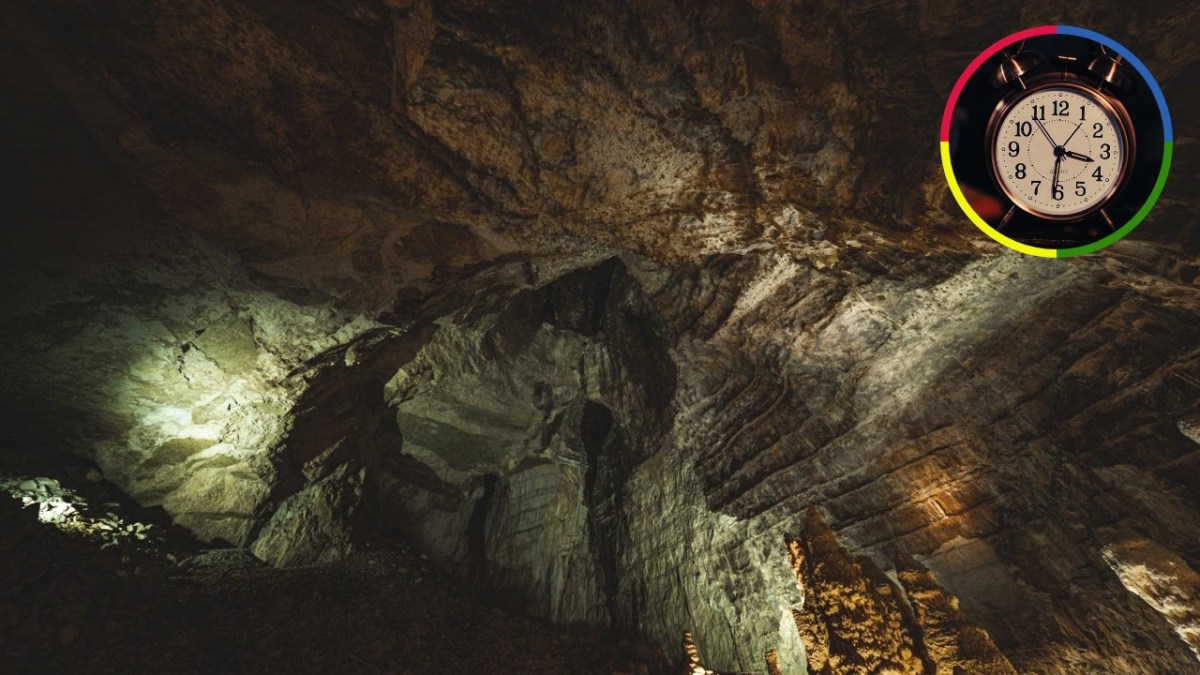

Christian Clot emerged from a 40-day experiment in a cave in the south of France, concluding that his internal perception of time was drastically different from reality. The DeepTime experiment, which he led, aimed to understand how humans function when all external cues for time are removed. By stripping away clocks, smartphones, and even natural sunlight, the volunteers were forced to rely entirely on their own internal rhythms to decide when to eat or sleep.
As reported by LADbible, Clot noted that the initial transition was quite a challenge for him personally. He stated, “During the first week in the cave, it was really hard to accept the idea that when I wake up, I didn’t have to check my smartphone or my watch to see if I slept enough. I just have to listen to my body.”
Once he moved past that initial hurdle, he found the experience to be incredibly freeing. He described the sensation by saying, “It was like a liberation, you know. It was like: Wow, amazing. I just have to listen to me!”
The entire cave was kept mostly dark
The environment was set up to be as immersive as possible to ensure that no outside influence could sneak in. The cave was kept mostly dark, with the exception of a single living area that provided enough light to function.
The rules were strict regarding their independence, as participants were told to eat and sleep only when they felt the urge. It was absolutely forbidden to wake up someone else, which meant that everyone simply rose whenever they felt rested.
Clot observed that most of the volunteers shifted to a 30-hour cycle rather than the standard 24-hour day we follow on the surface. One participant even had a much longer cycle, completing only 23 sleep sessions throughout the entire 40-day period. This variation highlights how much our typical schedules are driven by environmental factors rather than our biology alone.
Interestingly, the group dynamic shifted significantly as the experiment progressed. At the beginning, the volunteers were completely out of sync because they were still clinging to the habits they brought with them from their normal lives.
Clot mentioned, “People were awake around the clock,” as they struggled to adjust to the isolation. However, a strange phenomenon occurred as time went on. The group began to naturally align their schedules with one another without any conscious effort or discussion. Clot observed that “In an unconscious way, when people wanted to be together, they woke up at the same time.”









Published: Oct 14, 2026 09:15 am