



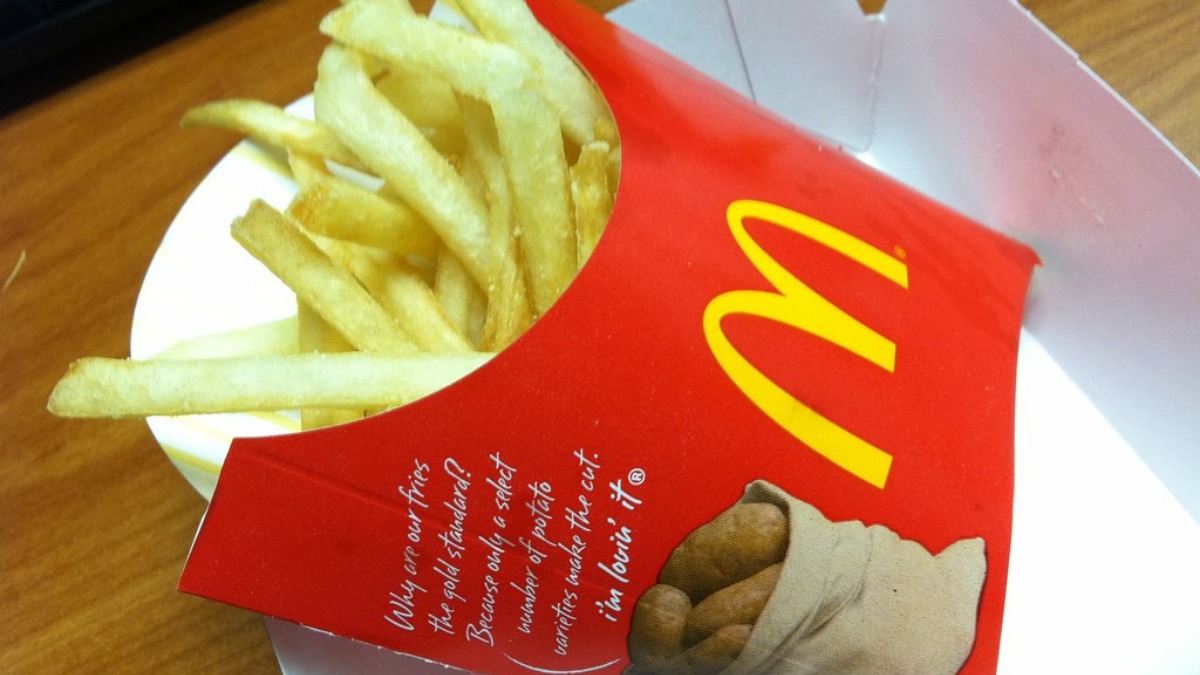

A TikTok user named Minda T is convinced that the large McDonald’s fries she recently ordered are what used to be sold as a small, and her video has sparked a wider conversation about whether the chain quietly downsized one of its most popular menu items. “Since when did this become a large fry?” Minda asked in the clip, pointing to a paper sack in place of the classic red cardboard container.
As highlighted by BroBible, Minda said the bag looked noticeably smaller than what she expected from a large order, and she did not hide her frustration with the change, saying she felt ripped off. A similar complaint surfaced on Reddit, where a customer in the San Francisco Bay Area shared a photo of a large fry order also served in a bag instead of the traditional carton.
The packaging shift is not new. A large fry bag drew comparable backlash in a Bay Area location back in 2024, when commenters compared the new bag to the smaller sizes they were used to seeing. Still, the current wave of complaints has reignited the debate over whether McDonald’s is serving less food for the same price.
There might be more behind the fry size drama than shrinkflation alone
The actual weight numbers complicate the shrinkflation theory. A current small fry order is 80 grams, and a large comes in at 150 grams, compared to the original 1955 serving size of just 68 grams, which was the only option available at the time. It is possible that customers simply got used to oversized portions during the “supersize era” between 1987 and 2004, making a standard large feel smaller by comparison.
Former corporate chef Mike Haracz has weighed in on the broader shrinkflation conversation, though he has not addressed the fry bag specifically. He said there are several things they could do to make it more affordable, pointing to practices like adjusting the lean-to-fat ratio in beef or mixing frozen meat with fresh cuts.
On the fries specifically, Haracz suggested that rising costs may be tied to supply chain pressure rather than portion cutting. In 2024, a major McDonald’s french fry supplier announced the closure of a processing facility, adding strain to an already stretched pipeline. Elsewhere in online debates over corporate accountability this week, a Planet Fitness member’s $500 dispute also picked up traction.
The reaction online has grown heated, with several commenters saying they have stopped visiting McDonald’s altogether in favor of other options. Others suggested a more direct approach, encouraging customers to check their order at the counter and ask for a replacement if the portion looks off. In other viral workplace stories circulating this week, a Gen Z employee’s second-day firing drew a similarly divided response.
McDonald’s has not provided an official statement addressing the fry size claims. The company has, however, recently rolled out a new mini McFlurry size and updated packaging for that item, citing a goal of sourcing all primary guest packaging from renewable or recycled materials by the end of 2025.








Published: Jul 31, 2026 09:15 pm