



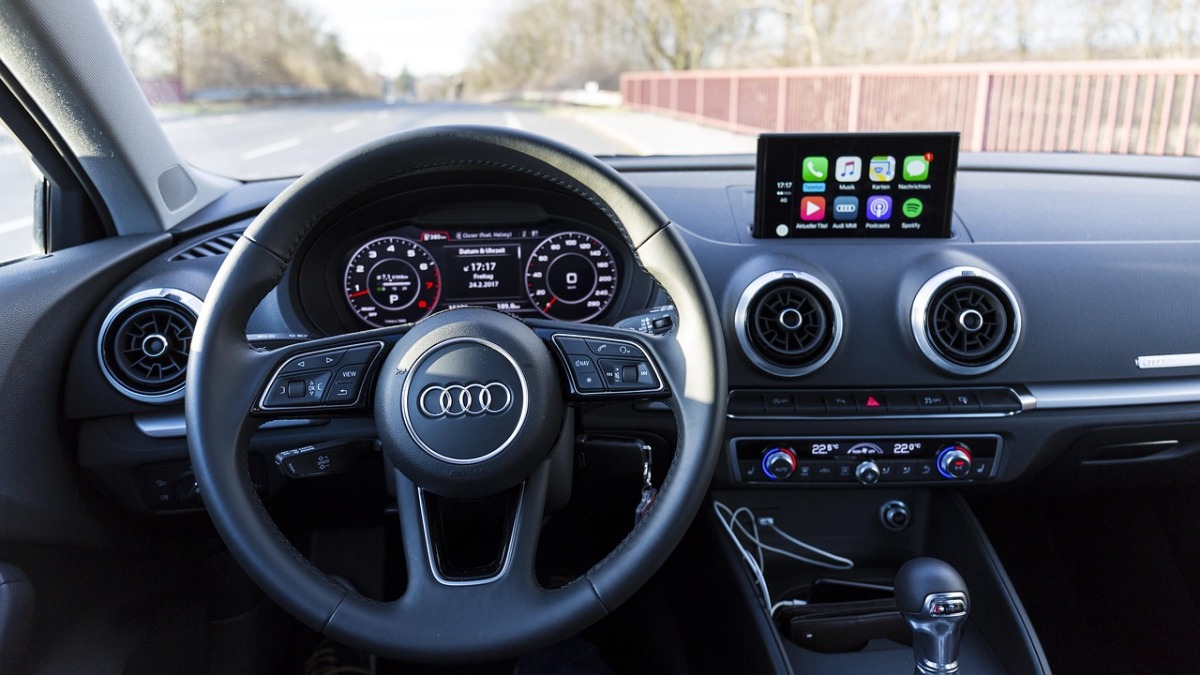

A woman received an Audi loaner while her own vehicle was being repaired, only to discover the car’s onboard camera system was recording both video and audio the entire time she drove it. According to the Daily Dot, she shared her reaction in a video posted to X.
“You ready to see the most dystopian effed thing that I’ve seen in a long time?” she said. “How is it legal that a dash cam voice records everything that you’re talking about, private information?” She explained that the constant recording created a real problem for her job. “I work in medicine and I speak to patients on the phone about private health information every day, and now I can’t do that in this car because Audi is recording it and listening and videotaping,” she said.
The system also reacted to how she drove, alerting her out loud when it detected certain behaviors. “If you’re speeding, it knows and it tells you you’re speeding. If you are not wearing your seatbelt properly, it tells you, seatbelt, seatbelt. It’s watching, it’s capturing, it’s recording,” she said. Concerns over unexpected surveillance in everyday settings have surfaced elsewhere too, including Flock cameras spotted overlooking a children’s playground, which sparked its own wave of privacy debate.
Whether this was even legal depends on the state
The legality of what she experienced actually hinges on where she was driving. Audio recording laws in the U.S. split states into two categories: one-party consent and all-party, or two-party, consent. In the roughly 38 one-party consent states, only one person in the conversation needs to be aware of the recording. The driver’s own presence satisfies that requirement.
In the dozen or so all-party consent states, including California, Illinois, Pennsylvania, and Florida, every person being recorded must be aware and agree to it. A passenger who never consented could have grounds for a complaint. Fleet and rental vehicles equipped with cameras have generally been treated differently under the law than personal vehicles. Courts often allow companies to record in commercial settings when proper notice has been given and the footage serves a legitimate safety purpose.
By the end of the video, she said she would rather have paid out of pocket for a different option entirely. “I would have 100 percent paid $700 for a rental car instead of this. I can’t tell you how uncomfortable I feel in this car,” she said. The account that shared the clip identified the device as a product made by Lytx, though the exact model installed in the vehicle could not be independently confirmed.
According to Lytx’s official website, its DriveCam systems use AI-powered detection to flag more than 100 risk indicators, including speeding, distraction, phone use, drowsiness, harsh braking, and seatbelt non-compliance. The system can issue real-time in-cab alerts meant to help drivers correct their behavior on the spot.
The video did not include any statement from Audi or the specific dealership explaining why the system was installed in the loaner. It also didn’t clarify how the recorded footage and audio are stored, accessed, or used. Reactions included other renters describing similar experiences, with one writing, “This EV model is an invasion of privacy and these business practices need to stop, it hurts the consumer.”
Another claimed a GMC rental in Atlanta displayed a comparable in-cab warning, though that account could not be independently verified either. A separate commenter offered a possible explanation for the practice, suggesting dealerships install these systems “for liability reasons because too many people sued” over damage or driving disputes involving loaner vehicles.
The woman’s identity and the dealership involved have not been confirmed, and no comment has been made available from the automaker.





Published: Jul 15, 2026 02:15 pm