



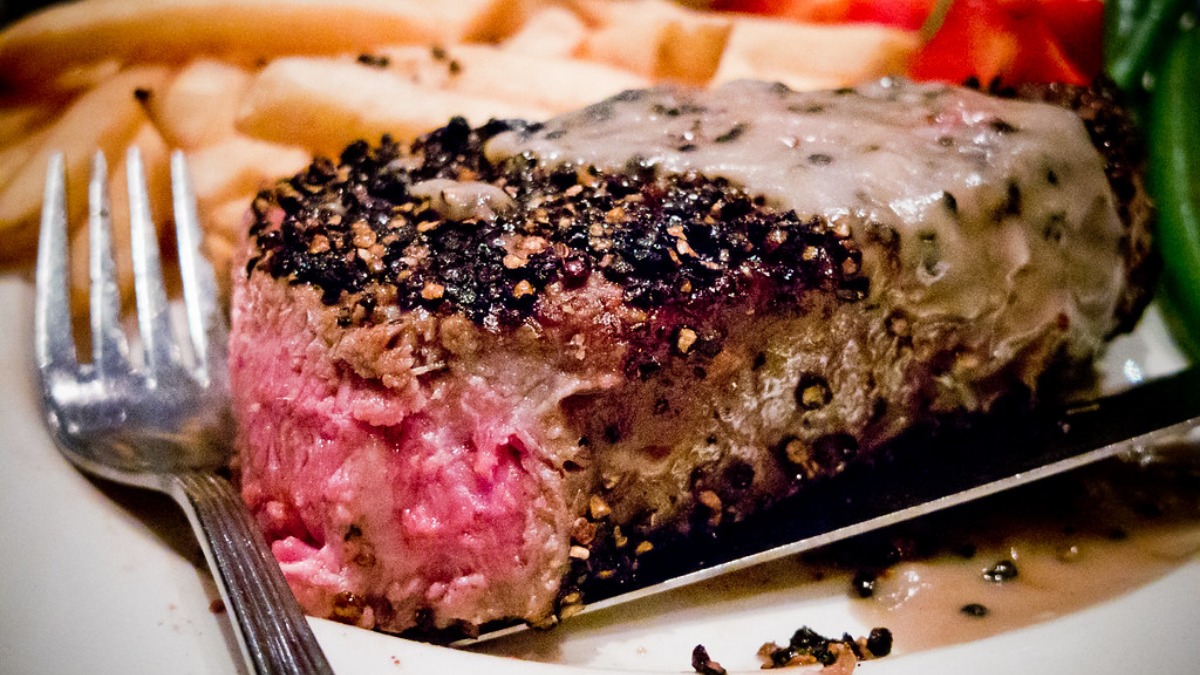

A quiet solo dinner out turned into an unexpected lesson on table etiquette for TikToker Kennedy Leo, after a clip of her cutting into a steak racked up nearly a million views. The video was not supposed to be a tutorial on anything. Kennedy posted it using a popular Wendy Williams sound, with on-screen text reading, “Taking myself out to a nice dinner and cutting into my ‘medium’ steak lol.” As reported by BroBible, the comment section quickly ignored the steak entirely and zeroed in on how she was holding her silverware.
The criticism came fast. One user wrote, “You’re holding your silverware like an American,” while another asked, “Do Americans genuinely not know how to hold a fork properly, or are you just trolling us all now?” A third commenter called the doneness of her steak a “punishment for holding the fork like that,” and others questioned the habit more broadly, with one asking, “Seriously why can Americans not use cutlery, can someone please explain this phenomenon to me?”
What the commenters were reacting to is a well-documented divide in dining etiquette. Kennedy was using what is commonly known as the American or “cut-and-switch” method, in which the knife is held in the right hand and the fork in the left while cutting, then the knife is set down and the fork is switched to the right hand to eat. The European or continental style, by contrast, keeps the knife and fork in their respective hands throughout the entire meal, with no switching involved.
The American method has older roots than most people realize
According to Taste of Home, some theories trace the cut-and-switch technique back to 19th century France, where it was briefly fashionable before falling out of practice. It found a lasting home in the United States, however, and anthropologist James Deetz suggested the switch felt natural to Americans already accustomed to using a spoon in their dominant hand. Before the 1800s, forks in America were not used to bring food to the mouth at all and served only as cutting aids, meaning the cut-and-switch was among the first fork etiquette styles many Americans ever adopted.
Both methods are considered entirely acceptable in the United States, and neither is objectively wrong. The debate the video sparked mirrors other viral restaurant moments that have drawn outsized online attention, including a viral dispute between a restaurant owner and a food influencer that blew up around the same time.
The broader point the video illustrates is that dining habits carry strong regional and cultural identity, and the internet rarely lets those differences go unremarked. Kennedy’s experience is not unique in that sense. A TikTok video out of North Carolina documenting a perfectly executed dine-and-dash at a restaurant generated similar waves of commentary online around dining norms and what restaurants might do in response.






Published: Jun 12, 2026 12:30 pm