



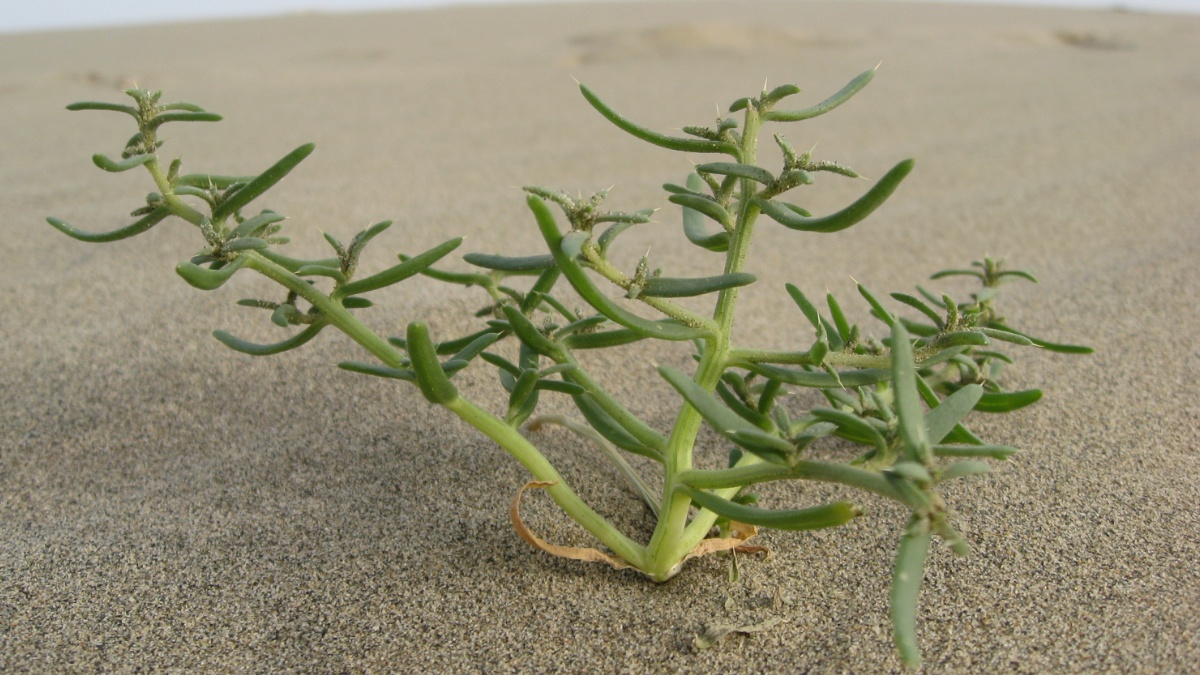

China is making some incredible strides in battling desertification, deploying an ancient, microscopic organism to transform loose desert sand into stable, plant-friendly ground, as reported by Earth.com. This is a major effort that’s showing real promise for areas like the Taklamakan Desert.
The star of this groundbreaking initiative is cyanobacteria. These amazing, sunlight-powered bacteria are practically living fossils, having likely appeared about 3.5 billion years ago, long before any forests existed. Many strains can pull carbon dioxide from the air into their cells, releasing simple organic matter as a byproduct. Plus, in desert soils that are often low on nutrients, some species even perform nitrogen fixation, converting nitrogen gas into a usable form for plants.
So, how does this all work to fight desertification? Well, scientists are using lab-grown cyanobacteria to bind loose desert sand into a thin, stable layer. Under a microscope, you’d see a mesh of bacterial threads wrapped around individual sand grains. To hold everything together, these tiny cells ooze sticky sugars between the grains, and those sugars harden into a thin, cohesive crust. This crust acts like a natural glue, holding the sand together so that wind can’t easily blow it away.
It’s truly exciting to see science tackle such a huge environmental challenge
This stronger, crusted surface gives restoration teams precious time to plant shrubs and grasses without the immediate threat of harsh winds and intense heat wiping out young plants. In trials near the Taklamakan Desert in Xinjiang, which you might remember as the backdrop of Black Myth Wukong, teams from the Chinese Academy of Sciences (CAS) saw these crusts stabilize sand within a surprisingly quick 10 to 16 months. Even with that speed, planners are focused on building a solid soil base first, ensuring that later plants can survive without constant replanting.
Over the first year, the treated surface really starts to hold its own. Nutrients begin to concentrate in the top inch of soil instead of just blowing away with the dust. Dead cells and leaked sugars mix with drifting mineral dust to form organic matter, which helps trap essential nitrogen and phosphorus.
As these nutrients build up, more microbes can thrive, and the entire crust community becomes much harder to disturb. For new seedlings, this creates a much better starting point, though their ultimate survival still depends on timely rain.
Behind today’s rapid trials is an impressive 59-year record from China that has tracked crust growth in desert recovery. By comparing untouched sites with plots treated with lab-grown cyanobacteria, the team found that adding these microbes shortened a decades-long natural process into just a few years. Even in the best scenarios, you’re still looking at two to three years for a mature crust that can truly resist disturbance, but that’s a massive improvement over waiting fifty years!
Despite these limits, fast crust building is turning microbial growth into a practical, powerful tool. It links immediate desert sand control with the slower, plant-based restoration efforts that are so vital. Long-term monitoring will be key to seeing whether the durability, benefits, and any side effects hold up across different deserts and climates. As we have the Great Lakes losing water by the minute in the US, this seems like a development we will have to keep tabs on.








Published: Feb 24, 2026 04:30 pm