


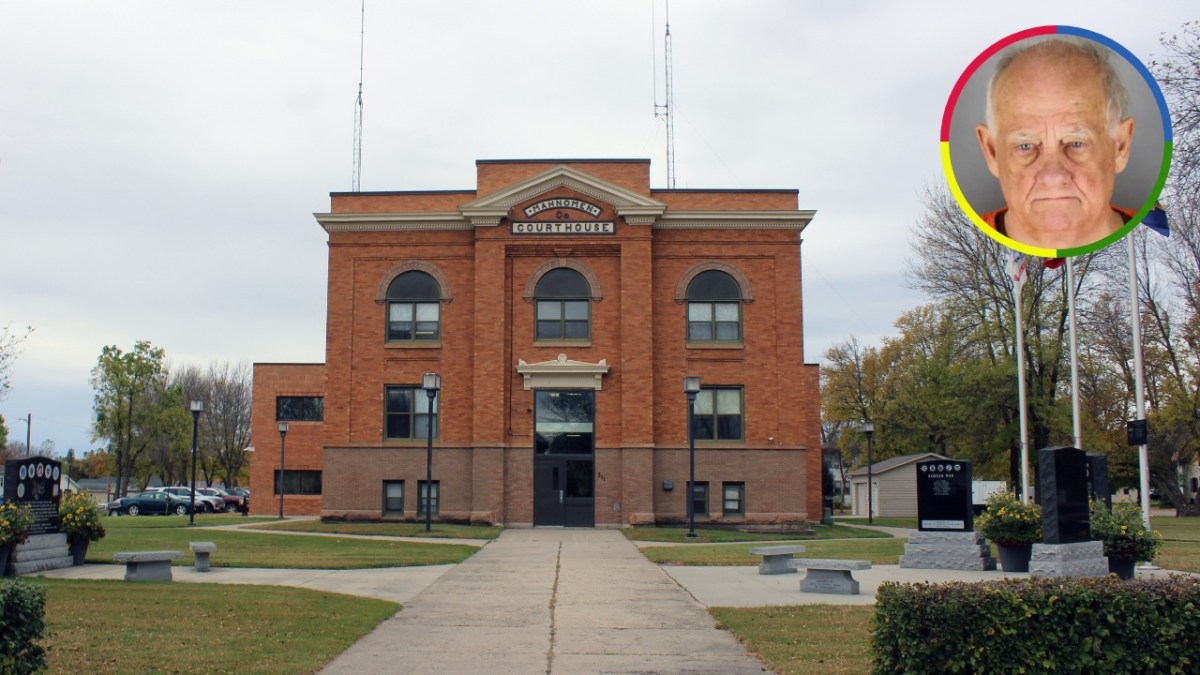

A Minnesota man who turned a decade-old lawsuit loss into a 236-page manifesto will spend the next several years in federal prison. Robert Phillip Ivers, 73, of Wayzata, has been sentenced to 78 months for threatening a federal judge and a trial witness, according to the Justice Department.
U.S. District Judge Karen E. Schreier handed down the sentence on Tuesday, which works out to six and a half years. She said the prison term was warranted, as Ivers had “terrorized anyone he had a grievance against.” A federal jury found him guilty in August of two counts of mailing a threat to injure the person of another and one count of threatening to murder a federal judge.
The case centers on a document Ivers titled “How to Kill a Federal Judge,” which prosecutors say contained graphic images of violence against real people and their families. Between January and April 2025, he mailed copies to all nine U.S. Supreme Court justices, three federal circuit judges, a law firm, and a private university in Minnesota.
Prosecutors say his grudge started with a life insurance lawsuit about a decade ago
According to the Justice Department, Ivers sued an insurance company roughly 10 years ago over about $100,000 in life insurance proceeds. The case went to a bench trial, and the federal judge who heard it ruled against him and found that his testimony lacked credibility. Prosecutors say Ivers held onto that loss for years and gathered his grievances into the manifesto.
It was not his first case tied to threats. In 2018, Ivers threatened a federal judge’s life during a phone call while he was trying to refile a civil lawsuit, and he received an 18-month sentence for that conduct. He was released from prison in May 2024, months before the first copies of the manifesto began arriving in mailboxes.
The manifesto targeted the judge who presided over his trial and an attorney who testified against him, and a copy also went to another judge. Prosecutors say it threatened judges, attorneys, witnesses, and their children, with lines such as “Begging for your life won’t do you one bit of good judge.” The attorney’s name was underlined in the document.
The attorney told investigators she feared for herself and her family after the mailings, and her law firm arranged extra security at both her home and her workplace. The release did not explain why Ivers also chose to mail a copy to a private university in Minnesota, or whether anyone there was named in it.
When law enforcement searched Ivers’s vehicle in September 2025, they found about 20 copies of the manifesto, along with lists of federal judges and attorneys and promotional materials for the document. Agents also found a book with instructions for making homemade explosives, a replica firearm, and fireworks, according to the release.
The charges carry specific meanings under federal law. Mailing a threat to injure the person of another covers threatening communications sent through the U.S. mail, while threatening to murder a federal judge is a separate crime aimed at protecting judges from retaliation over their official duties. However, the release did not say how the 78 months were split across the three counts.
Unlike a man who carried homemade explosives to a church preparing for a Mass attended by Supreme Court justices, Ivers was not accused of bringing a device anywhere. However, the book with bomb-making instructions in his car was part of what investigators found as they built the case against him.
The investigation pulled in six agencies, including the FBI, the U.S. Marshals Service, the U.S. Supreme Court Police, and the U.S. Secret Service. The Wayzata Police Department and the Saint Paul Police Department also took part, and Assistant U.S. Attorneys Bradley M. Endicott and William C. Mattessich prosecuted the case in Minnesota federal court.
The release did not say whether Ivers plans to appeal, and it did not list any supervised release that may follow once he finishes his prison term.








Published: Nov 26, 2026 08:45 am