



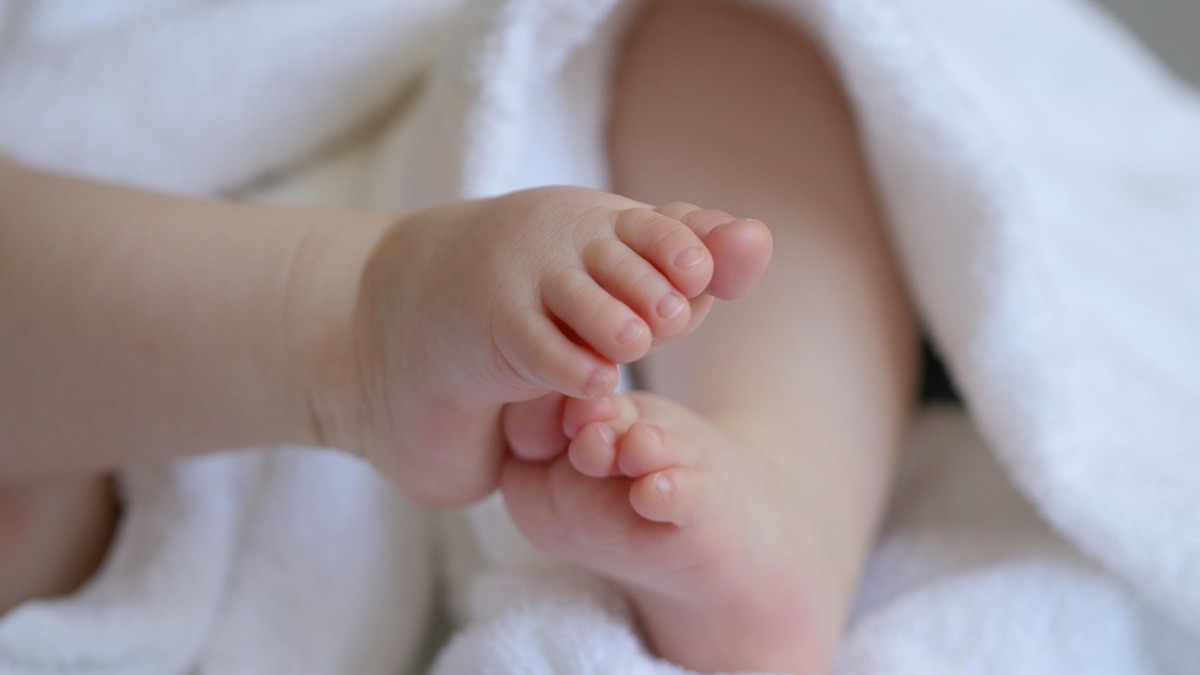

The excavation of a former mother and baby home in Tuam, County Galway, has uncovered an additional 22 sets of infant remains, bringing the total recovered to 33. Investigators moved heavy equipment to a patch of grass beside a children’s playground on a local housing estate last summer, and the project is currently expected to continue until 2027. The story gained traction through VT.co, which detailed the latest developments in the ongoing recovery effort.
Between 1925 and 1961, the St. Mary’s Mother and Baby Home housed thousands of women and children. Many of these women were shunned by their families for becoming pregnant outside of marriage, and records indicate that 802 children died at the home during its operation, often from treatable conditions like gastroenteritis, whooping cough, measles, and malnutrition. Patrick Derrane was the first infant to die there in 1925 at five months old, while Mary Carty became the last in 1960.
The truth about the site only began to surface because of local historian Catherine Corless, who became interested in the home’s history while researching her own family’s past. When she started asking questions, she was met with silence and suspicion, recalling that “nobody was helping, and nobody had any records.” Her persistence eventually led to a conversation with a cemetery caretaker who shared a memory from his youth: two boys playing near the demolished site had uncovered a broken concrete slab concealing a hole filled with bones.
The caretaker’s memory unlocked a discovery that authorities had long ignored
While many locals assumed the bones belonged to victims of the Great Famine in the 1840s, Corless knew those victims were buried in a different field half a mile away. Her research included reviewing old maps from 1929 and the 1970s that labeled the area as a sewage tank or burial ground, and she eventually visited the birth and death registration office in Galway. When she asked for the names of all the children who died at the home, she found there were exactly 796. She later noted, “People weren’t believing me.”
The accounts from those who lived near the site are stark. Mary Moriarty, who lived in a nearby house in the mid-1970s, recalled being told by two women that a young boy had been seen playing with a skull on a stick. After she and her neighbors investigated, she fell into a hole where she saw “little bundles” wrapped in black, rotting cloth, “packed one after the other, in rows up to the ceiling.” She estimated there were hundreds of these bundles. It wasn’t until she later gave birth to her own son in a local hospital and saw him wrapped in similar cloths that she understood what she had seen.
The government investigation officially confirmed the presence of “significant quantities of human remains” in 2017. Forensic experts found that the age range of the bones spanned from 35 weeks of gestation to about two or three years. Daniel MacSweeney, the head of the current excavation, has described the process as “really a world-first,” noting that an infant’s femur is often no larger than an adult’s finger. He added, “They’re absolutely tiny,” and emphasized the need for precision to maximize the possibility of identification.
The former Irish prime minister Enda Kenny described the site as a “chamber of horrors.” The home was run by the Congregation of the Sisters of Bon Secours and operated in cooperation with the Irish government. Survivors have described the home as a prison, where they were isolated at school and treated as outcasts.
The primary goal of the excavation is the identification of remains so that families can receive answers, a process that mirrors the urgent search for unaccounted children in other parts of the world. A total of 28 DNA samples have been taken from relatives of those who died at the home, with over 65 cases currently being processed for eligibility. Catherine Corless, who refused an invitation to meet with the Pope to instead attend a vigil in Tuam, has consistently stood by the victims throughout the process.





Published: Jun 1, 2026 12:30 pm