



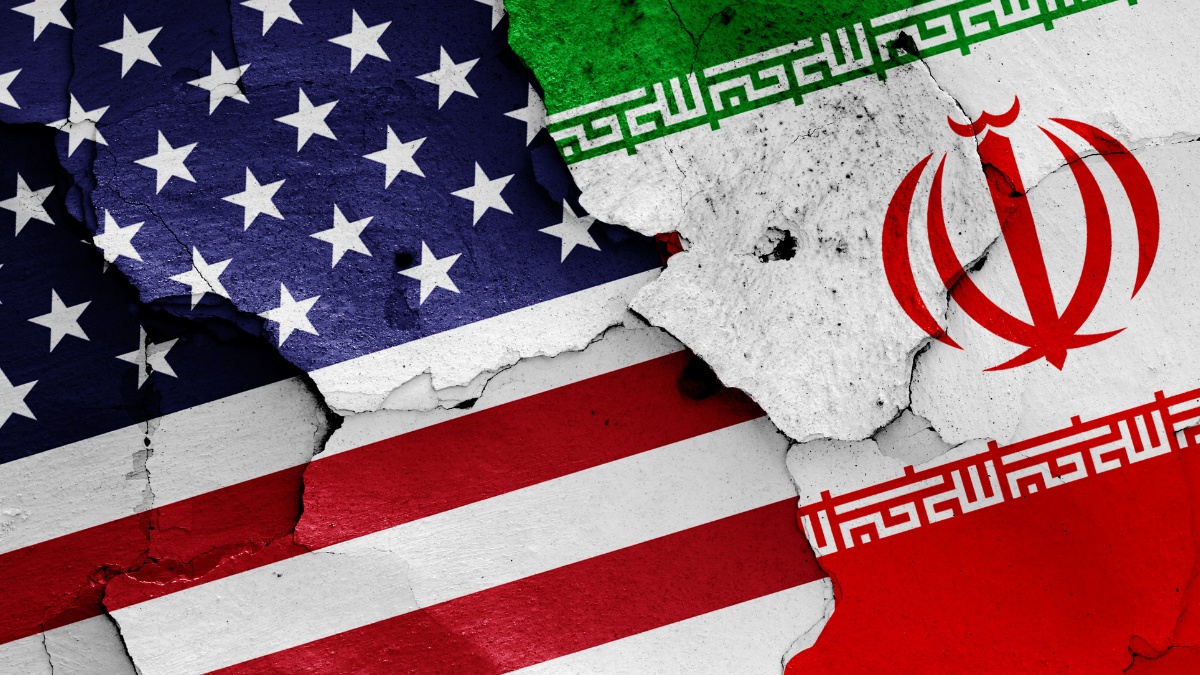

President Trump sharply escalated his rhetoric toward Iran on Wednesday, warning that a military strike could come “with speed and violence” if Tehran failed to comply with sweeping U.S. demands. As reported by The New York Times, the president said a “massive armada” was moving into position and urged Iran’s leaders to make a deal before tensions worsened.
The warning was backed by a visible military buildup. The aircraft carrier Abraham Lincoln and accompanying naval vessels, bombers, and fighter jets are now positioned within range of Iranian targets, signaling that the threat is not purely rhetorical. Trump publicly likened the deployment to forces he gathered near Venezuela late last year, which preceded the operation that led to the capture of Nicolás Maduro and his wife in early January.
That comparison underscored the administration’s intent to pressure Iran’s clerical leadership and the Islamic Revolutionary Guard Corps. The display of force appears designed to suggest that regime leaders themselves could be targeted if negotiations fail.
The terms amount to sweeping limits on Iran’s military leverage
While the president has not detailed the conditions publicly, U.S. and European officials confirmed that Washington has presented Iran with three non-negotiable demands. The Kristi Noem Minneapolis fallout has also kept pressure on the administration as it manages multiple high-profile flashpoints at once.
The first demand calls for a permanent end to uranium enrichment and the disposal of Iran’s existing stockpiles. Monitoring such a ban would be difficult, given the potential for small, concealed enrichment sites. Although the main facilities at Natanz and Fordo were heavily damaged by U.S. airstrikes last June, intelligence officials remain concerned about uranium enriched to 60 percent purity that was stored deep underground.
The second condition would limit both the range and number of Iran’s ballistic missiles. Those missiles are viewed by Tehran as its primary deterrent against future Israeli strikes, and restrictions would sharply reduce Iran’s ability to reach Israeli territory. The third demand requires Iran to cut off support for proxy groups, including Hamas, Hezbollah, and the Houthis in Yemen, a step officials believe may be more feasible given Iran’s weakened economy and currency.
Absent from the list is any reference to protecting protesters who flooded Iran’s streets in December, despite earlier promises of support from the president. Human rights groups estimate that between 3,400 and 6,200 people were killed during the unrest, with numbers expected to rise once internet access is fully restored. The Epstein trafficking book cancellation has also drawn attention to how sensitive investigations and disclosures can be, even outside government channels.
Iranian officials have rejected the demands outright. Mehdi Mohammadi, a senior adviser to the parliamentary speaker, said on state television that the conditions amounted to surrender, arguing they would leave Iran defenseless against future attacks. Foreign Minister Abbas Araghchi warned that diplomacy cannot succeed under military threats, while Rear Adm. Ali Shamkhani said any U.S. strike would be treated as an act of war and met with retaliation, including attacks on Tel Aviv.
Secretary of State Marco Rubio told lawmakers that the U.S. deployment is primarily defensive, aimed at protecting American troops within range of Iranian missiles, but confirmed that forces are prepared to act preemptively if ordered. He acknowledged that there is no clear plan for what would follow if Iran’s regime collapsed, and officials said talks have made no progress in the past week, with Tehran showing no sign of backing down.








Published: Jan 28, 2026 07:45 pm