



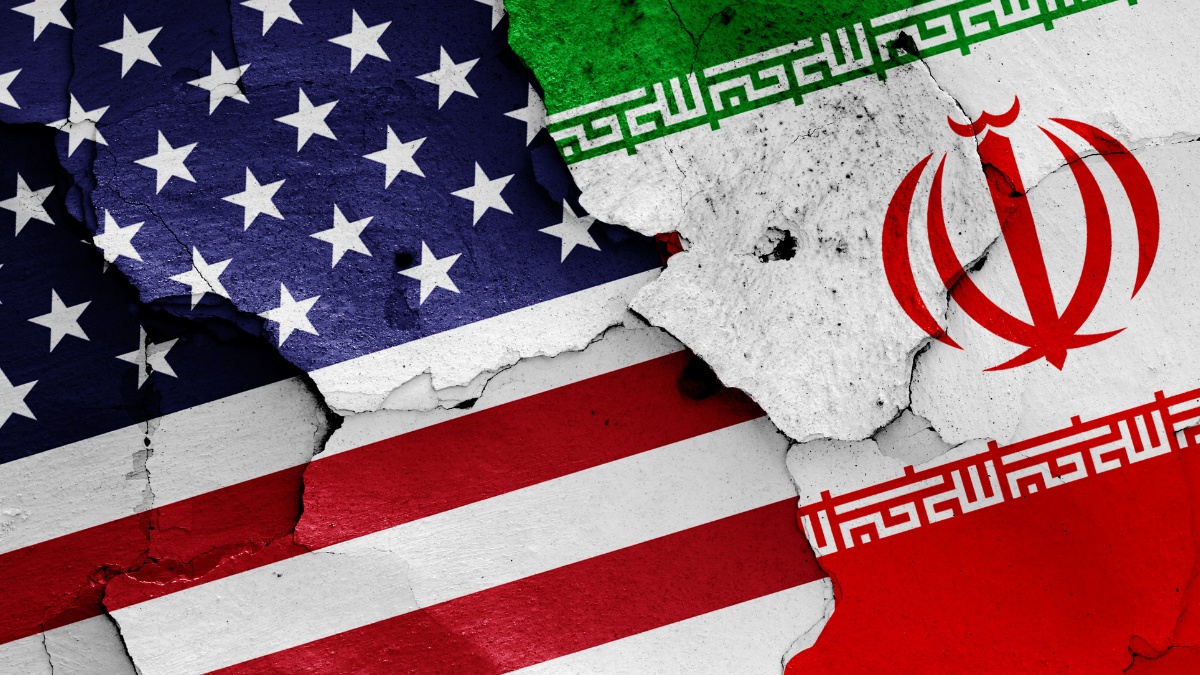

President Donald Trump said the United States will know within “probably 10 days” whether a nuclear deal with Iran is possible, even as the US military expands its presence in the Middle East. The developments were detailed by The Guardian, which outlined both the diplomatic timeline and the parallel military movements now underway.
White House envoys Steve Witkoff and Jared Kushner recently met Iranian officials in Geneva to discuss Iran’s nuclear enrichment program. Tehran has said it will respond within two weeks to US demands that it fully abandon enrichment in exchange for sanctions relief.
Trump’s 10 day estimate roughly aligns with that timeline, but the growing military footprint suggests preparation for other outcomes. A second US carrier strike group is now moving into position, adding to a substantial naval and air presence already in the region.
A major show of force raises questions about intent
The USS Abraham Lincoln carrier strike group has been operating in the Arabian Sea for nearly a month with nine squadrons of aircraft. Separate from the Iran talks, Federal Reserve pick plan has also become part of the administration’s broader policy backdrop.
A second and larger carrier strike group, led by the USS Gerald R Ford, was confirmed to be in the Atlantic west of Morocco on February 20. It is expected to transit the Strait of Gibraltar and enter the eastern Mediterranean within days.
Matthew Savill, director of military sciences at the Royal United Services Institute, told The Guardian that two carrier strike groups together could generate “several hundred strike sorties a day for a few weeks.” He added that even the Lincoln alone could conduct more than 125 bombing missions daily.
Additional aircraft have also been deployed to support sustained operations. Six E 3 Sentry Awacs planes are now stationed at Prince Sultan airbase in Saudi Arabia to provide airborne command and control.
Savill questioned the purpose of such a large deployment. The scale of the air and sea assets suggests the US military is positioning itself to conduct a wide ranging bombing campaign if ordered.
Iran’s ballistic missile arsenal remains central to the regional calculus. Iran is estimated to possess around 2,000 ballistic missiles across as many as 25 launch bases, with several not targeted during the June conflict.
Iran’s supreme leader, Ali Khamenei, recently threatened to send US warships “to the bottom of the sea.” Iran’s mission to the United Nations also warned that it would consider hostile bases and assets in the region legitimate targets if Tehran faces military aggression.
The United States and its allies have taken steps to prepare for potential retaliation. Satellite imagery indicates that a Patriot air defense system has been installed at Al Udeid airbase in Qatar, and the Pentagon has also issued an AI companies ultimatum tied to defense operations.
Last summer, Trump initially gave himself two weeks to decide whether to bomb Iran’s Fordow facility but ordered B2 stealth bombers to strike within days.






Published: Feb 19, 2026 08:00 pm