



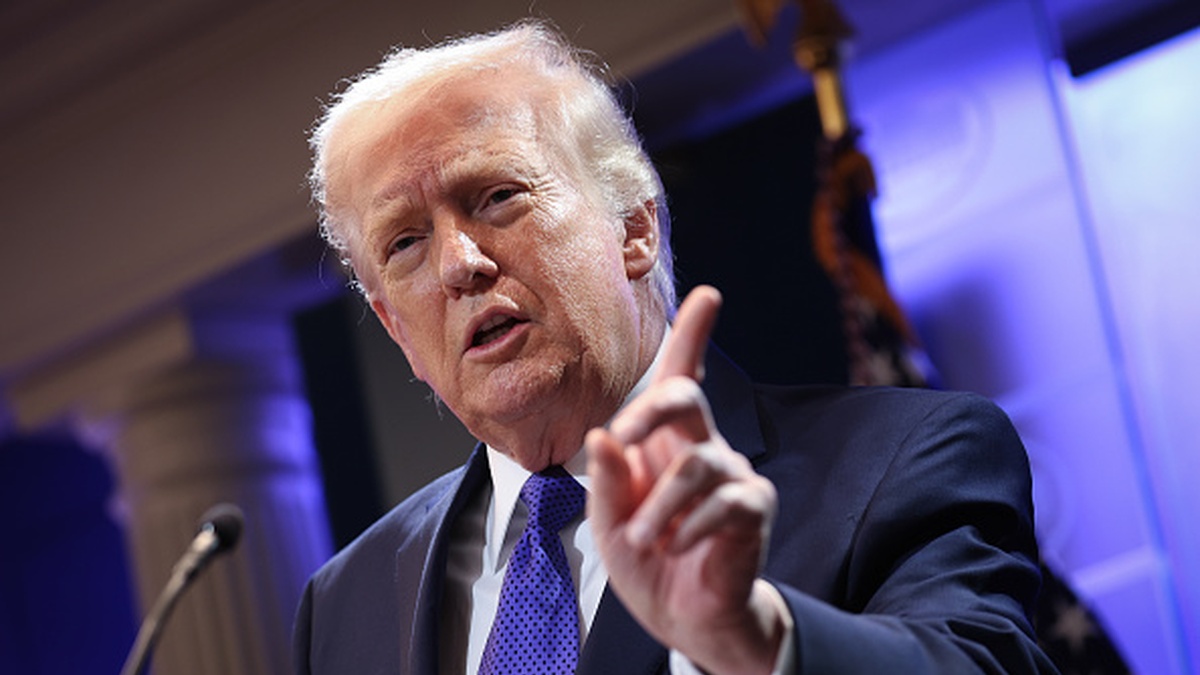

President Donald Trump has once again attacked Taiwan’s semiconductor industry, claiming the island “stole” the US chip business. This came shortly after a major US Supreme Court ruling that found he had overstepped his authority by imposing wide-ranging tariffs.
According to the South China Morning Post, the Supreme Court ruled 6-3 that Trump had violated the 1977 International Emergency Economic Powers Act when he used it to justify those tariffs. This law is meant to be used only in national emergencies, and the court found that using it for tariffs went beyond the president’s powers.
Right after the ruling, Trump directed his anger at Taiwan’s chip sector. At a press conference on Saturday, he said, “Taiwan came [into the chip sector and] they stole our chip business.” Semiconductors are central to nearly all modern technology, making this a significant accusation.
Trump’s Taiwan chip accusations carry more weight coming right after his tariff powers were struck down
This is not the first time Trump has made these claims about Taiwan, but the timing, immediately after the Supreme Court’s decision, adds important context. It appears to be a direct response to his tariff powers being curtailed, as he looks for other ways to address what he sees as an unfair trade situation. Earlier this year, Trump’s sweeping tariff hikes on every country had already exposed deep cracks in his broader trade agenda.
Taiwan has become one of the most important chip-manufacturing hubs in the world. Taiwanese companies have overtaken several major US chipmakers and are now deeply embedded in the global supply chain. To avoid tariffs and respond to earlier trade pressures, many Taiwanese firms have been building factories inside the United States and have pledged to invest heavily in the American economy.
Despite this, tensions between the US and Taiwan over the chip industry remain high. The back-and-forth between political pressure and industry response creates an unstable environment for one of the world’s most critical sectors.
Trump’s trade moves are just one part of a broader pattern of controversies; a Trump biographer’s account of White House staff reactions to a racist video he posted about the Obamas shed further light on the tensions inside his administration.
The semiconductor industry depends heavily on long-term planning and stable trade policies. Chip production and supply chains require companies to plan years ahead, and sudden shifts in political rhetoric make that very difficult for businesses across the board.
The effects of this uncertainty are not limited to large chipmakers. Companies of all sizes that rely on semiconductors for their products are also impacted, since the entire global tech industry is closely tied to a stable and predictable chip supply chain.







Published: Feb 23, 2026 11:45 am