



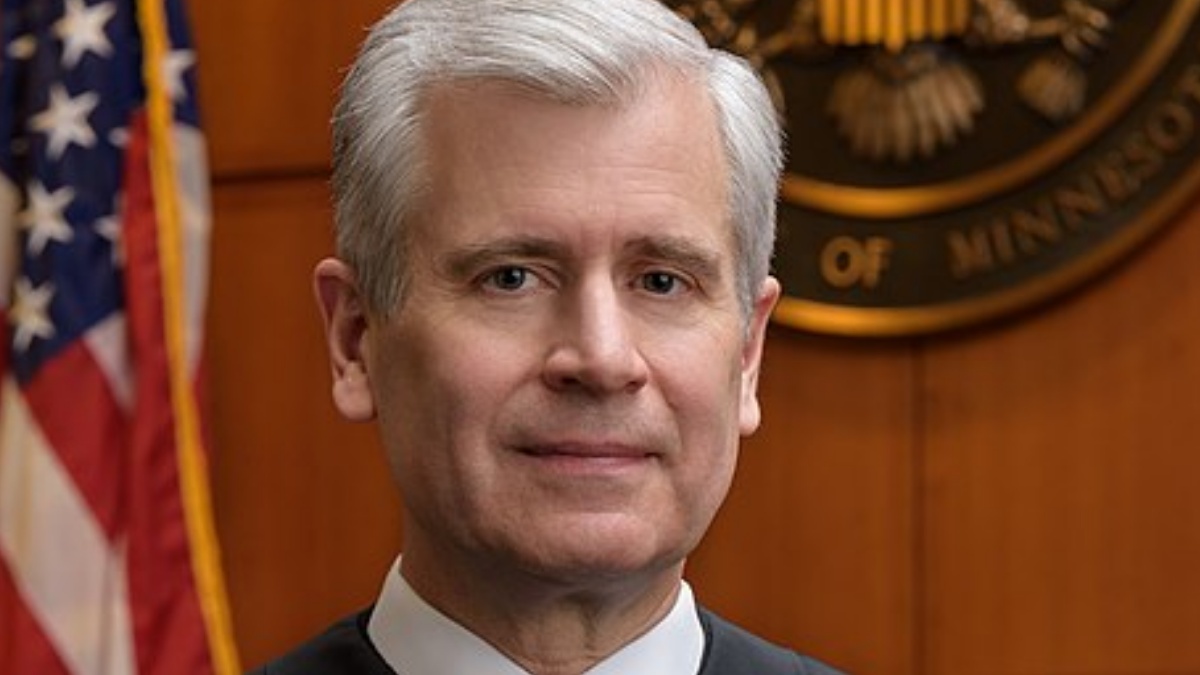

Chief U.S. District Judge Patrick Schiltz of Minnesota has accused federal immigration officials of defying 210 court orders across 143 cases tied to enforcement actions. In a sharply worded ruling, he warned that continued noncompliance could result in criminal contempt, declaring that “one way or another, ICE will comply with this court’s orders.”
The confrontation, reported by The New York Times, marks a significant escalation between the federal judiciary and the executive branch over immigration enforcement. Schiltz wrote that he was unaware of another instance in U.S. history where a federal court repeatedly had to threaten contempt to secure compliance with its directives.
The judge detailed a series of alleged violations, including missed deadlines to release detainees, transferring a detainee to Texas despite a direct court order, and failing to file required status updates. Minnesota’s courts have faced a surge of immigration-related lawsuits amid a broader enforcement crackdown.
The standoff intensifies over repeated noncompliance
Daniel N. Rosen, Minnesota’s U.S. attorney, previously acknowledged “some missteps” but argued the court had overstated the scope of the issue. The broader political pressure around enforcement has also been reflected in coverage of a SOTU $8 trillion hole. Schiltz said that while some earlier cited cases did not involve defiance, dozens of additional examples showed continued failure to follow court instructions.
Schiltz also addressed the strain on the U.S. attorney’s office, noting that judges had been patient with line attorneys who he said were placed in an impossible position by leadership within the Justice Department. He criticized the administration’s deployment of 3,000 ICE agents to Minnesota without a plan to handle the expected wave of resulting litigation.
The office has seen a significant drop in staffing, falling from 64 prosecutors at the end of the previous administration to 36, according to the report. Immigration enforcement operations have also drawn attention in recent reporting on an ICE 911 shooting threat. Rosen said his team has been working continuous overtime to meet deadlines that sometimes fall within hours, including on weekends and holidays.
Unlike civil contempt, which is typically used to compel future compliance through penalties, criminal contempt carries the possibility of fines or imprisonment for willful defiance. Schiltz, nominated by President George W. Bush and a former clerk to Justice Antonin G. Scalia, has grown increasingly pointed in his criticism, and a Department of Homeland Security spokeswoman has previously labeled him an “activist judge.”
The latest order underscores what the Times described as an extraordinary rupture between Minnesota’s federal judiciary and the U.S. attorney’s office, with Schiltz indicating he is prepared to pursue contempt proceedings if compliance does not improve.









Published: Feb 27, 2026 11:30 am