



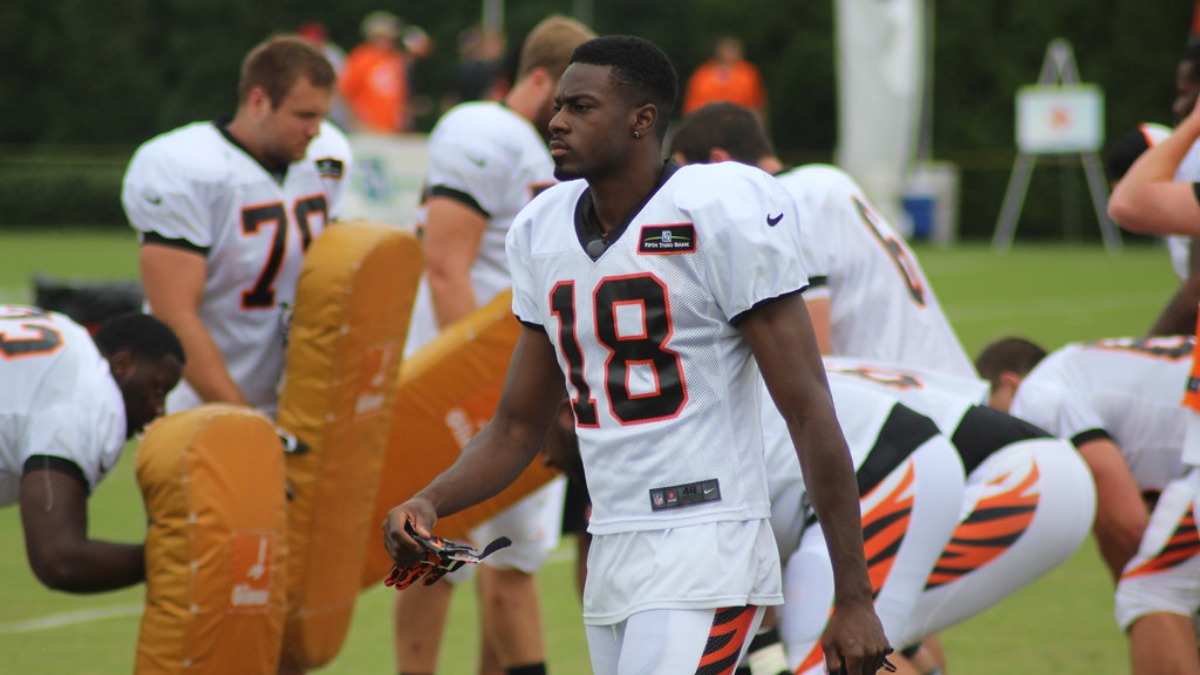

NFL players who are often hailed as heroes and fighters are also prone to mental health issues, and things get even more complicated when they have a huge amount of attention on them. The same happened to Vikings wide receiver Rondale Moore, who, after several relapses in his recovery, met a tragic end. Now, players and teams are looking for the answer to his suicide, but AJ Green has pointed out something really important in this aspect.
According to the Daily Mail, AJ Green, who was acting as Moore’s mentor, pointed out some gaps that could be filled to prevent a situation like this in the future. Green pointed out that even though the NFL claims to fulfill all the requirements of mental health support, in reality, there is a lot to be done for players like Moore who are dealing with an injury crisis. He declared that people in the front offices consider mental health issues as a red flag, which causes them not to talk about it.
Green, in the interview, said, “None of that means anything if the people who are making the football decisions, in private, are viewing mental health issues how I feel like a lot of times they still get viewed: as a red flag.” He added. “That’s the truth. No one in any front office will ever say it out loud. No scout is ever gonna put it in a scouting report. But that’s how it’s viewed in this league by a lot of people”.
AJ Green’s comments highlight the need to reshape the league’s mental health program
Rondale Moore’s incident has yet again revived the debate of mental health awareness in the NFL. Over the years, several players have had a similar end, including Kenny McKinley, Dave Duerson, and Mike Current, who committed suicide while being active in the NFL. Duerson even left the message in his death note asking to read his brain after his death.
The NFL, on the other hand, has its own program to help players with mental health issues. In association with the NFLPA, the NFL seeks to ensure its players are mentally fit, but because the program is designed for players to reach out to them, many hesitate to come forward and discuss their mental health.
As Green suggested, the NFL must design its mental health program so that players are examined at regular intervals to identify issues. The league should cater to the mental health issues of these players regularly, especially those who are suffering from injuries and have indulged in cases like Robert Nkemdiche. Even though the community is concerned, it remains to be seen whether the league will change its rules to avoid catastrophes or adhere to its current measures.








Published: Mar 19, 2026 01:15 pm