



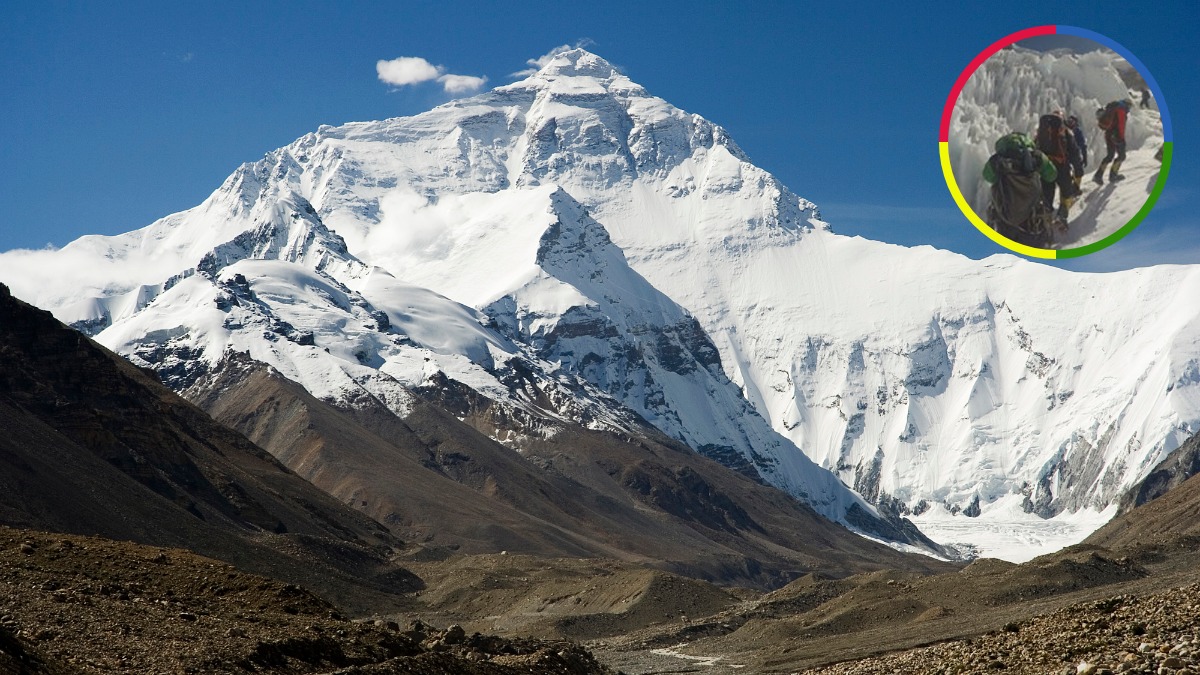

If you’ve ever dreamed of summiting Mount Everest, you’re going to want to do some serious research on your guides first. According to BroBible, a recent investigation has uncovered a massive, multi-million dollar insurance scam where guides have allegedly been poisoning climbers’ food to trigger incredibly expensive helicopter rescues. This is a truly wild and dangerous situation, making an already perilous journey even more treacherous.
It turns out that getting stuck on Everest, even on the lower slopes, usually means a helicopter ride out. This is a life-saving measure, no doubt, but it’s also incredibly pricey. The report found that while a helicopter might carry several passengers, separate invoices are often submitted to each passenger’s insurance company.
This means a $4,000 helicopter charter can easily balloon into a $12,000 insurance claim. To make matters worse, helicopter operators have been caught filing fake flight manifests and load sheets to back up these inflated costs. The scam doesn’t stop with just the helicopter rides, though. Investigators also discovered that guides were administering altitude sickness tablets alongside excessive water intake. This combination would actually induce the very symptoms that would then justify a rescue call.
Imagine trusting your guide and this happens
In one particularly nasty case, a guide even added baking soda to a climber’s food, specifically to make them feel unwell enough to require evacuation. This is awful for climbers who put their trust in these professionals. Hospitals are also implicated in this scheme. In one instance, a local hospital worker reportedly used his own X-ray, which was taken a year prior at a different hospital, to justify treatment for a patient and bill their insurance company.
The numbers behind this whole racket are truly staggering. According to the report, investigators identified 4,782 foreign patients treated across the implicated hospitals between 2022 and 2025. While only 171 cases, or 3.6 percent, were confirmed as fake rescues, Era International Hospital received deposits of over $15.87 million linked to these fraudulent activities. Shreedhi International Hospital also reportedly received more than $1.22 million.
The flight companies were certainly not missing out on the action either. Mountain Rescue Service reportedly conducted 171 fraudulent rescues out of 1,248 total charter flights, claiming approximately $10.31 million from insurers. Nepal Charter Service allegedly conducted 75 fake rescues from 471 flights, claiming $8.2 million, and Everest Experience and Assistance was linked to 71 fraudulent rescues out of 601 total flights, with insurance claims totaling $11.04 million. It’s a huge amount of money being siphoned off.
As if the idea of your guide intentionally making you sick wasn’t bad enough, it gets even more complicated. The investigation revealed that not all climbers were victims of the scam. Some climbers apparently worked directly with medical providers and helicopter evacuation companies as part of the fraud, exposing a grim reality: we are no longer safe from predatory scams, whether we are in the physical world or the digital one.
For example, one German climber was found to have collaborated with a pair of providers to deliberately inflate the cost of a helicopter rescue and medical services. She then later asked for a refund when she was “accidentally” double-billed for the services, after her insurance had already paid. So, if you’re planning on tackling Mount Everest anytime soon, you’ll need to prepare not just for the extreme physical challenge of the climb itself.
You absolutely must do extensive research on your guides and the companies they work for. Your safety, and your wallet, might just depend on it.




Published: Apr 2, 2026 05:15 pm