



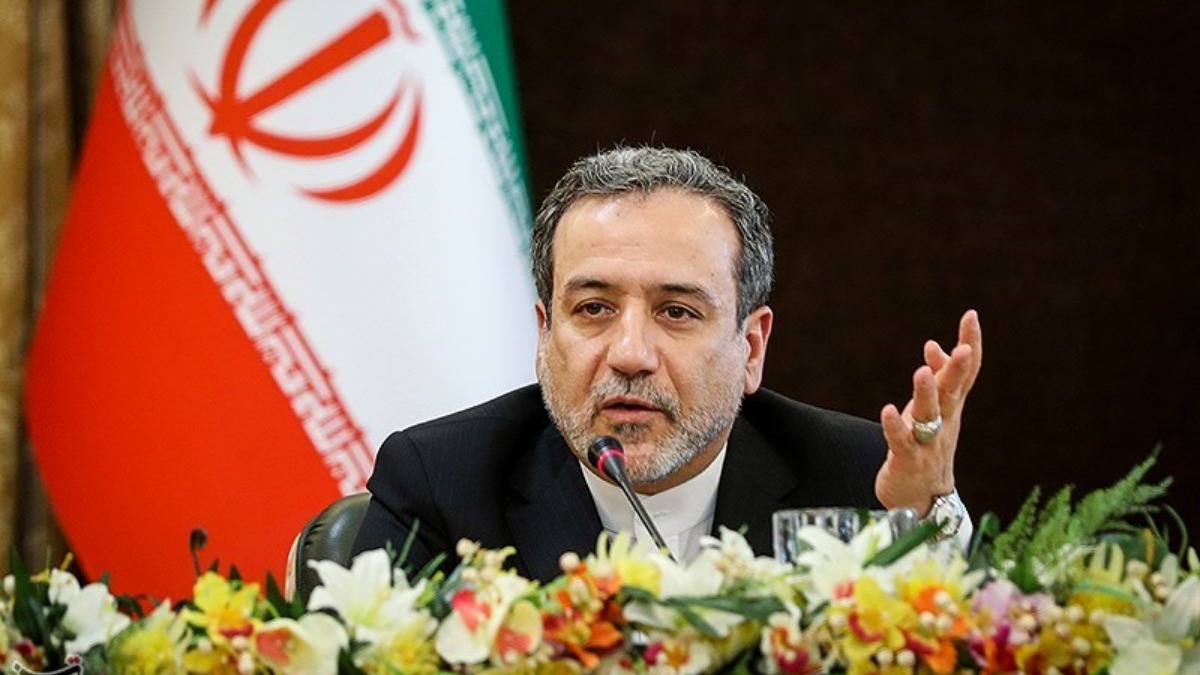

Iranian Foreign Minister Abbas Araghchi delivered a sharp retort to President Trump’s recent threat to take Iran “back to the Stone Ages” amidst ongoing U.S. military operations against the country. Araghchi took to social media to highlight a critical difference between historical periods and the current geopolitical landscape. His response directly challenged the implications of the president’s aggressive stance.
“There’s one striking difference between the present and the Stone Age: there was no oil or gas being pumped in the Middle East back then,” Araghchi wrote on X. He then posed a pointed question, asking, “Are POTUS and Americans who put him in office sure that they want to turn back the clock?”
President Trump had made his “Stone Ages” threat during an address to the nation, where he also laid out a narrative of U.S. dominance over Iran. He spoke of Tehran’s forces being decimated, declared that “there’s no country like us anywhere in the world, and we’re in great shape for the future,” and issued warnings of more strikes if a peace deal isn’t quickly reached to end the conflict.
The military operations against Iran represent the latest in President Trump’s attempts to use U.S. military power to obtain foreign natural resources, like oil and minerals
During his Wednesday evening address, the president threatened to obliterate Iran’s energy infrastructure, stating, “If there’s no deal, we are going to hit each and every one of their electric-generating plants very hard and probably simultaneously.” In an interview published Sunday, President Trump candidly shared his personal preference. “To be honest with you, my favorite thing is to take the oil in Iran, but some stupid people in the U.S. say: ‘Why are you doing that?’ But they’re stupid people,” he stated.
These threats come after a period of intense military activity. The U.S. and Israel launched joint strikes against Iran at the end of February, which coincided with nuclear deal negotiations. These strikes resulted in the deaths of Iranian Supreme Leader Ayatollah Ali Khamenei and other top leaders in Tehran, marking a significant escalation in the conflict.
In retaliation, Iran has carried out strikes on U.S. military bases and energy infrastructure located in the Persian Gulf region. Just last week, the Islamic Revolutionary Guard Corps issued a threat to target Middle Eastern campuses of U.S. universities and the operations of U.S. tech companies in the region, which would be a pretty devastating blow to regional stability and innovation.
In a separate post, Araghchi also criticized a reported U.S.-Israeli attack on a civilian bridge in Iran. President Trump had previously posted a video on Truth Social that appeared to show a strike on this same structure, which he referred to as “the biggest bridge in Iran.” Araghchi firmly stated that “Striking civilian structures, including unfinished bridges, will not compel Iranians to surrender.” He continued, adding, “It only conveys the defeat and moral collapse of an enemy in disarray. Every bridge and building will be built back stronger. What will never recover: damage to America’s standing.”
The phrase “bombing a place to the Stone Age” isn’t a new invention in U.S. foreign policy rhetoric. It’s a military idiom that essentially means to completely destroy a society until it is reduced to a primitive, pre-industrial state. This isn’t the first time the United States has referenced the Stone Age in such a context.
Back in 2006, then-President of Pakistan, Pervez Musharraf, recounted in a CBS television interview that the Bush administration had threatened to bomb Pakistan “back to the Stone Age” after the 9/11 attacks if the country didn’t cooperate with the war on terror. Musharraf stated that the threat was made by assistant secretary of state, Richard Armitage, during conversations with Pakistan’s intelligence director. He quoted the intelligence director as saying Armitage told him, “‘be prepared to be bombed. Be prepared to go back to the Stone Age.’” Armitage later told NBC News that his remarks during that conversation were misrepresented, but the sentiment clearly resonated.








Published: Apr 3, 2026 02:00 pm