



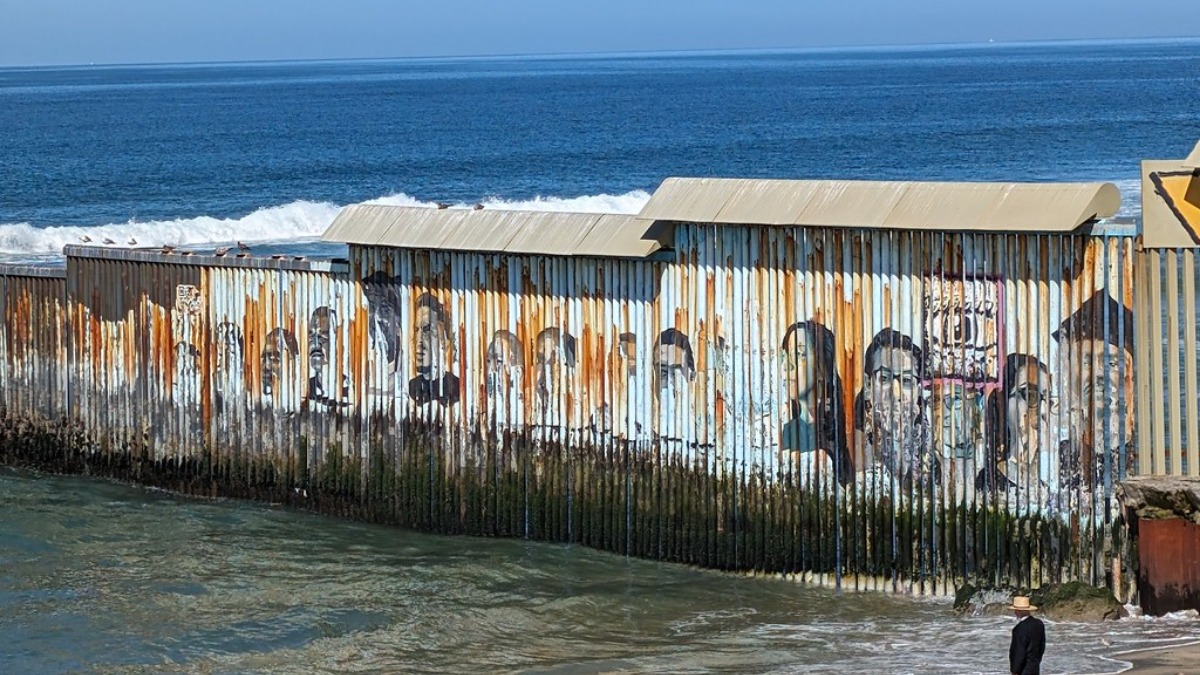

The Trump administration is working quickly to build a large barrier along the southern border, and it is spending billions of dollars on the project. Over the past six months, the Department of Homeland Security has awarded more than $19.4 billion in contracts for the border wall.
By comparison, the government awarded only $2.1 billion for the same purpose between 2016 and 2024. This is a sharp rise in spending that, according to reports, puts the president on a path toward possibly finishing a land and water barrier by the end of his second term.
According to The Washington Post, most of this money is reportedly going to just two companies, both of which have documented ties to the White House and the Republican Party. Fisher Sand & Gravel has secured more than $7.8 billion in contracts since December, while Barnard Construction has earned $4.5 billion since late last year.
Two pre-vetted firms have received the bulk of the recent contracts
These firms are part of a small, pre-vetted group cleared by the Department of Homeland Security to handle the work. While this process is faster than standard procurement, the report says it is raising concerns because it is much less transparent.
According to officials at Customs and Border Protection, crews are putting up five miles of wall every week. The project, which is being called the Smart Wall, includes more than steel bollards. It also covers new access roads, lighting, river buoys, sensors, and cameras.
The effort has reportedly resulted in 52 separate contracts in 2025 alone, a large jump from the fewer than 10 contracts per year that were typical in the past. Because the government waived a long list of environmental and contracting rules, there is reportedly very little oversight compared to a regular open bidding process.
This has led to legal trouble, with a New York-based firm named Posillico Civil suing the administration in May. The firm alleges that the process is not fair and that most of the work is being funneled to the two big winners. These claims have not been proven in court.
Costs have also reportedly grown. In some cases, initial contract prices have jumped by hundreds of millions of dollars after the fact because of plan changes. For example, a $574 million contract awarded to Fisher Sand & Gravel last December reportedly grew by $629 million after the government added more roads and barriers.
Another contract in New Mexico for $1.68 billion reportedly saw an extra $108.3 million added just three weeks later. Former federal attorney Charles Tiefer told The Washington Post that the scale of these modifications is highly unusual and suggests that the usual safeguards for taxpayer money might be getting ignored.
These spending questions come as lawmakers spar over other large federal outlays, including a $1.6 billion taxpayer-funded program that recently faced a Senate hurdle.Fisher Sand & Gravel has held high-profile contracts before and has faced controversy. The firm’s CEO, Tommy Fisher, is a known donor to the Republican Party.
The company previously faced scrutiny over a project near an Arizona wildlife refuge, and it was also involved in a private border wall project that ended in legal issues for others involved. Timothy Barnard of Barnard Construction and his wife have donated over $1 million to the Trump 47 Committee.
For residents in places like West Texas, the sudden arrival of heavy machinery and construction camps is a major change. Cary Dupuy, a regional director for the National Parks Conservation Association, noted that the cost for two sections of wall in Big Bend alone totals $2.9 billion.
That is the same amount of money allocated to support all 433 national park sites in the 2026 fiscal year. Debates over how federal money is directed have surfaced elsewhere too, such as when Senate Republicans cut funding for a White House ballroom from a budget package. As construction continues, the administration maintains that these decisions are based on finding the best value and getting the job done quickly.





Published: Jun 6, 2026 08:48 am