



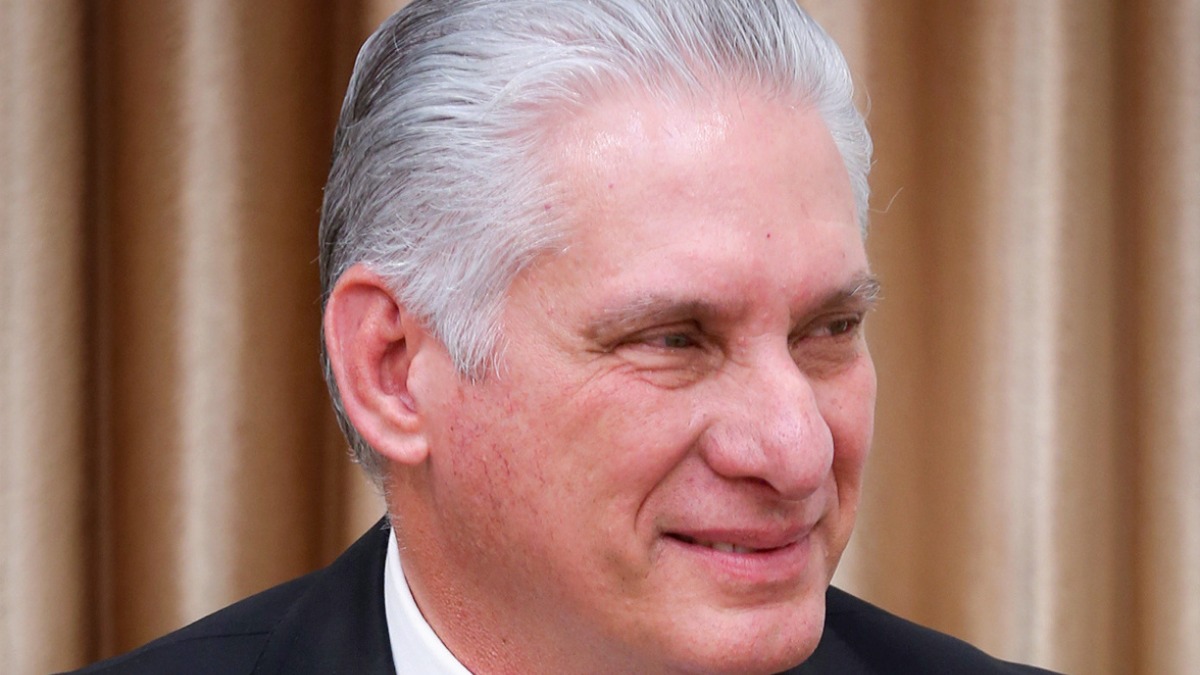

Cuban President Miguel Diaz-Canel has officially stated that he will not bow to pressure from the United States to resign, despite an increasingly aggressive campaign from the Trump administration. In a recent interview, Diaz-Canel made his position crystal clear when he told the press that stepping down is not part of their vocabulary, Al Jazeera reported.
He framed Cuba as a free, sovereign state that maintains the right to self-determination and argued that the island is not subject to the designs of the United States. It is a bold stance, especially given that the president, who has been in office since 2018, is facing immense pressure and explicit demands for regime change from Washington.
The Trump administration has gone as far as to suggest that Cuba could face the same fate as Venezuela and Iran. Just last month, the US president made some pretty alarming comments regarding the use of military force. He mentioned building a great military that he initially thought he would never have to use, but he then added that sometimes you have to use it, concluding with the ominous remark that Cuba is next.
The strategy being employed by the US seems to be a systematic squeeze on Cuba’s infrastructure
Since January, when the US ousted Venezuelan leader Nicolas Maduro, Cuba’s main oil supply was effectively cut off. The US followed this up with an executive order that threatens tariffs on any country that dares to sell oil to Cuba. The result of this de facto oil blockade has been devastating for the average person living on the island. Cuba relies heavily on imported oil to generate electricity and keep public transport running, so when those shipments stop, the entire country starts to struggle.
As a result, Cuba has faced nationwide blackouts, severe fuel shortages, and major disruptions to the distribution of food and water. In March alone, the island dealt with two massive island-wide blackouts on top of regional outages. For those living in Havana, power cuts can last up to 15 hours a day, and in rural areas, it can be even worse. It is a brutal reality where hospitals are forced to limit surgeries, rubbish trucks can’t run, and families are resorting to wood fires just to cook meals or heat water.
There is a real fear of a humanitarian collapse. Journalists on the ground have pointed out that sanctions have a very real, measurable cost. There is academic research suggesting that economic sanctions can lead to excess deaths, and we are seeing the fallout in Cuban hospitals. Doctors have reported that infant mortality rates are rising because staff can’t get to work, mothers aren’t getting necessary prenatal vitamins, and basic sanitation is failing due to the lack of power and fuel.
Despite all this pressure, Cuba isn’t completely isolated. Russia has remained a steadfast ally, and they have made it clear that they won’t abandon the island. During a news conference in Havana on Friday, Russia’s Deputy Foreign Minister Sergei Ryabkov stated that they cannot betray Cuba and that leaving it on its own is out of the question. Last month, a Russian tanker carrying 730,000 barrels of oil finally reached the island, marking the first shipment in three months.
It is worth noting that the power dynamics in Cuba are quite complex. While Diaz-Canel is the president, many analysts believe the real authority sits with the Communist Party and the Castro family, including former President Raul Castro. There is also the matter of GAESA, a military-controlled conglomerate that reportedly runs about 60 percent of the Cuban economy. Because the system is designed to prioritize the party over individual leaders, some experts argue that removing the president wouldn’t necessarily change the underlying structure of the government.



Published: Apr 10, 2026 03:15 pm