



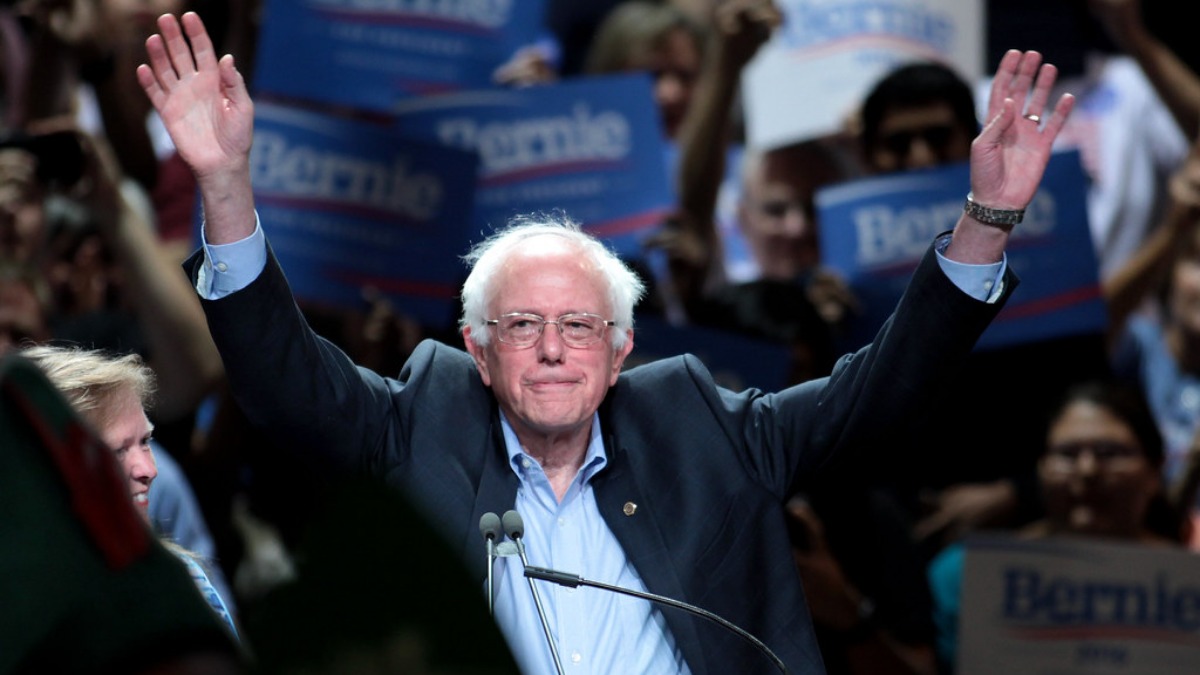

A major legislative effort to cut down on the high cost of prescription drugs hit a significant roadblock early Thursday morning, but not without some surprising developments in the Senate. Sen. Bernie Sanders sponsored an amendment that aimed to slash drug prices by ensuring that Americans pay no more for their medications than what is charged in countries like Canada, the United Kingdom, Germany, France, and Japan, The Hill reported.
The final vote count stood at 49 to 49, falling short of the 60 votes required to attach the proposal to the budget resolution. Despite this outcome, the fact that three Republican senators joined the Democratic caucus to waive a budgetary objection against the amendment is a notable shift in the ongoing debate over healthcare costs. Sens. Susan Collins of Maine and Dan Sullivan of Alaska, who are considered two of the most endangered Republicans in the chamber, chose to side with the effort. They were joined by Sen. Josh Hawley of Missouri, who also voted with Democrats to allow the measure to proceed.
“The American people pay by far the highest prices in the world for prescription drugs, and the result is 1 out of 4 Americans cannot afford the prescriptions that their doctors write, and thousands die every year as a result,” Sanders said on the floor. The data backs up his concerns, as research has shown that Americans pay at least twice as much on average for their medication compared to those in other wealthy nations.
While the amendment ultimately failed to move forward, the vote brought to light an unexpected split within the Republican Party
The core of the proposal was straightforward. “This amendment is very simple,” Sanders explained during the debate. “It would prevent pharmaceutical companies from charging more for prescription drugs in the United States than they do in Canada, the U.K., Germany, France and Japan.” By linking domestic prices to the median costs found in these other major nations, the amendment aimed to reduce the price of prescription drugs in the United States by more than 50 percent.
This specific policy proposal is not entirely new territory for the Senate. Last May, Sanders and several of his Democratic colleagues introduced the Prescription Drug Price Relief Act. That bill proposed that federal health officials review brand-name drugs every year to check for excessive pricing. If a drug was found to be priced too high, the government could void the exclusivity granted to the manufacturer.
Under that legislation, a price would be deemed excessive if the domestic average manufacturing price exceeded the median price for that same drug in Canada, the United Kingdom, Germany, France, and Japan.
The atmosphere surrounding this vote was particularly interesting because of the previous stance taken by the executive branch. During the State of the Union address, President Trump asked Congress to codify a most-favored-nation drug policy. This was intended to ensure that Americans would no longer pay more for their prescriptions than people in other countries. Sanders pointed out that his amendment was essentially calling on Congress to do exactly what had been requested.
Despite the President’s vocal support for a most-favored-nation pricing model, the vast majority of the Senate Republican conference stood against waiving the budgetary rules needed to advance the amendment.
This created a situation where almost every Senate Republican went on the record against a policy that the President had previously championed. Last year, the President signed an executive order directing federal health officials to communicate most-favored-nation price targets to pharmaceutical companies to bring American costs in line with other nations.
However, experts have pointed out that without formal congressional action to grant the federal government more authority over drug pricing, those executive targets were largely symbolic. Pharmaceutical companies were not actually required to comply with the targets, which is why drug prices have continued to rise despite the executive order.
Sanders had previously addressed this, stating, “If Trump is serious about making real change rather than just issuing a press release, he will support legislation I will soon be introducing to make sure we pay no more for prescription drugs than people in other major countries.”







Published: Apr 23, 2026 03:30 pm