



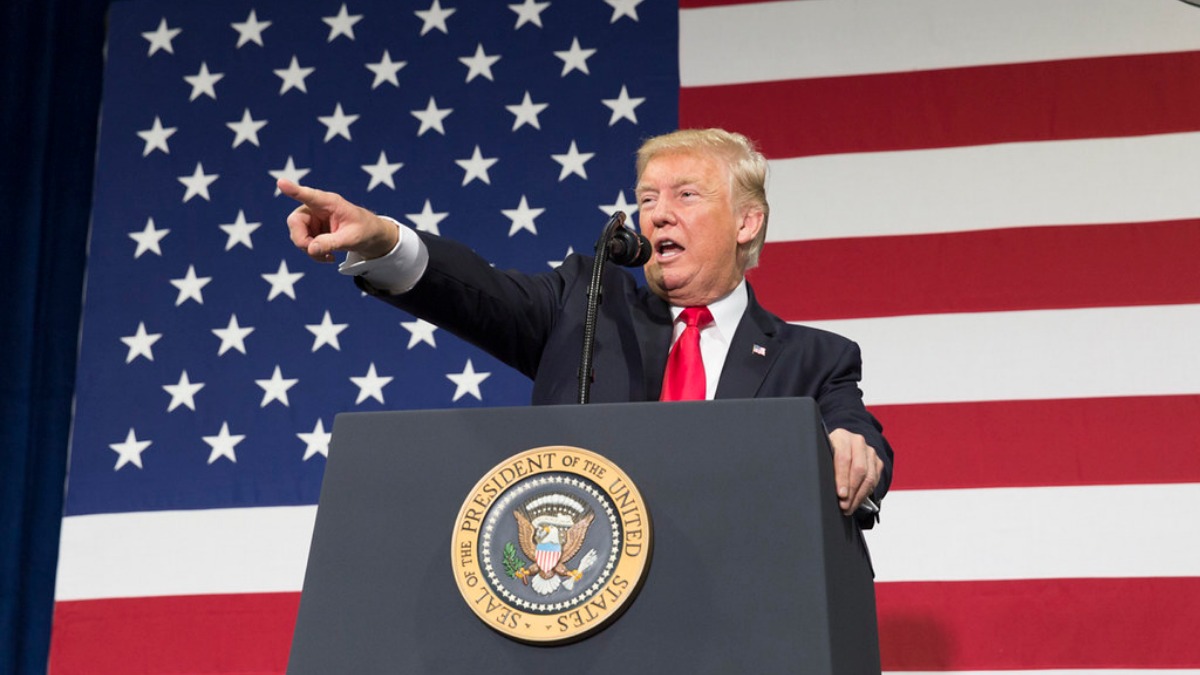

A Canadian citizen has officially launched a lawsuit to stop the U.S. Department of Homeland Security from obtaining his private information from Google, CTV News reported. This legal action comes after the government issued an administrative subpoena to the tech giant in an attempt to unmask a user who has been vocal about his opinions on social media.
The individual, who is using the pseudonym John Doe to protect his identity and his family, has been using X to share strongly-worded criticisms of U.S. President Donald Trump and his administration’s policies. These posts have gained significant traction, accumulating well over 100,000 views in total.
The situation escalated on February 14, 2026, when the Department of Homeland Security issued a summons to Google. This demand requested a massive amount of personal data, including the user’s name, home address, detailed location history, and even bank account and credit card numbers.
It is worth noting that this demand was issued without any court involvement
Instead, the agency cited customs enforcement law to justify the request. It feels incredibly heavy-handed for an agency to use that kind of authority to target a critic who lives in Canada and has not even stepped foot in the United States since 2015. The lawsuit, which was filed in a California court, argues that this is a clear attempt to chill speech. The government is essentially trying to intimidate people who disagree with its policies, which is a massive overreach.
The American Civil Liberties Union is representing the plaintiff in this case. The organization, which has been around since 1920, is pushing back against what it views as a dangerous abuse of power. As the plaintiff noted in an ACLU press release, he has long admired the United States for its dedication to free speech.
He shared his perspective by saying, “Never in a million years did I think that, after criticizing the U.S. government, I would be targeted with a summons seeking to find out who I am, where I live, where I go, and what I read online. You don’t have to be from America to know that this is un-American.”
This is not the first time the Department of Homeland Security has attempted to gather information on critics. The ACLU has actually filed three previous lawsuits regarding similar issues involving Google, Facebook, and Instagram. In those instances, the government withdrew the requests before a judge could issue a ruling.
This new lawsuit is different because it aims to do more than just stop this specific summons. It is asking the court to explicitly rule that the Department of Homeland Security cannot use its customs enforcement authority as a tool to identify and harass people who speak out against the administration.
Michael Perloff, who is a senior staff attorney at the ACLU of the District of Columbia, highlighted the global implications of this behavior. He stated, “Not satisfied with trying to suppress speech at home, the Trump administration is now targeting dissenters abroad,” and added, “A law designed to enforce customs does not give the government authority to target its critics around the world.” It is a sentiment echoed by Jake Snow, a senior staff attorney at the ACLU of Northern California, who described the situation as a “dangerous and terrifying precedent that threatens all of our fundamental rights.”
Google has not yet complied with the summons. The company has a policy of notifying its users when it receives legal demands, provided it is not legally prohibited from doing so. A Google spokesperson explained that the company’s review process is designed to protect user privacy while still meeting legal obligations. The spokesperson noted, “We review every legal demand and push back against those that are overbroad or improper, including objecting to some entirely.” In this case, Google promptly notified the plaintiff about the request, allowing him the time to mount this legal challenge.
Since President Trump began his second term, social media platforms have reportedly been flooded with hundreds of similar requests for personal information. It is concerning to see such a high volume of these demands, especially when they appear to be focused on silencing dissent rather than legitimate law enforcement goals.
The Department of Homeland Security did not provide a comment when asked about the situation. For now, the case remains in the Northern District of California, and the outcome could have a major impact on how the government interacts with international users of American tech platforms. It is a critical moment for digital privacy and the protection of free speech in an increasingly connected world.






Published: May 7, 2026 04:45 pm