



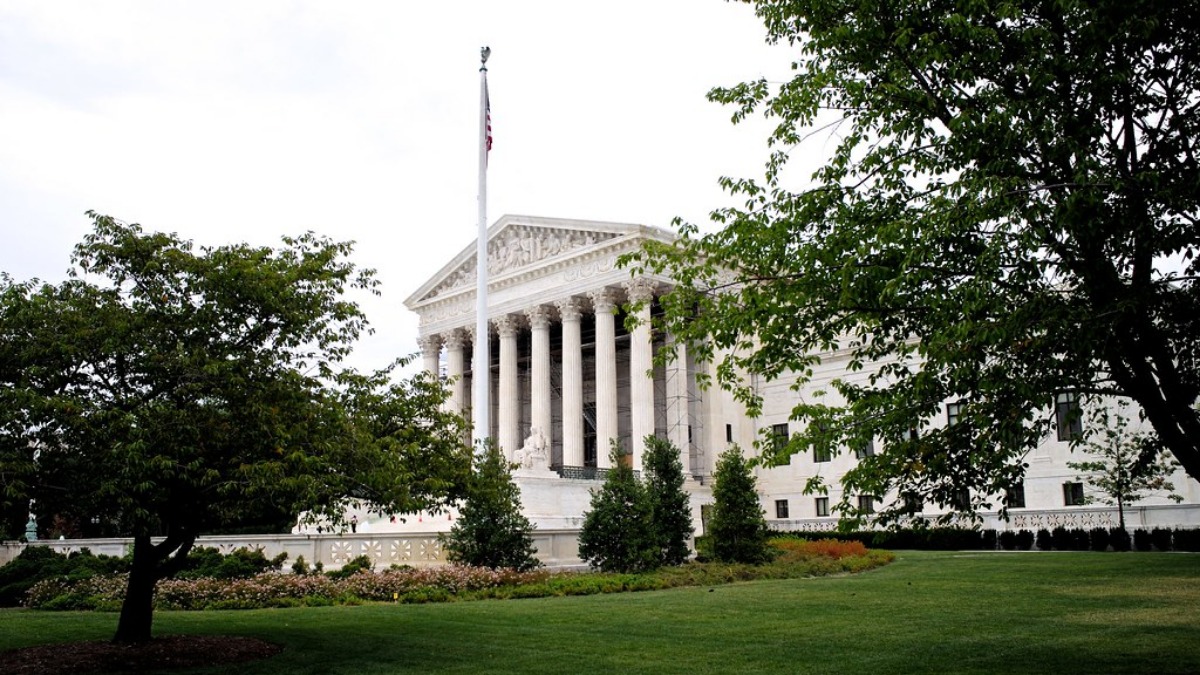

The Supreme Court’s reputation as a neutral arbiter of the law is taking a beating, and Chief Justice John Roberts is pushing back. Speaking at a conference in Hershey this week, Roberts defended the court against what he called a fundamental misunderstanding: the idea that justices are just “political actors” making decisions based on policy preferences rather than legal principles, NBC News reported.
Roberts didn’t hold back in his frustration. “I think at a very basic level, people think we’re making policy decisions, [that] we’re saying we think this is what things should be as opposed to this is what the law provides,” he said. “I think they view us as truly political actors, which I don’t think is an accurate understanding of what we do.”
He doubled down on the idea that the court isn’t just another branch of the political machine, arguing that its role is to interpret the law, even when the results are unpopular. “One of the things we have to do is issue decisions that are unpopular,” he said. Those rulings, he insisted, are “based on our best effort to figure out what the Constitution means and how it applies.”
With the Supreme Court’s recent rulings on abortion, gun rights, and voting rights, it’s not hard to see why so many Americans are skeptical
The court’s 6-3 conservative majority, cemented by three appointments during a single administration, has delivered a string of landmark decisions that have reshaped American law, often along partisan lines. The 2022 decision overturning Roe v. Wade, which eliminated the constitutional right to abortion and sent the issue back to the states. That ruling reinforced the perception that the court is less about legal precedent and more about ideological outcomes.
Then there’s last week’s decision on Louisiana’s congressional maps, which struck down a second majority-Black district as an unconstitutional racial gerrymander. The 6-3 ruling weakened a key provision of the Voting Rights Act, a law that has been a cornerstone of efforts to combat racial discrimination in voting. Justice Elena Kagan called the decision a “now-completed demolition” of the Voting Rights Act. In a 48-page rebuke, she wrote that the court’s ruling “puts that achievement in peril” and “betrays its duty to faithfully implement the great statute Congress wrote.”
Roberts didn’t mention the Louisiana case or any other specific ruling in his remarks, but the timing of his defense is hard to ignore. The court’s conservative majority has repeatedly sided with Republican-led states on issues like abortion, gun rights, and voting, while its liberal justices have found themselves in the minority, issuing increasingly sharp dissents.
Kagan’s language in the Voting Rights Act case was a warning. “I dissent because the Court’s decision will set back the foundational right Congress granted of racial equality in electoral opportunity,” she wrote. That’s not the kind of statement you make when you think the court is operating above the political fray.
Roberts did acknowledge that criticism of the court is fair game up to a point. “We’re not simply part of the political process, and there’s a reason for that, and I’m not sure people grasp that as much as is appropriate,” he said. But he also drew a line, warning that attacks on judges as individuals, rather than their rulings, cross into dangerous territory.
“As soon as that happens, that’s not appropriate, and it can lead to very serious problems,” he said. It’s a valid concern, especially in an era where threats against judges are on the rise. But it’s also a tough sell when the court’s decisions so often break along ideological lines, with the conservative majority consistently delivering wins for one side of the political spectrum.
The court’s rightward shift is the result of a deliberate strategy to reshape the judiciary, one that included the appointment of three justices in quick succession. The most controversial was Amy Coney Barrett, who was confirmed just weeks before the 2020 election after the death of liberal icon Ruth Bader Ginsburg. Barrett’s confirmation solidified the conservative majority, and the court hasn’t looked back since. The justices she joined, Brett Kavanaugh and Neil Gorsuch, were also appointed during the same administration, and together, they’ve formed a bloc that has repeatedly sided with conservative priorities.









Published: May 7, 2026 07:00 pm