



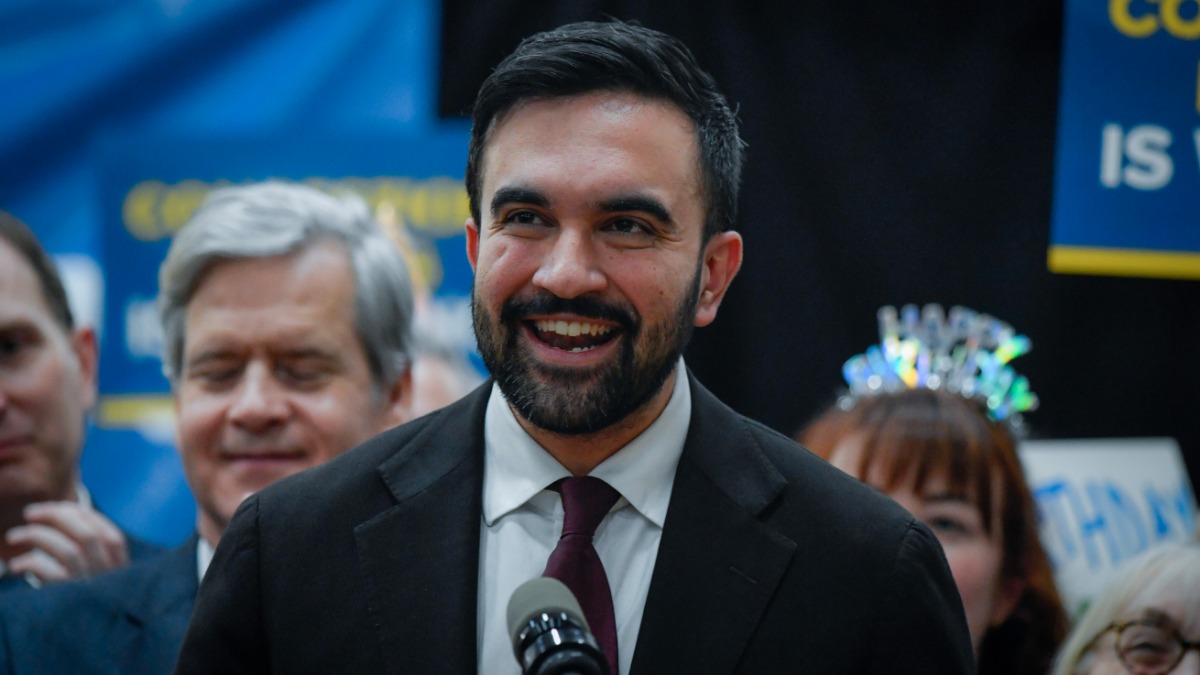

Mayor Zohran Mamdani has officially closed New York City’s $12 billion budget gap, bringing the city back from what he described as “an existential fiscal brink,” CBS News reported. The new $124.7 billion budget proposal manages to avoid a 9% property tax hike while relying on a mix of state aid, internal savings, and new taxes on the wealthy. It is a major shift in how the city handles its finances, and Mamdani is clearly leaning into his platform of making the city more hospitable for working New Yorkers.
The mayor’s path to a balanced budget was anything but simple. After releasing a preliminary proposal 12 weeks ago, Mamdani used the threat of a property tax increase to push for more support from Albany. He noted that his team worked aggressively to shrink the deficit, eventually bringing it down to zero.
“In the month that followed, we took aggressive steps to tackle the deficit, and drove it down to $5.4 billion. Today, after three more months of painstaking work, I am proud to announce that we have closed the gap entirely down to zero. It has not been easy, but we have balanced the budget, and we have done so without placing the burden on the backs of working New Yorkers,” Mamdani said.
The gap was filled through $4 billion in state aid and $1.77 billion in internal savings, largely achieved by improving efficiencies and leaving vacant positions unfilled
The mayor explicitly stated that he would not touch the city’s rainy day fund. He credited his collaborative relationship with Gov. Kathy Hochul for the turnaround, marking a departure from the tensions that often defined the relationship between City Hall and Albany in the past. “For years, the relationship between City Hall and Albany has been defined by dysfunction and infighting. Gov. Hochul and I, however, share a belief that government works best when we work together on behalf of the people we serve. So we have worked together through every step of this process,” Mamdani said.
A key component of this plan is a new pied-à-terre tax on luxury second homes, which is expected to bring in $500 million annually. While the specifics of the tax, such as the exact rate, are still being hammered out, the proposal has already drawn heat from high-profile figures.
Citadel CEO Ken Griffin, who was singled out by the mayor during the rollout, expressed concern about the potential flight of top taxpayers. “With 1% of New York taxpayers paying 45% of all the taxes, the city is in a precarious position if they make those who create value feel like they’re best off moving their businesses and their lives to other jurisdictions,” Griffin said.
The mayor remains optimistic about the city’s ability to retain talent and business leaders. When asked about the risk of losing the tax base, Mamdani emphasized that safe streets and a stable environment are the best ways to keep people in the city. He also pointed to the work of his administration’s chief savings officers, who identified significant efficiencies across city agencies.
Unlike in previous years, this budget avoids the annual cycle of cutting funding for libraries, parks, and cultural institutions only to restore it later. Instead, the mayor has raised the baseline for these services, allocating $31 million for libraries, $15 million for parks, and $10 million for cultural institutions.
Not everyone is on board with this new approach. Republican Nassau County Executive Bruce Blakeman criticized the state’s contribution, calling it daylight robbery. “Kathy Hochul just committed the largest daylight robbery in New York history, looting $4 billion from your family’s grocery and rent budget to bankroll Zohran Mamdani’s socialist experiment,” Blakeman said.
Despite the pushback, Mamdani views the budget as a win for long-term stability. “I see this as a win, not just for our administration, but for the city of New York. A win to ensure that the city is back on firm financial footing,” he said.




Published: May 13, 2026 09:45 am