



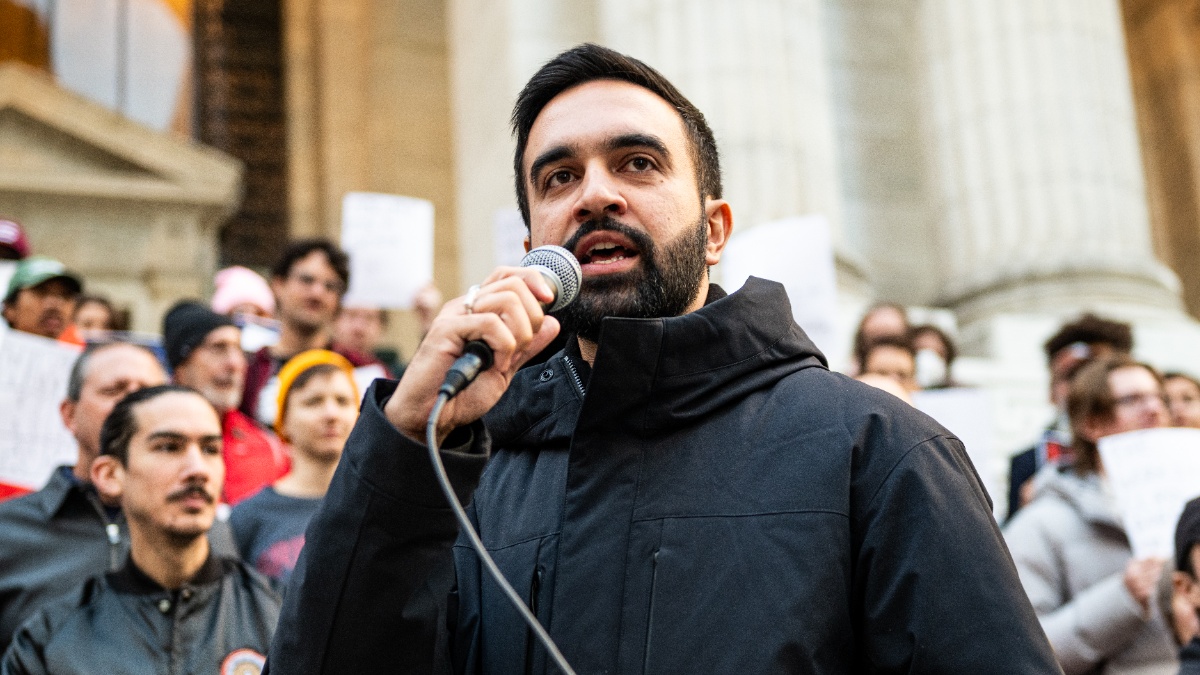

Mayor Zohran Mamdani has become the first major American politician to publicly commemorate Nakba Day, a move that is already causing quite a stir among Jewish leaders in New York. Shortly before sundown on Friday, the mayor shared a four-minute, documentary-style video produced by City Hall that highlighted the displacement of hundreds of thousands of Palestinians during the events of 1948, the New York Times reported.
For Palestinians, this period is known as the Nakba, which translates to ‘catastrophe’, marking the loss of their land during the creation of Israel. The video featured an interview with Inea Bushnaq, who shared her personal experience of being displaced with her family when she was just nine years old. In the footage, Ms. Bushnaq notes that she has lived in various places, including Italy and England, but says, “In this diverse city I feel most at home, since leaving Palestine.”
Mamdani used his social media presence to frame the video as an important historical acknowledgment. “Inea is a New Yorker and a Nakba survivor,” Mamdani said. “She shared her story with us — one of home, tradition and memory over generations.” The video itself was interspersed with text blocks that provided historical context, including references to United Nations reports and the work of various historians.
Zohran Mamdani is leaning into his support for Palestinian rights and history, which has been a consistent theme throughout his tenure
This public recognition is a significant departure from the practices of previous New York City mayors. In fact, his approach to these commemorative days has been quite intentional. While Israel’s independence day fell on Thursday, Mamdani did not mark the occasion. Furthermore, his office has confirmed that he will not be in attendance at the Israel Day parade scheduled for the end of May.
This shift in posture has drawn sharp criticism from some Jewish leaders who argue that ignoring one event while highlighting another is inherently divisive. Mark Botnick, a former aide to Mayor Michael Bloomberg, expressed his frustration before the Sabbath began on Friday night.
“This reflects Mayor Mamdani’s continued disregard for the concerns of the Jewish community and his tendency to deepen divisions at a moment when leadership should be focused on bringing people together in extremely complex times,” Mr. Botnick said.
There is also a significant amount of friction regarding the timing of the post. The UJA-Federation of New York pointed out that the video was shared at 5:40 PM on Friday, just as Jewish New Yorkers were preparing to light Shabbat candles.
Because many observant Jews turn off their electronic devices during the Sabbath, the timing was viewed by some as an additional point of contention. The organization also criticized the content of the video for omitting broader historical context, such as the 1948 war between Israel and various Arab states, as well as the displacement of Jews from Middle Eastern countries. “And you chose 5:40 p.m. on Friday to post it — as Jewish New Yorkers prepare to light Shabbat candles,” the organization stated in a social media post. “We noticed.”
The debate over the founding of Israel remains incredibly intense, particularly in New York, which hosts the largest populations of both Muslims and Jews in the United States. For many Jewish people, the founding of Israel is viewed as a triumph following millennia of persecution and the horrors of the Holocaust. Conversely, many Palestinians view the same era as the start of a national trauma involving violence and displacement that continues to impact them today.
Mamdani has long been associated with these views. As the city’s first mayor identified with the Democratic Socialists of America, he has been vocal about his support for boycotting Israel, a stance he held even before his time in office. His background includes founding a chapter of Students for Justice in Palestine during his time at Bowdoin College.
While his supporters see his latest move as a long-overdue recognition of Palestinian history, the political divide in the city remains wide. Asad Dandia, an ally of the mayor and the official historian of Brooklyn, praised the move on social media, writing, “For the first time in the history of the Great City of New York, its Mayor names and remembers the Nakba. And I get to be alive to see it.”
The mayor has faced pressure on these issues for some time, including past scrutiny regarding his stance on the phrase “globalize the intifada.” While he declined to condemn the phrase during his campaign, he later clarified that he had never used it himself and would discourage others from doing so. Amidst rising hate crimes against both Jewish and Muslim communities, the environment in the city remains tense.
Mamdani has spoken out against recent protests targeting real estate events for Israeli settlements, and he labeled the hate driving a recent, alleged plot against a local synagogue as “despicable.”






Published: May 20, 2026 03:30 pm