



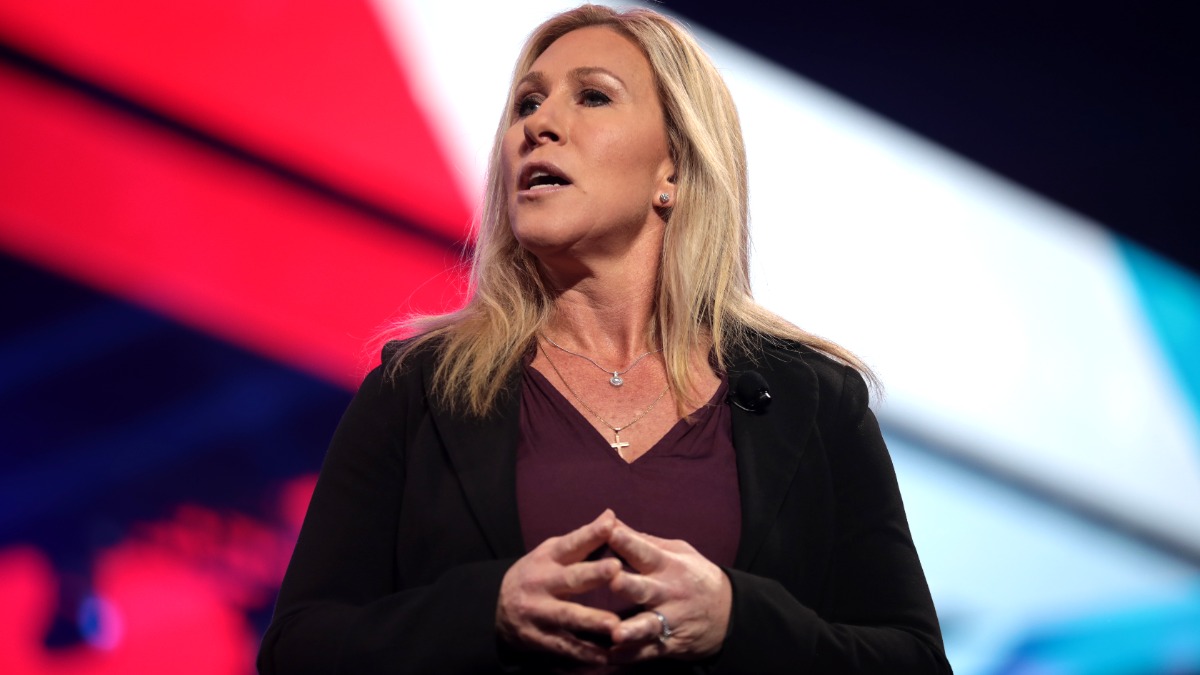

Marjorie Taylor Greene, the former representative from Georgia, is voicing serious concerns that President Trump might leverage the ongoing war in Iran as a justification to cancel the 2028 presidential election. These remarks, shared during an interview with Alex Jones, highlight a significant shift in her relationship with the current administration.
Greene, who once stood as a steadfast ally to the president and a prominent voice within the MAGA movement, resigned from her congressional seat in January following a public split with the White House. Her current stance reflects a growing tension within conservative circles regarding foreign policy and the adherence to constitutional norms.
The core of Greene’s apprehension stems from a 2025 interaction between President Trump and Ukrainian President Volodymyr Zelensky. During that meeting, the two leaders discussed the status of elections in Ukraine, which have been postponed due to the nation’s ongoing conflict with Russia.
Greene noted that given her history with the president, she is skeptical of his true intentions behind such rhetoric
Trump reportedly remarked to Zelensky, “So, you say, during the war, you can’t have elections? Three and a half years from now, so you mean if we happen to be in a war with somebody, no more elections? Oh, that’s good.” While Greene acknowledged during her conversation with Alex Jones that the president likely intended the comment as a joke, she admitted that she cannot be entirely certain.
Greene emphasized that even if the remarks were framed as humor, the underlying sentiment is deeply concerning. She argued that the president’s casual discussion about extending executive power during periods of conflict risks normalizing the idea while he simultaneously gauges the level of support for a hypothetical third term.
For Greene, this is a line that cannot be crossed. She stated, “I think it’s incredibly dangerous and no one should ever accept it.” She further clarified her position by noting, “There cannot be a third term, no. That’s against our laws, that’s against the Constitution, there is no third term.” Her insistence on maintaining the integrity of the electoral process, regardless of international military engagements, underscores the intensity of her current critique.
The 22nd Amendment explicitly prohibits any individual from being elected to the office of the president for more than two terms. Despite this clear legal barrier, the topic has surfaced multiple times throughout the current administration. President Trump has occasionally made light of the prospect of a third term, though he has also conceded that he understands he cannot legally run again.
Earlier in the administration, he stated that while many people have expressed a desire for him to seek a third term, he prefers to focus on the current workload, stating, “I like working.” Still, the conversation persists among his supporters and political allies.
In September 2025, Senator Lindsey Graham of South Carolina publicly expressed a desire to see Trump remain in office beyond his current term limit. During an appearance on Fox News with Sean Hannity, Graham remarked, “Trump 2028. I hope this never ends.”
This sentiment came during a discussion regarding Trump’s approach to the war in Ukraine and his efforts to deter Russian aggression against NATO allies. Graham defended the president’s strategy, suggesting that while Trump does not want to provoke a direct conflict with Moscow, he is actively working to facilitate defense for Ukraine. He cited the president’s decision to allow NATO nations to purchase weapons for use in the conflict as an example of this pragmatic approach.
The fracture within the MAGA coalition is not limited to the potential for a third term. The war in Iran has become a significant point of contention among prominent conservative figures. Influential voices like Megyn Kelly and Tucker Carlson, who were instrumental in supporting the president’s 2024 bid for the White House, have recently criticized the United States operation in Iran.
They argue that the current military involvement represents a reversal of the America First campaign pledge that initially defined the president’s platform. This internal dissent, combined with Greene’s frustration over the administration’s handling of files concerning convicted sex offender Jeffrey Epstein, illustrates a widening rift.








Published: May 22, 2026 07:00 pm