



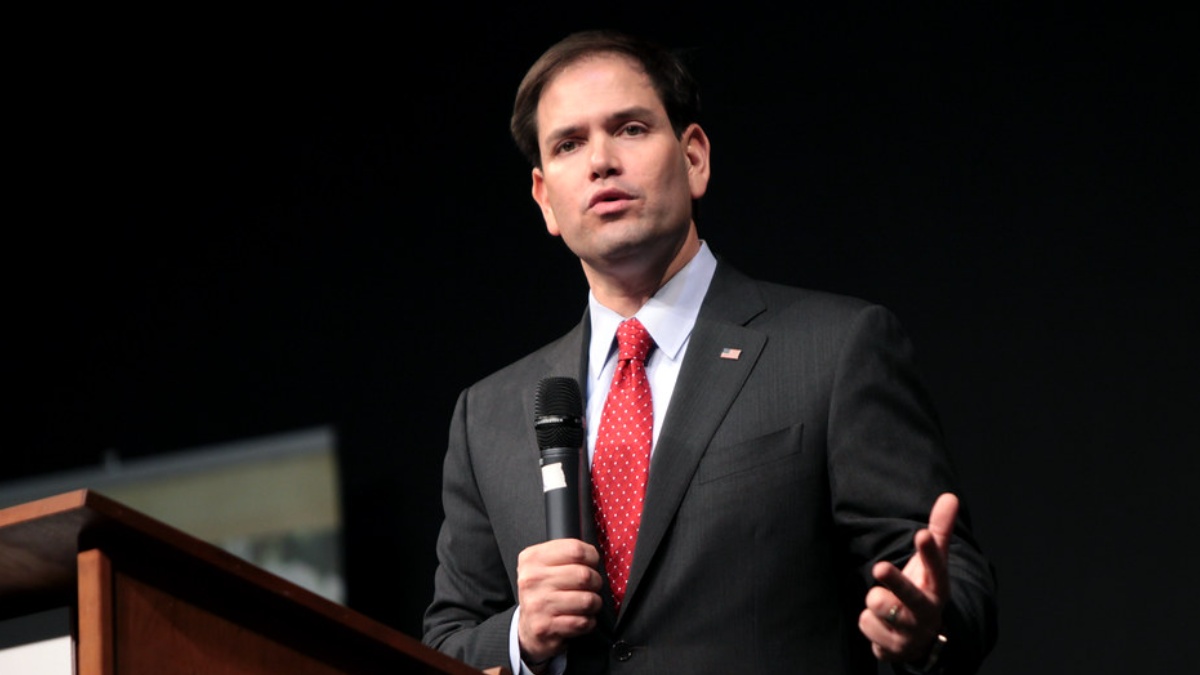

U.S. Secretary of State Marco Rubio confirmed that Greenland remains part of Denmark “for now,” even as the administration continues to navigate complex discussions regarding the island’s future role in Western security, Politico reported. During his testimony before the House Foreign Affairs Committee, Rubio carefully avoided answering whether the United States needs to own territory within NATO to effectively defend it. Instead, he emphasized that Washington is actively engaged in ongoing talks with both Denmark and Greenland to solidify the island’s importance in collective defense strategies.
The administration clearly views the Arctic island as a vital component of its broader missile defense capabilities. Rubio noted that the U.S. is involved in conversations with Greenland and Denmark on the use of Greenland for collective defense for all of us. He expressed a sense of optimism about these discussions, telling the committee that he thinks we’re in a good place on it now and predicting that pretty good news could emerge from the talks. These comments arrived right as Danish Prime Minister Mette Frederiksen unveiled a new coalition government.
President Donald Trump has repeatedly stated that the U.S. needs the island for national security purposes, often citing a need to counter Russian and Chinese influence in the region. While some officials within the administration have pointed to the U.S.-Greenland Joint Committee as a productive framework for cooperation, the situation has been complicated by the President’s public rhetoric. Trump has previously suggested that the U.S. should be the nation that has Greenland as part of its overall security apparatus, and his administration has even appointed special envoys to explore the possibility of making the island a part of the U.S.
The ongoing friction regarding Greenland stems from a long series of geopolitical tensions
The geopolitical stakes are high, especially given the vast, untapped resources located on the island. According to an assessment by the U.S. Geological Survey, Greenland contains approximately 31,400 million barrels of oil equivalent of oil, along with significant natural gas reserves and critical minerals like uranium and graphite. Despite these potential assets, the diplomatic fallout has been significant.
European leaders, including Finnish President Alex Stubb and British Prime Minister Keir Starmer, have voiced support for Denmark, warning against any American attempt to seize control of the territory. Prime Minister Frederiksen has been particularly vocal about the risks, stating, if the U.S. chooses to attack another NATO country militarily, then everything stops, including NATO and thus the security that has been established since the end of the Second World War.
The atmosphere within the alliance has further soured following several recent incidents. Relations deteriorated significantly in February when the U.S. and Israel attacked Iran, leading several European capitals to refuse military support. Madrid denied access to its air bases, and other EU nations declined to send naval vessels to assist in reopening the Strait of Hormuz. These tensions were compounded in April when Trump floated the idea of leaving the alliance, followed by his order to withdraw 5,000 U.S. troops from Germany in early May.
Denmark has already taken steps to address security concerns in the region independently. In November, the nation announced a $4.26 billion investment plan to boost its security capabilities in the Arctic, which includes procuring two Arctic patrol ships, maritime patrol aircraft, a new early-warning radar, and extensive drone systems. This plan stands in contrast to the President’s earlier dismissive remarks about Denmark’s contributions to Arctic security.
As we look toward the future of the transatlantic relationship, all eyes are on the upcoming NATO summit. Rubio has framed the July 7-8 gathering in The Hague as a pivotal moment for the alliance, predicting it could become the most important gathering in the alliance’s history. Whether the administration can bridge the gap between its desire for greater control over Arctic territory and its commitments to its European allies remains to be seen.
For now, the administration continues to emphasize that it is working closely with the government of Denmark and the government of Greenland on closer security and economic cooperation, even as the broader diplomatic landscape remains strained by the President’s unpredictable approach to international alliances and territorial claims. It’s a delicate balancing act that will likely define much of the discourse at the upcoming summit in The Hague.









Published: Jun 4, 2026 05:15 pm