



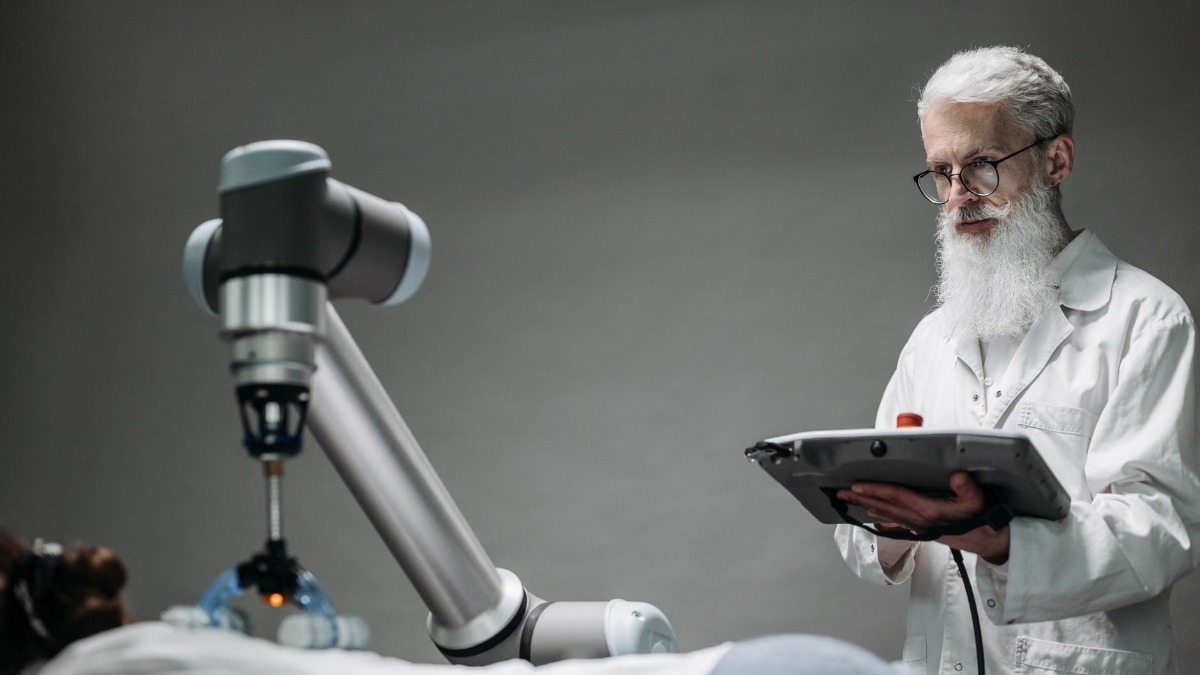

Humanoid robots are getting closer to the operating room than ever before after completing two gallbladder removal surgeries under the guidance of human surgeons. While the robots handled the procedures, they did not make any medical decisions on their own, making the milestone a major step toward future robot-assisted surgery rather than fully autonomous operations.
The surgeries marked the first time general-purpose humanoid robots performed a laparoscopic gallbladder removal procedure of this kind. Although no human patients were involved, the operations were carried out on live pigs to test whether these robots could reliably assist with or eventually perform surgical tasks that have traditionally required a surgeon’s hands in the operating room.
According to BroBible, surgeons from the University of California, San Diego remotely controlled the humanoid robots throughout both procedures. The study was designed to explore whether this technology could help expand access to surgery in places where trained surgical teams are difficult to find.
This feels like a glimpse of what future operating rooms could look like
The first operation involved a UC San Diego humanoid robot working alongside a human assistant while a qualified veterinarian monitored the pig’s anesthesia and overall condition. The second procedure took the concept a step further, with two humanoid robots working together to complete the same gallbladder surgery as experienced surgeons guided them remotely from another location.
Robots are also becoming more common outside healthcare, although the results have been mixed. Recently, an Ohio police department deployed a robotic security unit to patrol a parking garage, but the experiment quickly drew attention after the machine failed to perform as expected.
Michael Yip, one of the study’s senior authors, said remotely operated and autonomous humanoid robots could significantly improve access to critical surgeries for patients who might otherwise go without treatment. He believes the technology could also help ease healthcare staffing shortages across the United States and around the world.
Yip said the study shows humanoid robots have a practical future in surgery. He added that they could eventually be deployed in remote communities with limited medical staff, as well as in demanding environments such as search-and-rescue missions where field hospitals must be established quickly.
Dr. Shanglei Liu, another senior author of the study, said the robots cost only a fraction of traditional robotic surgical systems while requiring far less operating room space. That smaller footprint could make them easier to deploy in rural hospitals, battlefield medical units, and even future space missions.
Looking ahead, the research team envisions humanoid robots becoming increasingly capable of assisting during surgeries without depending entirely on remote human control. Yip noted that many communities struggle to maintain fully staffed surgical teams, leaving patients with limited access to care.
He said the long-term goal is an operating room where humanoid robots and human surgeons work side by side as an integrated team, delivering procedures in hospitals as well as resource-limited field medicine settings. As robots continue taking on more specialized tasks, they are also becoming increasingly visible in everyday life. A recent viral video of a grocery store robot named Tally sparked a broader conversation about how AI-powered machines could reshape the future of work.









Published: Jul 16, 2026 07:00 pm