



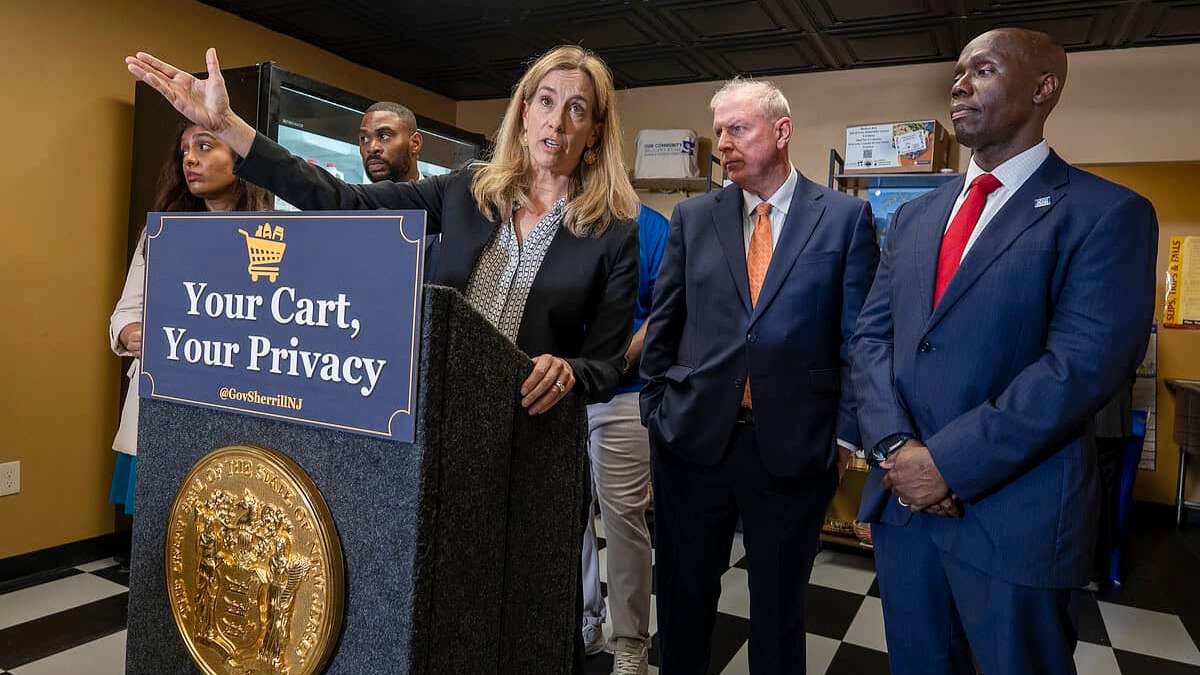

New Jersey is officially taking a stand against the practice of surveillance pricing in grocery stores. Governor Mikie Sherrill signed the Fair Price Protection Act into law on Thursday, marking a significant change for shoppers who want to ensure they aren’t being targeted by opaque algorithms. The new rules take effect August 1, 2027, and they aim to stop retailers from using your personal data to guess exactly how much you are willing to pay for your groceries, The Jersey Vindicator reported.
This legislation specifically targets the use of digital history, biometric information, and genetic data to tailor prices to individual shoppers. It is a proactive step to ensure that everyone gets access to the same price, rather than having a computer decide that you might pay more than your neighbor for the exact same item.
Governor Sherrill highlighted the risks during a bill signing at Our Community Grocery Store in Newark. She stated, “Surveillance pricing weaponizes your data against you.” She further explained, “Companies figure out where you live, where you shop, and even what you’re Googling, and they use that data to calculate specific, often higher, prices for items you need without your knowledge.”
If a grocery store is found using these practices, they could face significant consequences
The state attorney general or individual consumers can sue businesses, leading to potential refunds, loss of permits, and hefty fines. These penalties reach up to $10,000 for a first offense and $20,000 for later violations under the state’s Consumer Fraud Act.
It is important to note that this law does not ban all forms of dynamic pricing. If a store changes prices based on general demand, that is still permitted. However, the state is taking a cautious approach toward technology. The law includes a one-year pause on electronic shelf labels while officials study whether these digital displays could be used to enable unfair pricing. Governor Sherrill noted that this pause will allow the state to evaluate the labels “to make sure they aren’t hurting New Jersey’s shoppers or workers.”
The legislation passed both houses of the Legislature on June 30. Supporters believe this is a necessary move to protect families from rising costs. Antoinette Miles, director of the New Jersey Working Families Party, praised the move by stating, “Big corporations have turned grocery shopping into a surveillance operation, and we’re all paying more because of it. They track what we buy, where we live, and where we shop to figure out how they can charge each of us as much as possible.”
Not everyone is on board with the new requirements. Michele Siekerka, President and CEO of the New Jersey Business & Industry Association, expressed concern that the law could lead to the unintended loss of existing benefits. She argued, “In the end, this law will compromise the very cost-saving programs that consumers rely on, particularly during an affordability crisis.” Despite these concerns, the law explicitly states that it does not apply to standard loyalty programs, coupons, or general promotions.
New Jersey is now the third state to implement such a ban, joining Maryland and Connecticut. Similar efforts are moving forward in other states, including New York, where legislation awaits the signature of Governor Kathy Hochul. This legislative action follows the recent signing of the FAIR Act, which stops landlords from using algorithmic software to set rent prices.
By moving to regulate how data influences our daily expenses, New Jersey is setting a clear path for consumer protection in an increasingly digital world.









Published: Jul 26, 2026 03:30 pm