



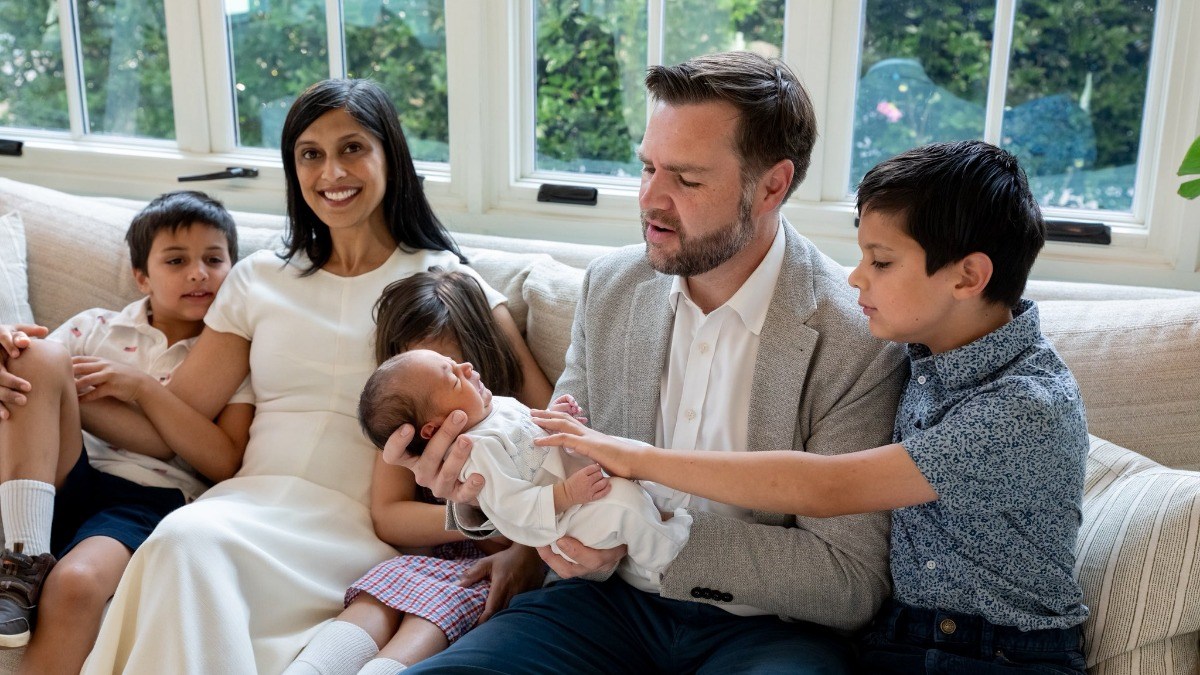

People familiar with internal talks said the Trump administration is preparing to let married couples collect child care subsidies when one spouse stays home, The New York Times reports. Vice President JD Vance has backed the idea. Officials want to tap a Health and Human Services fund set up in the 1990s so low-income and working-class parents could pay for care while they held jobs or attended school.
Those people said a draft rule would let stay-at-home parents draw from the same program, which usually pays about $9,000 a year per child. They described the shift as the first federal subsidy that would pay parents to remain home and raise their children. Accounts of the plan called it one of the administration’s largest moves so far to steer federal money toward a traditional family model.
Health Department figures show that about 80 percent of the 870,000 families now receiving the subsidies are headed by single working parents, most of them mothers. Critics said the change could pull dollars away from working parents and the providers who serve them, leading some centers to raise prices or shut down.
Draft rule would open existing child care pot to married stay-at-home spouses
Several people close to the talks said the White House is driving the effort and that Vance treats it as a leading priority. The draft also folds in ideas from bills Secretary of State Marco Rubio wrote while serving as a Florida senator. Spokespeople for the White House, Vance, and the Department of Health and Human Services did not reply to requests for comment.
Vance’s wife Usha, once a corporate lawyer, had their fourth child in July. He has for years urged more mothers to stay home with young children and has pressed to open subsidy programs to “kinship care.” In a 2021 Wall Street Journal opinion piece he co-wrote, he argued day care can harm children and wrote, “Young children are clearly happier and healthier when they spend the day at home with a parent.”
That same year, he posted on Twitter that “normal Americans” want a “family policy that doesn’t shunt their kids into crap day care so they can enjoy more ‘freedom’ in the paid labor force.” Pew Research Center data show that more than 80 percent of stay-at-home parents are mothers. Some family-policy specialists said the rewrite would leave working parents who already struggle to pay for care worse off.
Joshua McCabe, social-policy director at the Niskanen Center, said, “I am a big proponent of more support for stay-at-home parents. But this is not how I would choose to do it.” He added, “Expanding the eligibility without increasing funding would mean more parents competing for the same dollars, and leaving more parents, particularly single working parents, worse off.”
The Child Care and Development Fund totals $12 billion and is run by the Administration for Children and Families. It dates to the Clinton years and was built to help low- and moderate-income parents stay employed. The program covers children through age 13 and now helps pay for about 1.3 million of them.
States receive most of the money and pass it to families as vouchers or deposits sent straight to providers. To qualify, a parent’s income must fall below 85 percent of the state median, or 60 percent in some states, and the parent must be working, studying, or in job training.
The draft would keep that same funding pool and add married couples who meet the income test when one spouse works and the other stays home. Officials described the payments as a way to offset the income the stay-at-home parent forgoes.
A draft document seen by The Times said the plan “creates the option for a new category of care, parent-based child care, that will allow one married parent to receive C.C.D.F. assistance to care for their own child, while a spouse works at least 35 hours per week.” Couples who are not married would be left out. Single parents who do not work are ineligible today and would remain ineligible.
The text could still change before it is published. It would need White House sign-off, a public-comment period, and could take effect as early as next year. People familiar with the work said some department lawyers have asked whether a marriage requirement is legal. Others flagged a higher fraud risk because checks would go to individuals instead of licensed businesses.
Project 2025, the Heritage Foundation policy book, already sketched the same concept. It states, “Instead of providing universal day care, funding should go to parents either to offset the cost of staying home with a child or to pay for familial, in-home child care.”
This push for valuing stay-at-home parents intersects with ongoing public discussions about domestic labor, such as when a stay-at-home woman revealed her working husband helping with household chores.
Roger Severino, the Heritage vice president who wrote that chapter, said, “You don’t need statutes to do it, and with existing programs we can end discrimination against stay-at-home parents.” He also said, “It would be a welcome change to see equal treatment between commercial day care and the contribution stay-at-home parents provide in caring for and raising the next generation,” and added, “It doesn’t get more pro-family than that.”
Alex Adams, who leads the Administration for Children and Families, wrote governors on Mother’s Day that policy shifts were coming and told them to use every available flexibility so federal dollars “support married two-parent families,” especially “families who choose to have a parent remain at home with young children.”
Specialists said some states could end up sending a large share of the money to stay-at-home parents. Idaho, Wyoming, and Utah lawmakers have already pressed for state rules that favor those families. Providers that depend on the subsidies, about 225,000 of them, could lose enough tuition to close.
Krystal Gastineau runs Cribs 2 Crayons in Aurora, Colorado. She said subsidies cover about half her enrolled children and arrive by direct deposit. The debate over childcare subsidies extends to local initiatives, such as when Mayor Mamdani introduced a Parents Night Out program to offer free babysitting in NYC.
“If they could, I think parents would choose to take the money and stay home,” she said. “That would take away a major source of income.” She also said, “I think that’s a misuse of the system.” Lezlie Cranston of Auburn, Washington, uses the aid for her 4-year-old son, Ricky and 2-year-old daughter Samantha, while she studies for a certificate at Skagit Valley College.
The payments have “helped tremendously with allowing me to do my coursework,” said Cranston, who is a single parent. She added, “But changing it to let the money go to stay-at-home parents is going to create conflict between parents,” and “That’s a bad situation. We’re already trying to figure out how more working parents can get the subsidies. This could lead to single parents not being able to afford child care again.”





Published: Sep 6, 2026 11:15 am