



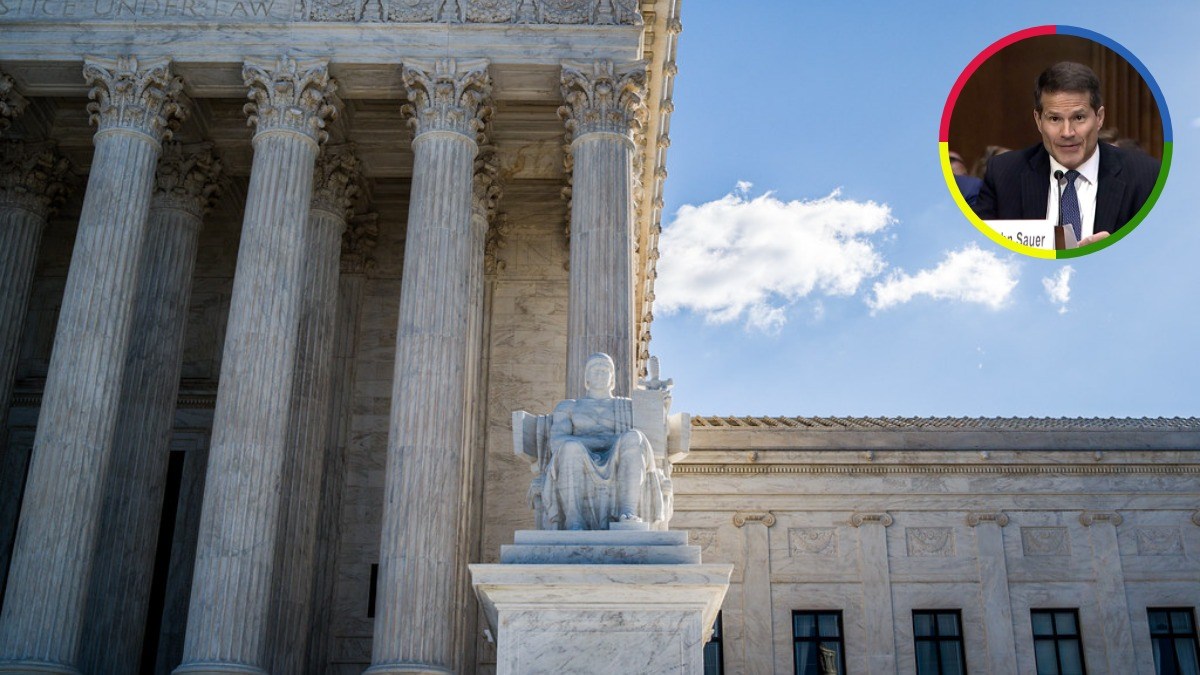

Trump’s administration is taking its fight over a controversial voter database all the way to the Supreme Court. Per CBS, the administration has asked the justices to let states use the system to check voter rolls for citizenship status. The system, known as the Systematic Alien Verification for Entitlements, or SAVE, was expanded. It now includes Social Security information, records of natural-born citizens and the ability to conduct bulk searches.
A federal judge previously blocked the expanded system after finding that the Trump administration had violated three federal laws in creating it. The judge also found that states had used the database to incorrectly remove U.S. citizens from voter rolls.
Now the Department of Justice is asking the Supreme Court to lift that block. They argue that the lower court went too far and that the federal government should be able to use Social Security information when responding to states seeking citizenship verification.
This could put a powerful new tool in states’ hands
The dispute is bigger than simply checking a name against a government database. The revamped SAVE system can conduct bulk searches. This would allow states to compare large portions of their voter rolls against federal citizenship and immigration records rather than checking people one at a time.
That capability is exactly what voting-rights and privacy groups have challenged. They argue that inaccurate or outdated federal records can cause citizens to be flagged as noncitizens. This can potentially lead to eligible voters being removed from registration lists.
The administration disputes the idea that SAVE itself removes anyone from the rolls. In its Supreme Court filing, it argued that the system only tells states if federal authorities can confirm a person’s citizenship. This would ultimately leave any decision about a voter’s registration to the state.
The Supreme Court has now been asked to decide if the expanded system can operate while the broader legal fight continues. The outcome could determine how much access states have to federal citizenship and Social Security data when reviewing their voter rolls.
For voters, the practical impact could be significant. A Supreme Court ruling allowing the system to proceed would give states a much broader federal database to use when checking voter eligibility. Simultaeneously, it would leave unresolved questions about the accuracy of the underlying records and the privacy protections governing that information.







Published: Sep 9, 2026 01:00 pm