



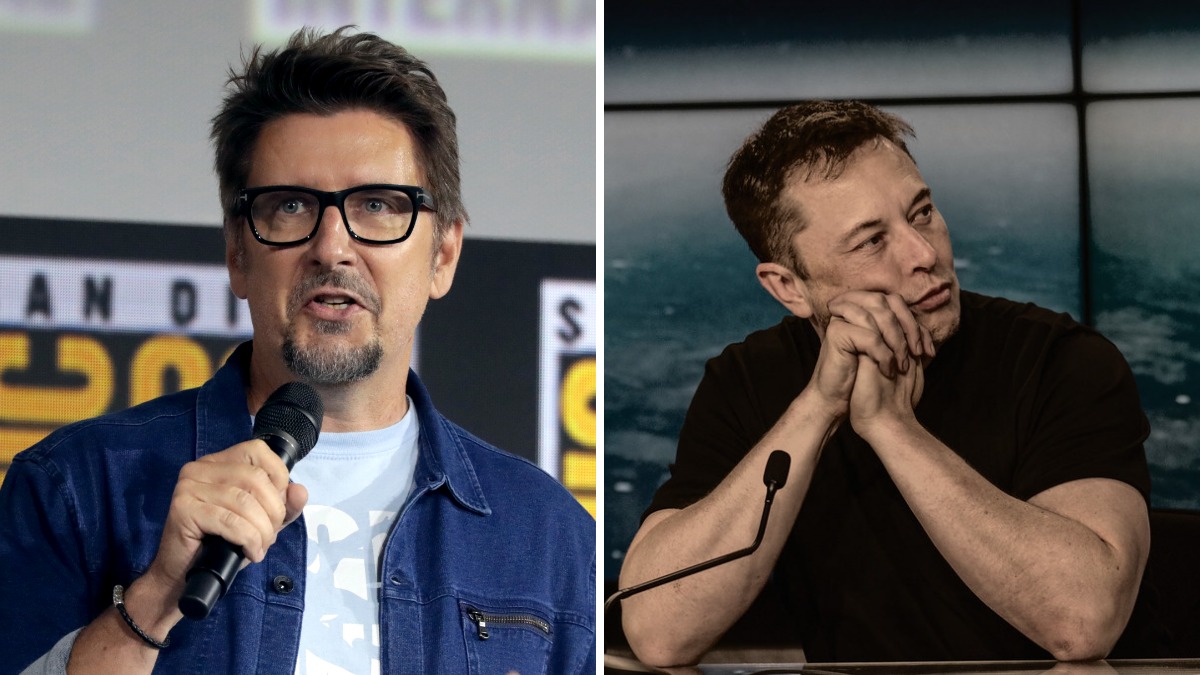

Elon Musk has promised that his AI tool Grok will produce a full-length, historically accurate movie version of The Odyssey before the end of the year. This claim follows a period of intense scrutiny from the billionaire regarding Christopher Nolan and his recent film adaptation of the epic poem. Musk even shared a three-minute clip of an AI-generated scene on X to show what his technology can accomplish.
Scott Derrickson, the director behind Doctor Strange and The Black Phone, did not hold back when he saw these claims. He took to X to voice his frustration with the tech mogul. “Clearly @elonmusk doesn’t know s— about cinema & he stopped reading in his 20s,” Derrickson wrote. He continued his assessment by stating, “His opinions on art are worthless.” He is clearly pushing back against the idea that an AI tool can replicate the nuance of professional filmmaking.
Musk has been vocal about his dislike for Nolan’s take on the classic story for quite some time. His primary issue appears to be rooted in specific casting choices that he believes are politically motivated. Back in March, he attacked the director for casting Lupita Nyong’o as Helen of Troy.
This is not the first time Musk has used X to criticize major film releases
Musk claimed that “Chris Nolan is an anti-White racist” and alleged that the decision was made because “he wants the awards.” He went on to say that “Chris Nolan has lost his integrity” and labeled the casting an “insult” to Homer. He also targeted Elliott Page, who portrays Sinon in the movie, by reposting comments that mocked the actor.
Musk has previously mocked the feminist themes present in Barbie and took aim at the Disney reboot of Snow White featuring Rachel Zegler. His pattern of using his platform to tear down big-budget projects has become a regular occurrence.
Despite the sustained campaign from Musk and his supporters, the public response to the film has been overwhelmingly positive. The Odyssey, which features Matt Damon in a lead role, managed to pull in $264 million worldwide during its opening. The movie remains a massive success, with theaters reporting that screenings are still selling out months after the initial release.
You have to wonder if an AI tool can truly capture the depth of such a complex piece of literature. While the technology is certainly moving fast, most people would agree that cinema requires a human touch that software just cannot replicate. It is going to be interesting to see if Musk actually follows through on his promise to release a full film by the end of the year.
For now, it seems like the audience is much more interested in the work of human filmmakers than in AI-generated experiments. The numbers clearly show that people are still flocking to the theater to see the real thing.



Published: Jul 23, 2026 07:15 pm