



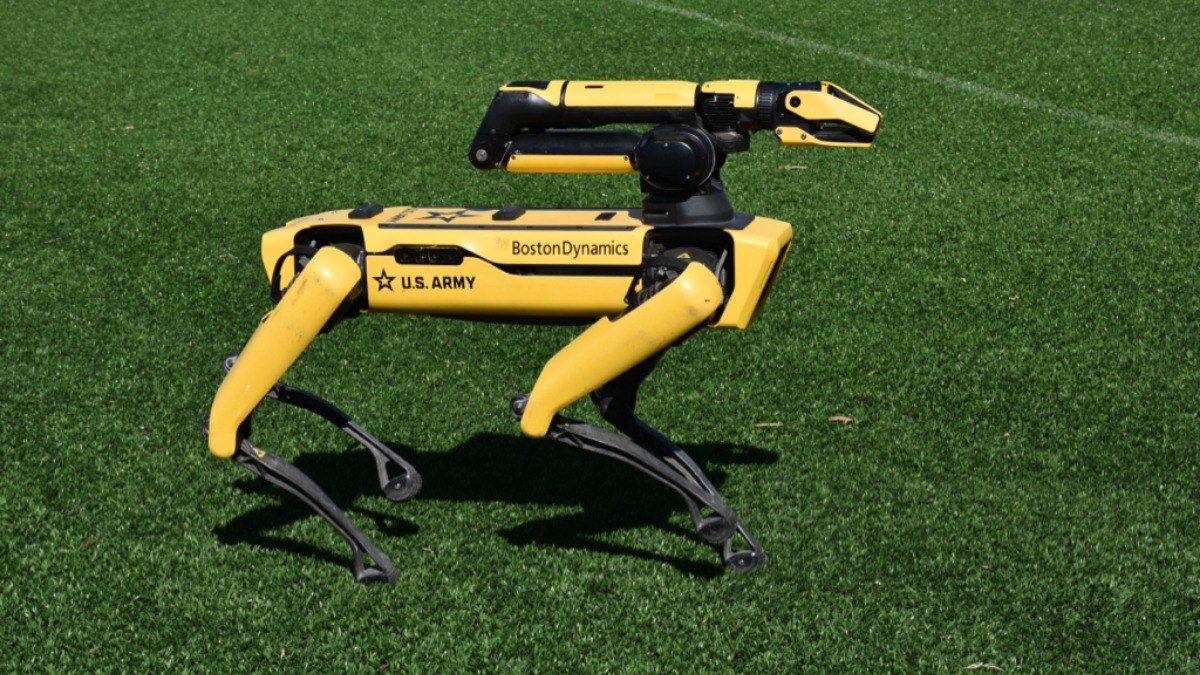

U.S. Immigration and Customs Enforcement is planning to spend up to $2 million on robot dogs to bolster its operations, ABC News reported. This move follows a federal procurement notice detailing the agency’s interest in acquiring the advanced technology for border and infrastructure security.
These machines are the Boston Dynamic SPOT robots, which have become a familiar sight in various law enforcement agencies across the country. You might recognize them from social media videos that went viral in 2024, showing the robot dogs patrolling Mar-a-Lago. It is interesting to note that the Secret Service also utilizes this technology for its own security needs.
The procurement notice explains that these robots will support public safety and law enforcement operations by providing a remotely operated robotic capability for inspection, situational awareness, and hazard assessment in environments that may pose risks to personnel.
The agency expects this technology to help improve officer safety and support informed operational decision-making
Furthermore, the notice stated, “This capability helps improve officer safety, supports informed operational decision-making, and enhances DHS’s ability to respond to incidents involving dangerous, confined, unstable, or difficult-to-access areas.”
These robots come equipped with 360-degree cameras and the ability to open doors. While they are often compared to police dogs, it is important to clarify that they cannot attack like a living canine. They do, however, feature extendable arms that allow them to interact with their surroundings. A video posted by the Los Angeles Police Department in 2023 provides a clear look at how these devices function, showing a robot examining a crime scene for guns and explosives.
This specific purchase is part of a larger trend in gear procurement for the agency. The notice for the robot dogs arrives shortly after the Department of Homeland Security approved spending $16 million for ICE to purchase electric shock gloves to distribute to officers around the country. It is clear that the agency is prioritizing new technology to handle, as they describe them, “dangerous, confined, unstable, or difficult-to-access areas.”
The integration of these robots into federal operations represents a significant shift in how agents might approach inspections and hazardous situations. By using a machine to enter potentially risky zones, the agency aims to keep personnel at a safer distance.







Published: Aug 30, 2026 05:15 pm