


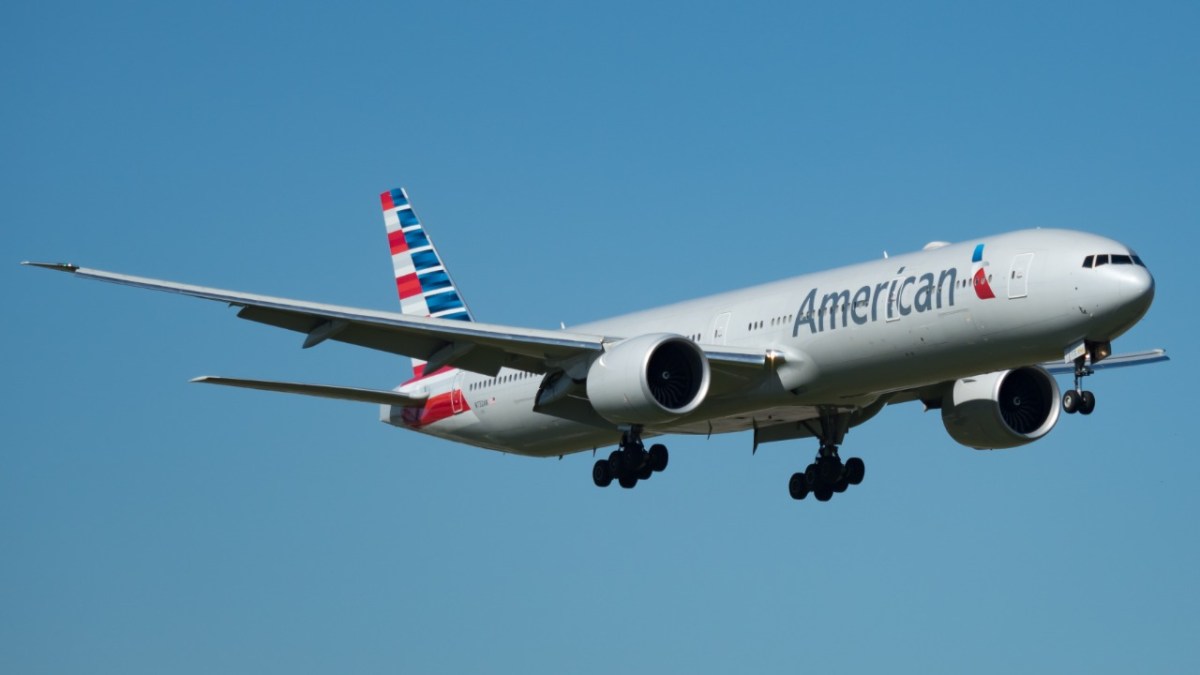

An American Airlines Airbus A319 carrying 120 people declared a Mayday shortly after departing Phoenix Sky Harbor Airport, Arizona, on Thursday. The emergency was highlighted in an Instagram post by FlightDrama (flightdrama), which gained over three million views. The video highlighted a recording of the conversation between an air traffic controller and the crew of flight AA3230 about an observation made by the SkyWest crew departing behind.
The video starts with the controller telling the crew, “The flight departing behind you said that they saw flames coming out of one of your engines and you might be leaking something.” The pilot calmly responded, “All right, we’re working on a hydraulic problem. We plan on coming back to the runway.” When the controller asked for confirmation, the pilot professionally declared their emergency status, saying, “Yes, Mayday, Mayday, Mayday. We’re going to return to Sky Harbor.”
The post noted that the pilots then requested vectors to be able to return to the airport. The tower asked them if they needed to burn fuel, to which the pilot stated, “That’s negative 3230.” The pilot, however, did ask for a delay vector on their approach back in.
The American Airlines crew took the careful way back in
Both the terms “burn fuel” and “delay vectors” are used to ensure a plane’s safe approach to an airport. While running out of fuel is problematic, having too much can also be a safety issue, which is resolved by burning fuel to achieve a safe landing weight, per Simple Flying. A safe landing weight is a weight and balance consideration, that protects a plane’s structural integrity at every stage of a flight.
During landing, a heavy plane “lands faster and harder and needs more runway,” and needs more care to account for a displaced center of gravity. Simple Flying notes that burning fuel is thus the process of circling at the right elevation to use up any excess fuel. The SFO Noise Office notes that a delay vector is a heading that takes a plane off course before bringing it back on the right path. It can be used to account for aircraft traffic or to create space between aircraft.
According to the NY Post, AA3230 was headed to Portland and departed around 4:15 PM. The aircraft landed back at the airport 20 minutes after takeoff. American Airlines confirmed that there was a “mechanical issue” on the flight, necessitating the return, but insisted there was “no evidence of any fire.”
In a statement provided to Fox Business, American Airlines noted, “The aircraft landed safely, taxied to the gate under its own power and was taken out of service to be inspected by our maintenance team.” The airline added, “Customers deplaned normally and re-departed on another aircraft.”
“Safety is our top priority and we thank our team members for their professionalism and apologize to our customers for the disruption in their travel plans.” The NY Post reported that the passengers were put on a flight to Portland later that evening
On FlightDrama’s post, AA3230 passengers took to the comments in shock, stating that all they were told was that they were returning because of a safety issue. One user noted, “Glad we’re all safe, but damn!” Another user noted that pilots usually downplay issues in announcements, writing, “As a frequent passenger, SAFETY ISSUE, is all I NEED to know. Any additional details would send all passengers into a terrified uproar on the flight. Thanks for a safe landing.”
Many viewers also took to the comments to praise the pilot’s and controller’s calm demeanor. As one user noted, “These pilots and air traffic control folks are unbelievable.”








Published: Nov 21, 2026 11:30 am