



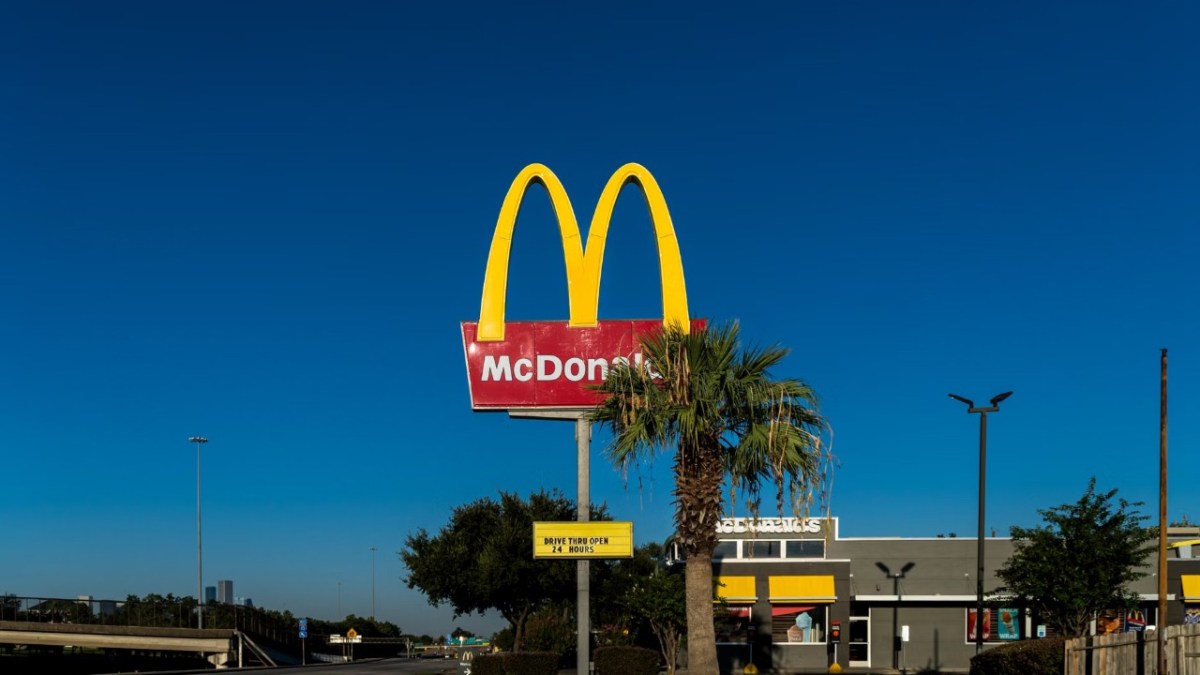

Waylon Cunningham, a Reuters reporter, said in a TikTok video posted by @reuters that he ordered a Big Mac at a McDonald’s drive-thru in New York City. After paying, he asked the worker how much it cost. The worker said $7.17, and on-screen text in the video showed the same amount.
Cunningham said he then drove two miles to another McDonald’s owned by the same franchisee. There he paid $8.05 for the same sandwich, which he said was 11% more. On-screen text displayed the higher price as he took the bag.
Franchisees have told Reuters that where a customer buys a Big Mac increasingly decides how much that customer pays, he said in the video. He attributed that pattern in large part to an AI project McDonald’s has developed and pushed in recent years called the pricing engine.
The pricing engine generates what McDonald’s calls the optimal price for each item
The video said the engine analyzes millions of transactions every day and generates what it calls the “optimal price” for every menu item at every restaurant. That figure is based in large part on what the system estimates is the customer willingness to pay, a phrase he said came from McDonald’s own documents he reviewed.
Screenshots of the franchisee interface include messages such as a restaurant showing “MEDIUM SENSITIVITY to Price” based in part on “customer willingness to pay in your area.” The tool also displays public menu prices from nearby Wendy’s and Burger King locations. Those chains said they do not use AI to set prices. Pricing perceptions also spark debate outside of fast food, such as when a Tiktoker compared girl dinner and boy dinner prices.
A check of the McDonald’s app in September found a company-run store in Fresno, California, charging $5.69 for a Big Mac while another company-run restaurant about two miles away charged $6.89. The same Fresno gap appeared on TikTok. The outlet said it could not confirm whether the difference came from the engine or other factors.
McDonald’s said costs and other factors vary across stores and that restaurants a few miles apart can sit in distinct markets. The company said the pricing portal is “a tool, not a mandate, designed to provide restaurant-specific recommendations to help franchisees deliver value for customers and make informed business decisions.” McDonald’s also called the Reuters reporting “speculative and uninformed” claims that “attempt to recast a standard business practice as something controversial.”
Five store owners told Reuters the company pressured them to use the AI tools. McDonald’s said franchisees remain free to set their own prices. An internal communication reviewed by the outlet said that in January the company began requiring franchisees to be “constructively engaging with McDonald’s approved Pricing Consultant and Tools.” A June document review showed the company records when owners stray from the recommended prices.
Franchisees have more recently said the engine has recommended smaller increases or even cuts, according to the video. McDonald’s told investors the pricing engine is part of a broader push on affordability.
The Reuters video, which has 347,100 views, drew mixed reactions. One commenter wrote, “End-stage capitalism right here.” Another said, “It’s called dynamic pricing.” A third wrote that McDonald’s prices have always varied by franchisee and location, and that a Big Mac in New York City costs more than one in New Jersey or Philadelphia.
One person suggested publishing the prices so customers can boycott the higher ones. Another commenter wrote, “I’m more concerned you put ketchup on a big mac.” A final commenter said, “Stop giving them your money.”






Published: Sep 30, 2026 03:45 pm