



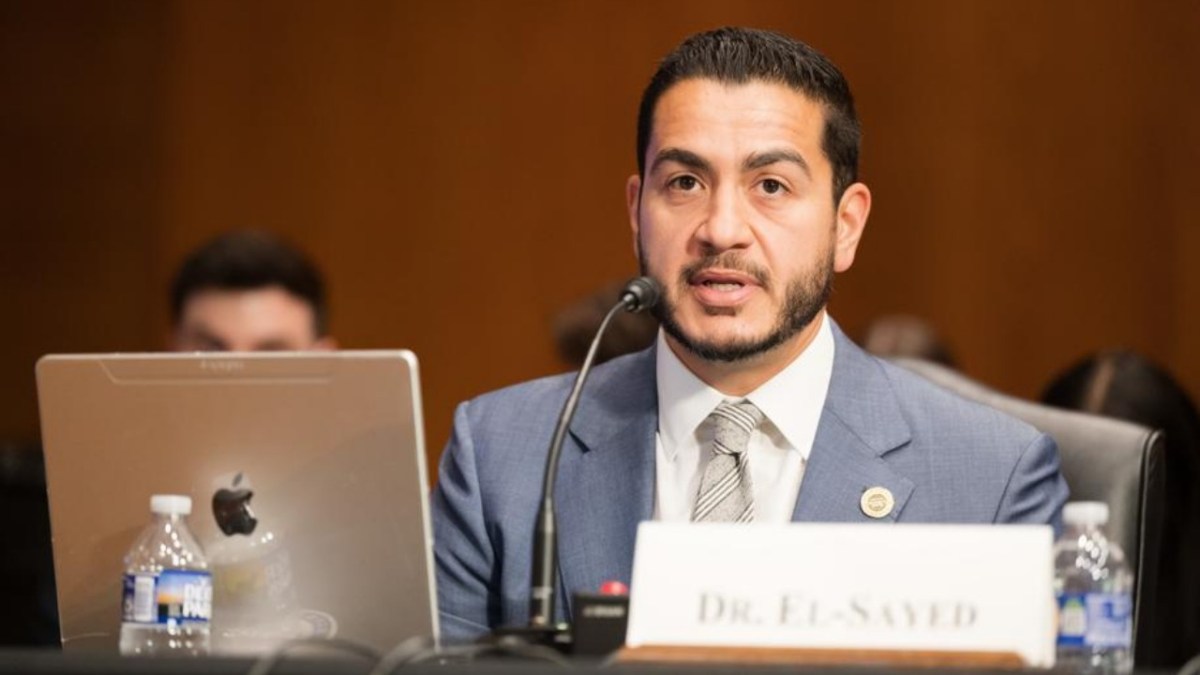

Michigan Democratic U.S. Senate candidate Abdul El-Sayed said Saturday that the country must confront what he described as “unpaid debts” owed to Black communities. As reported by Fox News, El-Sayed made the comments during a meeting with women faith leaders in Detroit, hosted by the Woman Difference Collaborative, with video of his remarks shared by C-SPAN.
El-Sayed is running against Republican nominee and former Rep. Mike Rogers in a closely watched Senate race. “When it comes to black communities in Michigan, when it comes to black communities in America, there are unpaid debts that have long since come due that we are unwilling to acknowledge, let alone pay down,” El-Sayed said, adding that leaders need to understand and address those debts.
The remarks came in response to a question about how El-Sayed plans to energize Democratic voters who did not support him during the primary. He said his strategy involves consistently showing up, engaging directly with voters, and pointing to his professional record, challenging the audience to look at his history and judge whether he has done his best to address the issues he says he cares about.
He’s leaning on his record as Wayne County health director
El-Sayed has leaned on his background as a former Wayne County health director to make his case, pointing to his work on lead exposure, asthma, and infant and maternal mortality as evidence of his commitment. He has also advocated for expanding access to capital for small businesses and increasing investment in local schools and housing.
The broader conversation around wealth inequality provides some context for these policy discussions. According to the Federal Reserve, the average Black household in the United States holds only a small fraction of the net wealth of the average White household, and researchers say the gap has widened over recent decades, with White households holding a disproportionately high share of total wealth relative to their population share.
Differences in initial wealth, income levels, and access to high return assets are cited as contributing factors to the gap, a dynamic that has surfaced in other economic policy discussions this election cycle. Homeownership, historically a primary way for families to build wealth, has also seen disparities, with the homeownership rate among Black households declining steadily between 2005 and 2015.
El-Sayed, who previously ran for Michigan governor in 2018, covered a range of topics during the Detroit event. According to C-SPAN, the discussion included his public health record, his endorsement of former Vice President Kamala Harris in the 2024 presidential election, his stance on U.S. aid to Israel, his response to campaign attack ads from Rogers, and various criminal justice issues.
The race between El-Sayed and Rogers remains one of the most closely watched Senate contests in the country as both candidates work to solidify support ahead of the election.






Published: Sep 18, 2026 07:30 am