



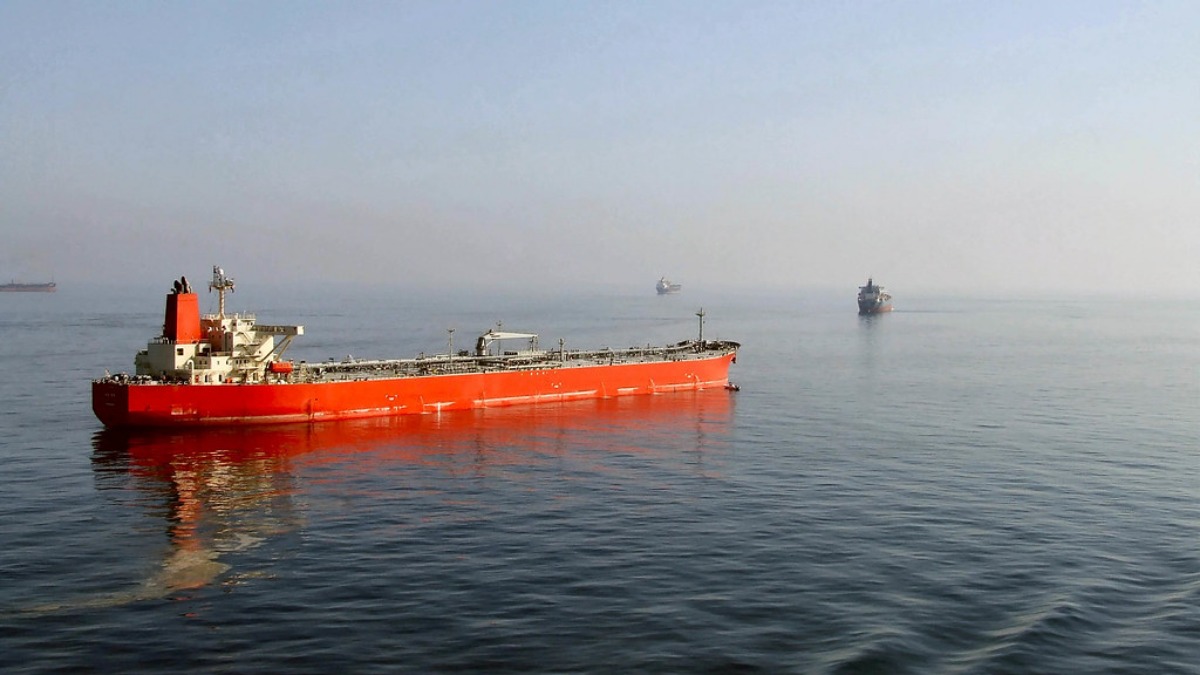

The first day of the U.S. naval blockade in the Strait of Hormuz has wrapped up. At least eight ships, including three Iran-linked tankers, sailed through the critical waterway without major disruptions, according to shipping data, as reported by Reuters. That’s far below the usual 130-plus daily crossings before the conflict escalated, but it’s still more activity than many expected on day one.
The U.S. Central Command announced on X that no ships bound for Iranian ports made it past the blockade in the first 24 hours. Six vessels complied with U.S. forces and turned around to re-enter an Iranian port. But the three Iran-linked tankers that did transit weren’t heading to Iranian ports, so they slipped through without issue.
One of them, the Panama-flagged Peace Gulf, is en route to Hamriyah port in the United Arab Emirates. It’s a medium-range tanker that typically moves Iranian naphtha—a petrochemical feedstock—to other Middle Eastern ports for export to Asia.
The blockade’s impact on global oil markets is still unfolding
Two U.S.-sanctioned tankers also made it through. The Murlikishan, a handy tanker, is heading to Iraq to load fuel oil on April 16. It’s no stranger to controversy, having previously transported Russian and Iranian oil. The Rich Starry, another sanctioned tanker, is carrying about 250,000 barrels of methanol after loading up at the UAE’s Hamriyah port. Owned by Shanghai Xuanrun Shipping Co., the vessel and its owner were hit with U.S. sanctions for dealing with Iran. The company hasn’t responded to requests for comment, but data shows the tanker has a Chinese crew on board.
China’s foreign ministry didn’t hold back in its criticism of the blockade. A spokesperson called the U.S. move “dangerous and irresponsible,” warning it would only escalate tensions. The ministry didn’t clarify whether Chinese ships were actively transiting the strait, but the presence of the Rich Starry suggests at least some involvement.
Five other vessels also sailed through the strait since the blockade began at 2:00 PM GMT on Monday. Among them were two chemical and gas tankers, two dry bulk ships, and the Ocean Energy cargo ship, which docked at Iran’s Bandar Abbas port. The U.S. military made it clear that humanitarian shipments would be exempt from the blockade, which might explain why some traffic is still getting through.
Fabrizio Coticchia, a professor of political science at Italy’s University of Genoa, weighed in on the strategy behind the blockade. He explained that the U.S. doesn’t need to block every ship or even enter the Strait of Hormuz. Instead, it’s opting for an “intermittent blockade,” where ships aren’t attacked but are diverted by U.S. warships stationed in the Gulf of Oman.
The financial side of this blockade is just as messy. War-risk insurance costs haven’t spiked since the blockade began, but they’re still sky-high. Shippers are paying hundreds of thousands of dollars in additional weekly costs, and underwriters are reviewing coverage every 48 hours. That’s a lot of uncertainty for an industry already on edge. Ship broker BRS didn’t mince words in a recent report, saying a return to “normality” in the Middle East feels more distant than ever. They’re predicting little to no commercial traffic in the strait for the foreseeable future.
Traffic in the Strait of Hormuz has been a rollercoaster since the U.S. and Israel launched their military campaign against Iran on February 28. Before the war, the strait saw over 130 daily crossings, but now it’s down to a fraction of that. The blockade has only added to the chaos, leaving shippers, oil companies, and insurers scrambling to adapt. The U.S. Central Command’s claim that no ships made it past the blockade in the first 24 hours doesn’t tell the whole story. Some vessels, like the Rich Starry and Peace Gulf, found loopholes by avoiding Iranian ports altogether.
Tracking data isn’t always reliable, either. Some ships have been caught “spoofing” their location signals or submitting incomplete data, making it harder to get a clear picture of what’s really happening. For example, the U.S.-sanctioned tanker Elpis transited the strait on Tuesday, possibly coming from Iran’s Bushehr port. MarineTraffic data shows it’s now stationary on the eastern side of the strait, but it’s unclear why. Another bulk carrier, the Christianna, sailed through the waterway on Monday after calling at Bandar Iman Khomeini in Iran but later turned back.








Published: Apr 14, 2026 05:00 pm