



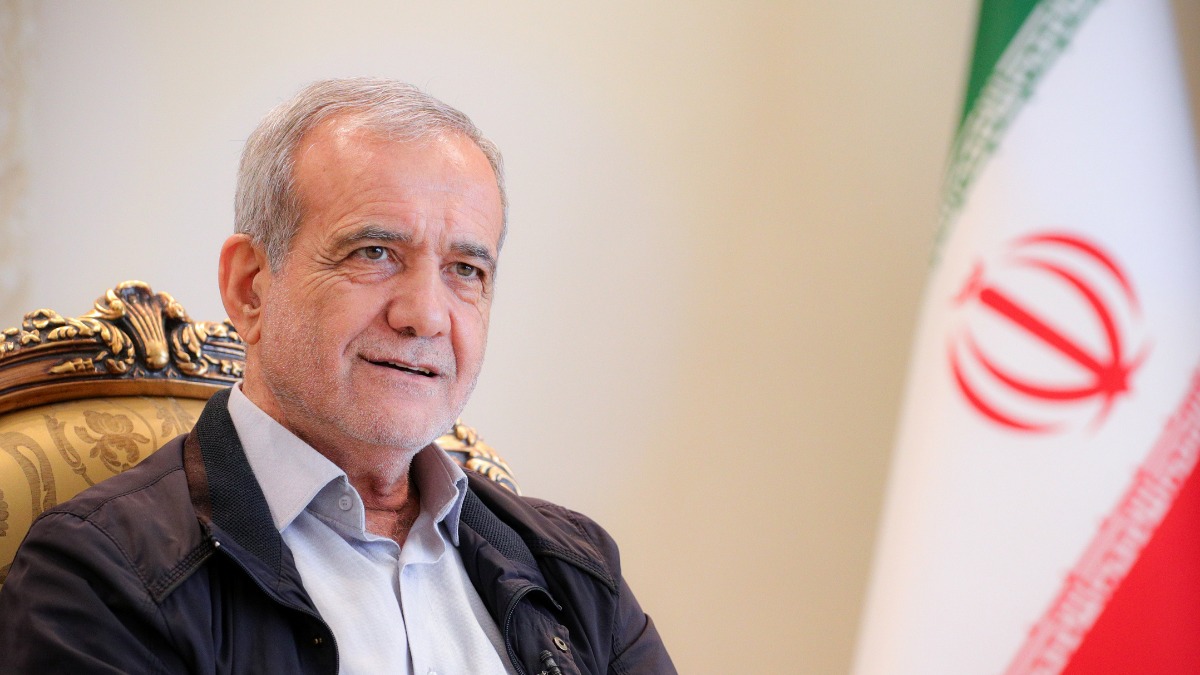

Iranian President Masoud Pezeshkian is pushing to break the current stalemate with the United States, declaring that now is the right moment to move past the state of neither war nor peace. Speaking on September 14, as reported by Al Jazeera, he emphasized that Iran currently holds a position of strength and unity, which he believes makes it the ideal time to reach a lasting agreement.
This diplomatic push arrives as Iran and Oman work toward a potential arrangement to reopen the Strait of Hormuz. This waterway is essential for global trade, as about one-fifth of the world’s oil shipments usually pass through it. Since the conflict involving the United States and Israel began on February 28, Iran has effectively blocked the strait. This ongoing war has already resulted in more than 3,400 deaths.
While the president is signaling a desire for progress, the path to a deal remains complicated by a list of strict requirements. Iranian Foreign Minister Abbas Araghchi noted on September 15 that while talks regarding the management of the strait are reaching their final stages, any reopening is still tied to specific conditions. He also clarified that Iran is not in direct negotiations with the United States, but is instead exchanging messages through intermediaries.
Pezeshkian expressed his frustration with the lack of a formal mechanism to handle conflicts
Pezeshkian noted that a dedicated team should have been established earlier to address ceasefire violations instead of resorting to fighting. He stated, “In any case, violations occur in every memorandum of understanding. In principle, a team should have been formed to address violations back then rather than to fight.” He added, “We need to see how to resolve them now, if a solution is possible, which is currently being worked on in the Oman negotiations. God willing, we will reach a point where we can get out of this state of neither war nor peace.”
The situation on the ground involves a proposed arrangement where Iran would oversee vessels entering the Gulf, while Oman would manage traffic heading out. Tehran confirmed on September 12 that it had agreed on coordinates for new shipping routes with Oman. However, the Islamic Revolutionary Guard Corps remains firm on its stance. Spokesperson Hossein Mohebbi stated, “Whenever the United States accepts Iran’s conditions, the Strait of Hormuz will certainly be reopened.”
The demands from Tehran have recently expanded significantly. On September 14, the Supreme National Security Council laid out six major conditions for reopening the strait. These include ending United States threats, halting attacks on Iran and its allies in Lebanon, Palestine, Yemen, and Iraq, and withdrawing naval and air forces from the region. Additionally, Iran is calling for the lifting of global sanctions, the release of frozen assets, and compensation for damages caused during two wars.
Analyst Negar Mortazavi suggests that Pezeshkian is using this moment to send a clear message to both domestic factions and the United States. By publicly backing diplomacy, he is aiming to strengthen the hand of those within Iran who support negotiations while countering the narrative that the country lacks a coherent position.







Published: Aug 9, 2026 09:00 am