



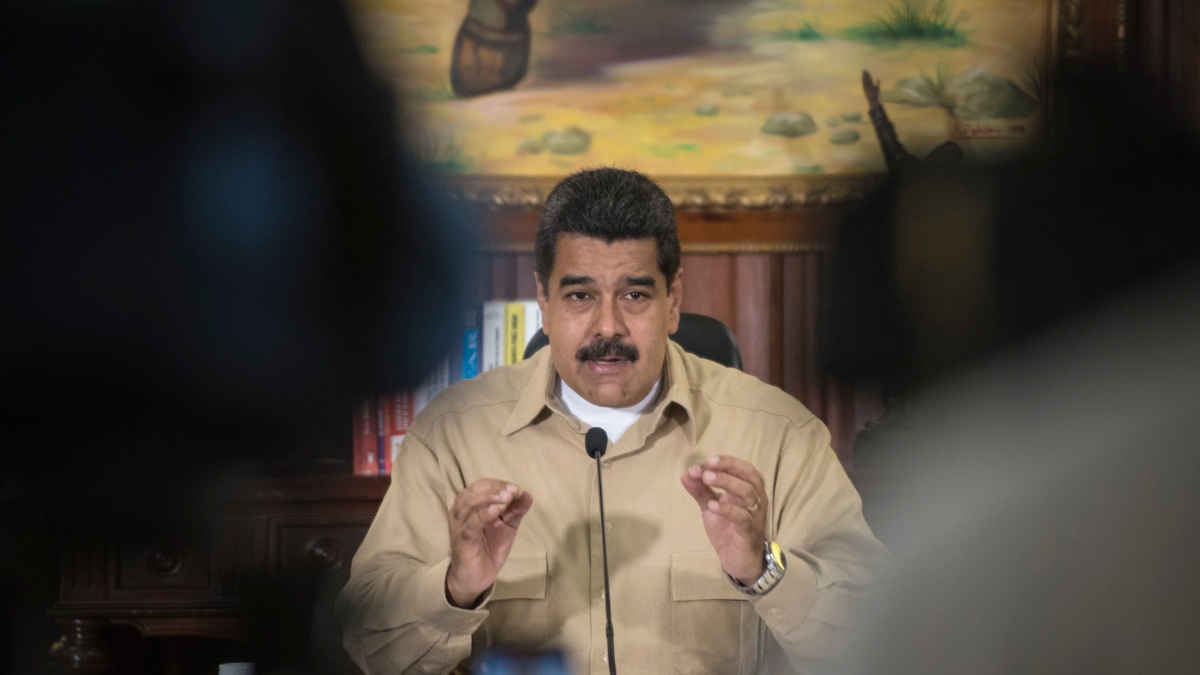

Venezuelan President Nicolás Maduro has asked a federal judge to dismiss the narco-terrorism case against him, arguing that the U.S. government is blocking his ability to pay for legal representation. The dispute centers on whether sanctions are preventing him from accessing funds needed to retain counsel.
As first highlighted by The Washington Post, Maduro’s attorney, Barry J. Pollack, filed a motion in federal court in Manhattan claiming the Treasury Department interfered with his client’s constitutional right to choose his lawyer. Pollack said the Office of Foreign Assets Control initially granted permission for him to accept payment from the Venezuelan government despite sanctions.
According to the filing, OFAC reversed that decision just hours later, leaving Maduro without access to funds to pay for his defense. Pollack argued the reversal effectively prevents his client from securing counsel of his choice.
A dispute over legal fees complicates the prosecution
Pollack contended the decision is inconsistent with other exceptions granted by OFAC, noting that oil companies and other entities have been allowed to conduct business with Venezuela. Federal enforcement and oversight questions have continued to surface, including an AI facial recognition arrest.
He also pointed out that attorneys representing Maduro’s wife, Cilia Flores de Maduro, who is a co-defendant, have been permitted to accept payments from the Venezuelan government, which Venezuelan law requires to fund Maduro’s criminal defense.
In the court filing, Pollack wrote that Maduro lacks personal funds to retain counsel and is being deprived of his constitutional right to choose his lawyer. He urged U.S. District Judge Alvin K. Hellerstein to dismiss the case, arguing that the Constitution guarantees defendants legal representation and that blocking payment creates a constitutional conflict.
As of Thursday, OFAC had not publicly explained the reversal or responded in court. New York’s legal and regulatory docket has been crowded in recent days, including a New York loot box probe. U.S. officials could seek a review of Maduro’s finances if he requests a court-appointed attorney, which would shift the cost of his defense to taxpayers.
Maduro and Flores were seized by U.S. military forces from their compound in Caracas in January and brought to Manhattan to face narco-terrorism and drug trafficking charges outlined in an indictment earlier this year. Both have pleaded not guilty and are being held in a Brooklyn detention center.
The dispute over legal fees follows earlier questions about Maduro’s representation after another attorney, Bruce Fein, sought to join the case claiming outreach from Maduro’s inner circle. Judge Hellerstein later removed Fein from the case following Pollack’s objection.








Published: Feb 27, 2026 11:00 am