



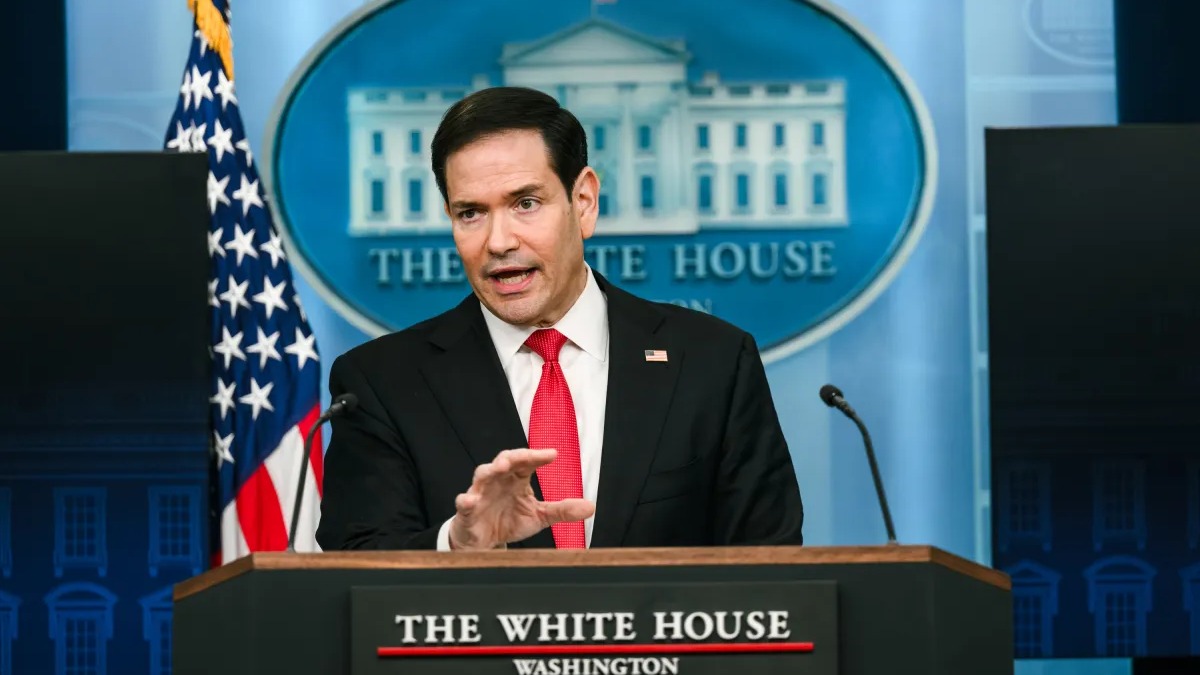

Secretary of State Marco Rubio warned that the current Iranian military control over the Strait of Hormuz establishes “a dangerous precedent” that could soon repeat itself across the globe. Speaking at the annual Association of Southeast Asian Nations summit in Manila, the Philippines, Rubio emphasized that the situation is about much more than just one waterway. It is about the fundamental principle of freedom of navigation that has supported international commerce for the last 150 years, The Hill reported.
According to the International Energy Agency, nearly 34 percent of the world’s crude oil passed through the strait last year. When Tehran effectively halted vessels in the early months of the war, it sent shockwaves through the global energy industry. Since July 6, the situation has remained volatile, with the International Maritime Organization reporting that Iranian forces have attacked at least a dozen ships. Iran has even established the Persian Gulf Strait Authority to manage shipping, forcing vessels into specific routes.
Rubio was clear that Iran has no legal standing for these actions. He stated that Iran lacks the authority “under any existing legal mechanism” to control transit in the waterway. He further explained the broader risk by stating, “If we create a precedent in the Middle East where a nation-state can decide that they are going to control an international waterway, charge a toll, and if you don’t pay them, blow up your ships, we have created a very dangerous precedent which will repeat itself in other parts of the world, including in this region.”
The diplomatic landscape is just as tense as the maritime one
A memorandum of understanding signed in mid-June, which aimed to lift shipping restrictions and end blockades, has effectively been abandoned. The United States and Iran have returned to a pattern of tit-for-tat strikes that began roughly two weeks ago. This escalation follows two recent Iranian attacks that killed four U.S. service members. In response, President Trump has ramped up his rhetoric toward Tehran.
On the ground, military operations are intensifying. U.S. Central Command completed an 11th consecutive night of strikes on Tuesday. These missions targeted aircraft hangars, drone storage facilities, maritime capabilities, military logistics infrastructure, and operations centers. Centcom noted these actions were taken “to further degrade Iran’s ability to threaten commercial shipping in the Strait of Hormuz.”
Despite the heavy military involvement, Rubio maintained that the administration remains open to finding a diplomatic path forward. He noted that the U.S. is “open-minded and always willing to engage” with Iranian officials. The secretary kept the pressure on by adding, “If they’re serious, we’re serious. If they’re not, then we will do what is necessary to protect that, our interests, and also the interests of our allies.”
It is clear that the administration views this as a critical test for international trade stability. Rubio summarized the gravity of the situation by saying, “If that is threatened, then I think the global economy is threatened and the rules which have underpinned 150 years of international trade and commerce are also threatened. And that cannot be allowed to happen.”









Published: Jul 22, 2026 04:15 pm