



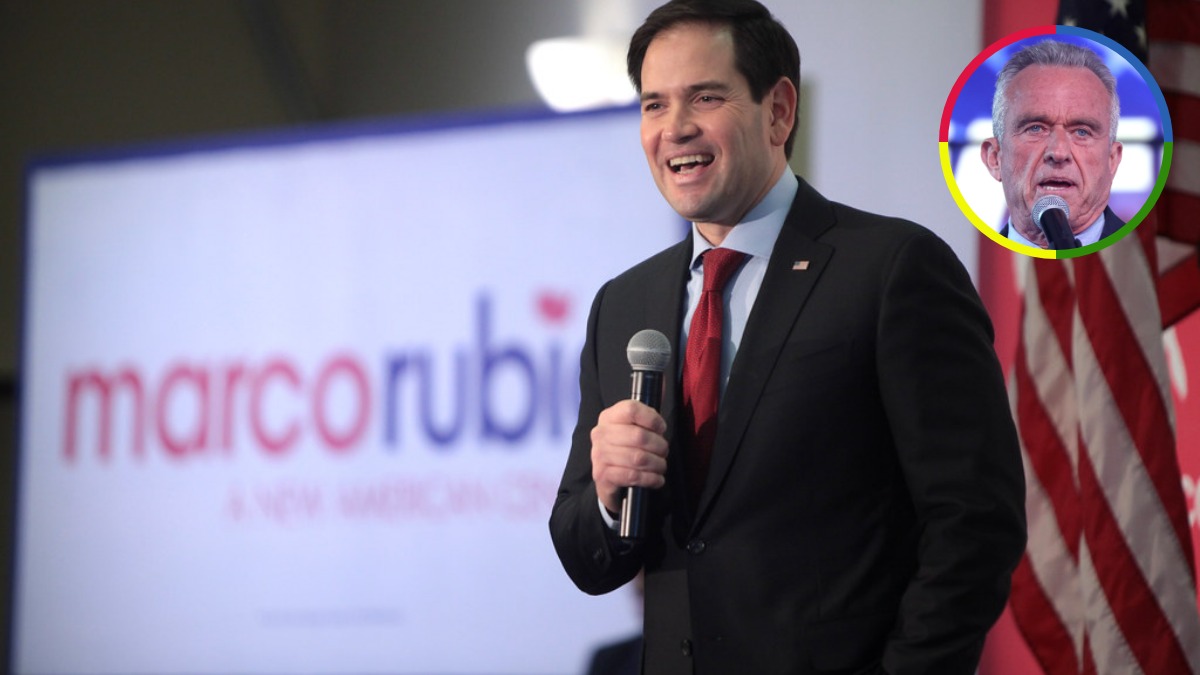

The United States is moving to “reengage” with a major global vaccine alliance, signaling a significant shift in how the government handles international health funding, The Hill reported. Secretary of State Marco Rubio indicated that his department is taking back the lead role in the relationship with Gavi, an organization that has been instrumental in distributing vaccines to some of the world’s most vulnerable regions.
This development is a notable reversal of the approach taken by Health and Human Services Secretary Robert F. Kennedy Jr., who had been blocking $600 million in congressionally appropriated funds due to his specific concerns regarding vaccine safety.
Rubio shared with members of the Senate Foreign Relations Committee that President Trump had originally asked Kennedy to play a leading role in the decision-making process for Gavi funding. This was largely because of Kennedy’s long-standing views on vaccine safety and a desire to implement certain reforms. However, the decision to hold back the $600 million has caused quite a stir, especially since Congress had already set aside $300 million each for fiscal 2025 and 2026. These funds are now facing a deadline, as they are set to expire on September 30 if the administration does not release them.
The tension stemming from RFK Jr.’s move to withdraw funds has centered on several specific points
Kennedy has expressed skepticism regarding the use of thimerosal, a preservative that inhibits bacterial growth. While he has argued that it is toxic and linked to autism, major health organizations like the Centers for Disease Control and Prevention have maintained that it is safe. Although thimerosal was largely removed from pediatric vaccines in the United States by 2001, Gavi continues to use multidose vials in developing countries, mostly because those areas often lack the refrigeration needed for single-use alternatives.
Kennedy has also raised concerns about other vaccines in the Gavi portfolio, including a shot for diphtheria, tetanus, and pertussis that he claims was discontinued in the U.S. due to potential brain injuries, despite those claims not being confirmed by modern investigations.
Despite these hurdles, the work done by Gavi remains massive in scale. The organization has vaccinated more than 1 billion children against diseases like measles, malaria, and polio since its inception in 2000. It is currently playing a vital role in the response to an ongoing Ebola outbreak in the Democratic Republic of Congo and Uganda, having made $50 million available for that crisis.
Rubio’s recent comments suggest that while the State Department will still listen to the perspectives held by Kennedy, they are no longer going to let the funding sit idle. He stated that the department would not simply yank the decision-making power away, but he did make the call a few weeks ago that the State Department needs to take charge.
Rubio noted, “We’d like to get this issue resolved in an outcome that’s acceptable both to Congress and also to our goals on global health.” He further explained, “I wouldn’t use the word defer, but we have certainly allowed him to play a leading role in determining what we’re going to do next, but right now we’re sort of at a stage where we are going to reengage the good, we need to drive this to an outcome.”
This shift has been welcomed by Gavi. A spokesperson for the organization, Olly Cann, stated that they are encouraged by the testimony and highlighted the urgency of the current situation. Cann explained that the organization’s ability to maintain vaccine stockpiles for Ebola, cholera, and other diseases has been severely impaired by the funding freeze. Interestingly, Gavi has already approved a strategy to phase out two vaccines that contain thimerosal, and Cann noted that additional funding would allow them to accelerate that process.
The pressure to resolve this has been building for some time. Back in May, a bipartisan group of senators, including Susan Collins, Jeanne Shaheen, Mitch McConnell, and others, wrote to Rubio to urge the restoration of the funds. They emphasized that Gavi’s success is a proven public-private partnership and that the funding supports American jobs by facilitating the purchase of U.S. goods and services.
While the State Department has not provided a formal commitment to release the funds just yet, the latest comments from the Secretary of State suggest a path toward resolving the standoff is finally in motion. For now, the administration remains in discussions with Gavi, aiming for a balance between addressing safety concerns and fulfilling the international commitments necessary to support global health security.




Published: Jun 3, 2026 05:00 pm