



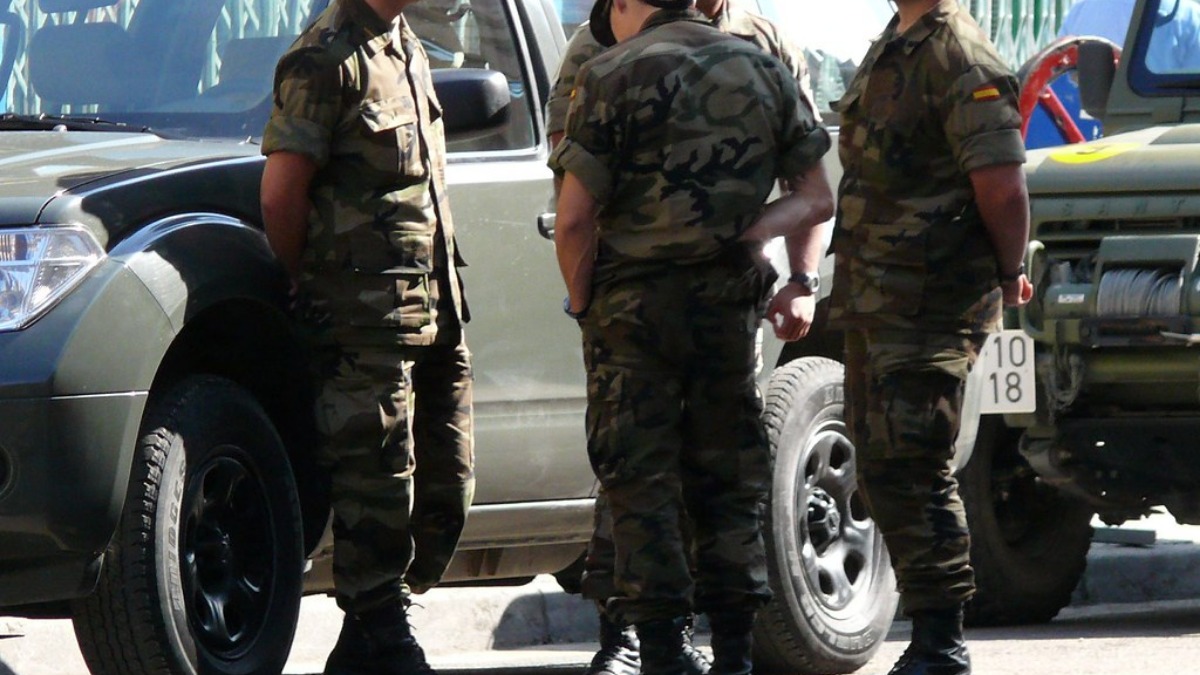

The Spanish military has been deployed to the peninsula of Ceuta to assist local authorities after a surge of tens of thousands of migrants entered the territory between Thursday and Friday. As reported by The New York Times, the sudden influx turned the small Spanish-governed exclave on the northern coast of Africa into the center of a humanitarian and security crisis.
Ceuta covers only 19.9 square kilometers and typically hosts a population of around 83,000 residents. Local authorities said they lacked the capacity to provide basic necessities like food and shelter, particularly for people who had gone nearly two days without eating. Footage from the scene reportedly showed scores of people, many of whom appeared to be young men, bypassing the Tarajal border fence, while many others swam for hours to reach the shore.
At least 60 people were reported dead in connection with the crossing. Juan Jesús Vivas, the president of Ceuta, described the situation as “a situation of absolute humanitarian and social emergency,” noting that the number of arrivals was equivalent to about 2 percent of Spain’s entire population entering the country irregularly.
Officials say most of the arrivals have already returned to Morocco
As of Friday afternoon, Spain’s Interior Ministry reported that nearly 50,000 migrants had entered the territory, though close to 48,300 had returned to Morocco. Still, hundreds, if not thousands, reportedly remained on the beaches as authorities worked to manage the situation. One man who made the crossing pointed to economic desperation as the driving factor, saying, “There’s no work in Morocco.”
The Spanish Interior Ministry pointed to a June 29 ruling by the Spanish Supreme Court that stopped authorities from summarily returning migrants who arrive in Ceuta and Melilla by sea without due process. The ruling did not legalize irregular entry, but it reportedly spread across social media in Morocco, which authorities believe human trafficking networks exploited to encourage the migration.
Morocco and Spain have long had a complicated relationship regarding the exclave, with Morocco viewing Ceuta as occupied territory dating back to the 8th century. Karima Benyaich, the Moroccan ambassador to Spain, said the situation was “not wanted by the Kingdom of Morocco,” adding that her country would prefer legal and orderly immigration.
Economic hardship has also driven other stories that spread online recently, amid unrelated disputes such as one involving an EBT card declined at Walmart that drew wide attention. Spanish Prime Minister Pedro Sánchez said his government is working with Moroccan and international authorities to restore normalcy, while European Commission President Ursula von der Leyen said the images coming from Ceuta were “unacceptable” and called for smuggling networks to be dismantled.
Italy announced a temporary suspension of the free movement regime within the Schengen area for maritime and air connections with Spain. Italian Prime Minister Giorgia Meloni described the move as an “extraordinary measure, adopted to safeguard national security,” while France separately moved to strengthen controls at its border with Spain.
Within Spain, the political fallout has been significant, with right-wing leaders including Vox’s Santiago Abascal and Popular Party leader Alberto Núñez Feijóo criticizing the government’s handling of the crisis. In the United States, President Donald Trump described the situation as looking “like an invasion of a country” during a Cabinet meeting at Camp David on Friday, and suggested similar events could occur domestically without a change in political leadership.
The political debate over the crisis has echoed other online arguments about broader social issues, amid a separate debate over feminists and motherhood that also circulated widely this week. France’s decision to tighten its border checks with Spain followed Italy’s Schengen suspension, marking the latest concrete step taken by neighboring countries in response to the crossing.







Published: Jul 31, 2026 08:15 pm