



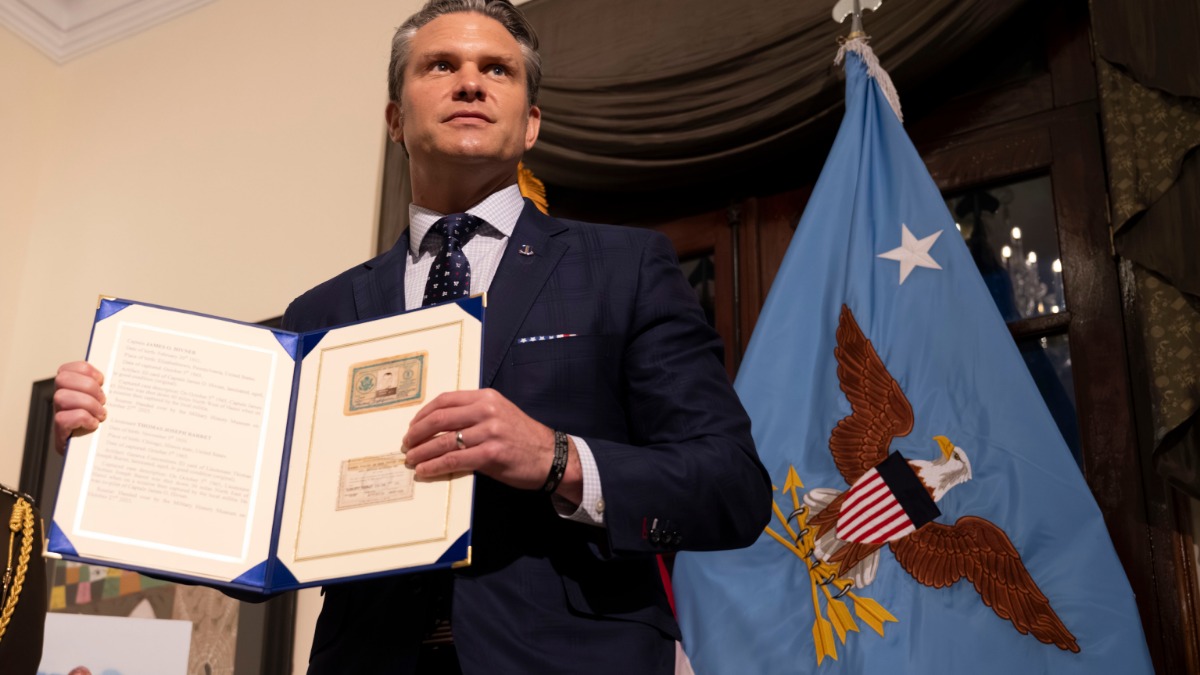

Secretary of Defense Pete Hegseth is actively reshaping the religious culture within the military, and it is causing significant pushback from service members. Hegseth is leaning into his own evangelical Christian faith, and many are worried that his personal beliefs are interfering with the established norms of military service.
According to The Daily Beast, the most notable development came in early April when Hegseth forced Maj. Gen. William Green Jr., the Army Chief of Chaplains, to retire ahead of schedule. The position remains vacant, which former Army Chaplain Rev. Jonathan Shaw describes as an enormous gap in leadership.
Shaw emphasized that the military is home to a wide diversity of faith traditions, making the absence of a chief of chaplains particularly concerning for the structure of the Chaplain Corps. Hegseth has been open about his desire to change the direction of the military chaplaincy.
Hegseth’s push to center evangelical faith in the military is raising serious concerns about religious freedom for troops
In a March interview on 60 Minutes, he said, “I mean, obviously, we’re fighting religious fanatics who seek a nuclear capability in order for some religious Armageddon. But from my perspective, I mean, obviously, I’m a man of faith who encourages our troops to lean into their faith, rely on God. There are no atheists in foxholes.”
He also added, “Your mortality’s right in front of you. I remember prayer for me on combat missions, how important that was. That’s why we’re making the Chaplain Corps great again and active again, making sure we’re pouring into the faith of our troops.”
This approach has not sat well with everyone. The Military Religious Freedom Foundation (MRFF) received several scores of complaints regarding Green’s forced departure. The organization has also fielded numerous concerns that Hegseth’s specific focus on his evangelical beliefs is pushing out the broader religious freedom that service members are entitled to.
Michael Weinstein, the founder and president of the MRFF, has pointed to an environment where some members fear the rise of Christian nationalism within the ranks. One complaint brought to the organization alleged that a commander told non-commissioned officers that Donald Trump was “anointed by Jesus to light the signal fire in Iran to cause Armageddon and mark his return to Earth.”
This comes as the Trump administration has faced growing scrutiny over its ties to crypto partners and other controversies. Hegseth’s personal image has also become a talking point. He has a tattoo on his bicep that reads “Deus Vult,” a Latin phrase that translates to “God wills it.” The phrase is a reference to the Crusades and has been adopted by various far-right groups, adding more scrutiny to his leadership style.
The situation highlights a fundamental conflict over the role of religion in the armed forces. The First Amendment’s Free Exercise Clause ensures that military personnel have the right to practice their own religion or to hold no religious preference at all.
With over 1.2 million service members currently serving, data shows that nearly a quarter of them identify as having no religious preference. The broader debate over religion and government authority has also played out elsewhere, including in Trump’s repeated clashes with Pope Leo.
Critics argue that military leaders are required to maintain religious neutrality to avoid appearing to promote a specific faith. As the position of Army Chief of Chaplains remains unfilled, the debate over how much influence a leader’s personal faith should have over the ranks continues to grow.






Published: Apr 26, 2026 10:45 am