



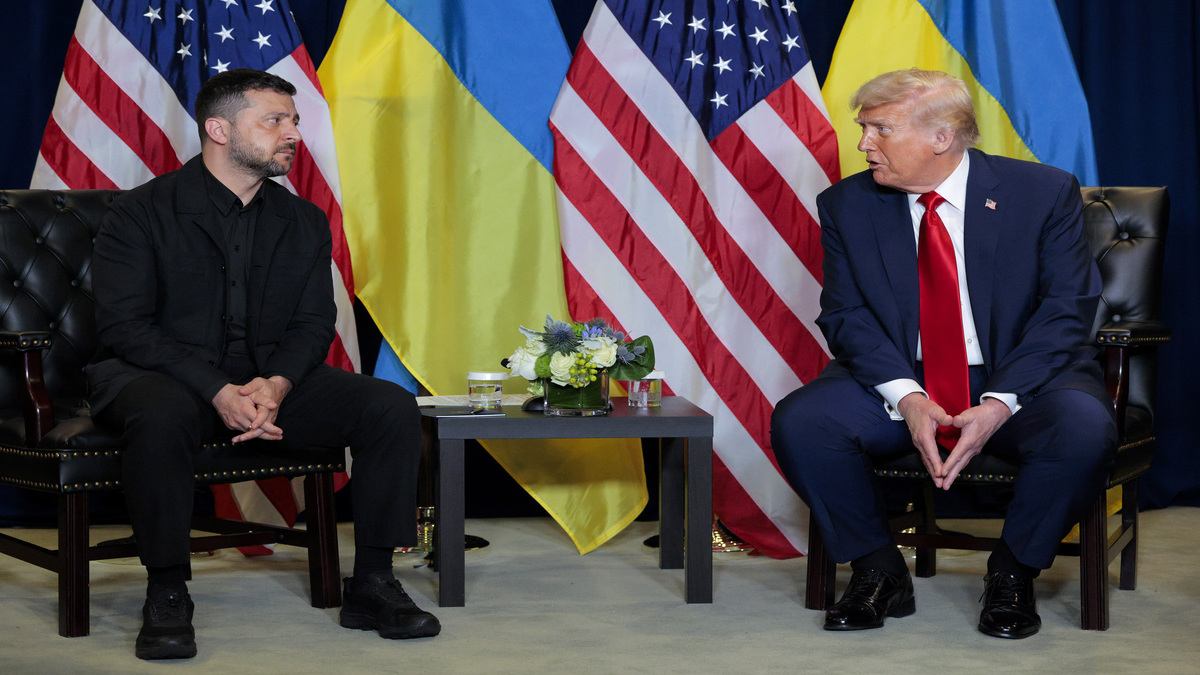

The White House is signaling that a resolution to the nearly four-year war between Russia and Ukraine may be close. This comes even as Ukrainian President Volodymyr Zelensky offered a far more cautious message during a high-profile appearance in Davos, as detailed by The Washington Post.
President Donald Trump met with Zelensky on the sidelines of the World Economic Forum, saying afterward that both sides were “reasonably close” to a framework agreement. Before the meeting, Trump warned that failure to finalize a deal would reflect poorly on the parties involved, underscoring the administration’s public confidence in the talks.
That optimism has been echoed by White House envoy Steve Witkoff, who recently met with Ukraine’s lead negotiator and described the negotiations as being narrowed to a single unresolved issue, widely understood to be territorial concessions. Witkoff argued that focusing on one remaining dispute makes the conflict “solvable,” and he and Jared Kushner are scheduled to travel to Moscow for talks with Russian leadership.
Zelensky’s Davos remarks expose the gap between rhetoric and reality
Despite positive signals from Washington, Zelensky used an unscheduled speech in Davos to stress the severity of Ukraine’s situation. After what both leaders called a “good” meeting with Trump, he told forum attendees that life in Ukraine felt like the film Groundhog Day, with attacks continuing to intensify during a brutal winter.
Zelensky criticized what he sees as Europe’s lack of unified action, warning that the continent must act as a single force rather than a collection of smaller powers. The broader political backdrop has also been shaped by a Ted Cruz winter storm photo.
He cautioned that continued hesitation could force European nations to defend their own way of life, asking who would respond if Russian President Vladimir Putin moved against Lithuania or struck Poland. Zelensky framed the moment as requiring decisions now, not extended debate.
The comments came as Ukraine’s power grid remained heavily damaged during one of the coldest winters in years, leaving millions without reliable heat or electricity. Zelensky said U.S. backing was essential, arguing that no security guarantees would be effective without American support.
The meeting between the two presidents came together quickly, requiring Zelensky to rearrange his schedule after Trump announced the talks with little notice. In Washington, attention has also turned to the DOJ’s Musk data sharing disclosure.
Only days earlier, Zelensky had said he planned to remain in Kyiv to oversee repairs to infrastructure damaged by Russian attacks rather than attend the forum. The rescheduling reflected how quickly the talks shifted once the meeting was confirmed.
While some officials had hoped for formal security guarantees to emerge from the meeting, a senior Ukrainian official confirmed that no documents were prepared for signing in Davos. Zelensky said framework documents to end the war were nearly ready, but emphasized that Russia would need to make compromises as well.
That challenge was reinforced by comments from Russian Foreign Minister Sergei Lavrov, who rejected any settlement that allowed the current Ukrainian government to remain in power. Witkoff and Kushner are still expected to meet with Putin in Moscow before Witkoff continues on to Abu Dhabi for planned trilateral talks involving Ukraine, the United States, and Russia.





Published: Jan 22, 2026 04:15 pm