



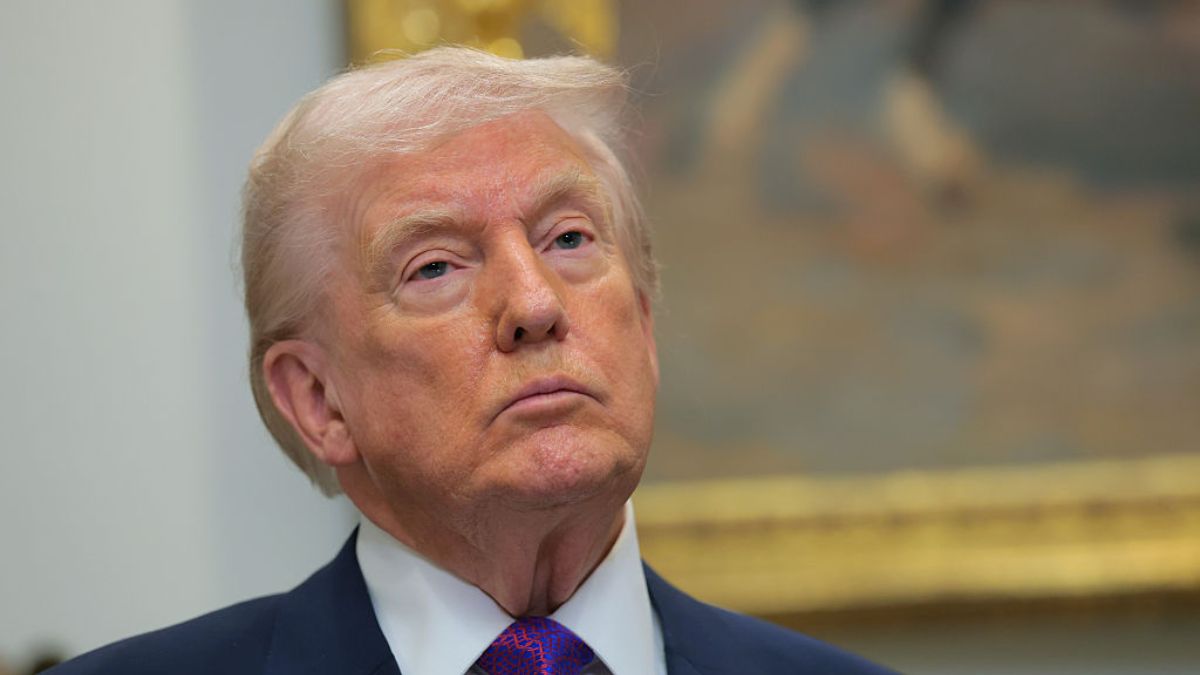

The Supreme Court has delivered a major blow to President Trump’s economic powers, stripping him of his sweeping emergency tariff authority. But the president is already fuming and working on a new plan, which has experts raising serious concerns.
Trump made a hastily organized 45-minute appearance at the White House briefing room on Friday. He declared his shame for “certain members of the court” for “not having the courage to do what’s right for the country.” Despite being “deeply disappointed,” he insisted that “other alternatives will now be used to replace the ones that the court incorrectly rejected,” claiming the US would emerge “stronger for it.”
According to CNN, the White House is moving quickly, planning to impose a new 10% across-the-board tariff for up to five months under a separate legal authority. He admitted the new process is “a little more complicated” and “takes a little more time,” but stated that “the end result is going to get us more money” and that he could “charge much more than I was charging” under the new system.
The ruling creates financial chaos and strips Trump of a key foreign policy tool
The ruling immediately sent financial uncertainty through companies and consumers already on edge from Trump’s aggressive tariff policies. The Supreme Court also didn’t clarify how the government should handle billions of dollars in refunds owed to companies, creating what aides and trade experts have called “a mess.”
Trump declined to commit to paying back that money, suggesting it would likely get tied up in years of legal battles. Michael Strain, director of economic policy studies at the American Enterprise Institute, called the ruling “a huge blow to the president,” adding that it “does take away a major foreign policy tool.” This comes as Trump’s broader foreign policy agenda faces scrutiny, including his Gaza peace funding commitments, raising questions about whether allies and adversaries might feel more emboldened to challenge the US globally.
Before the verdict, Trump had described his tariff regime as a matter of “LIFE OR DEATH,” warning that its invalidation “would literally destroy” the country. He tried to downplay the impact, saying he’d go in “a different direction, probably the direction that I should’ve gone the first time.” Economic experts from both sides argue that tariffs mostly lead to higher prices for Americans.
The political fallout was immediate, with the ruling arriving just as aides were preparing a State of the Union speech ahead of midterm elections. Vice President JD Vance posted on X, stating, “This is lawlessness from the Court, plain and simple.” This is notable given that Trump appointed two of the justices who voted against his tariff authority.
Administration officials had spent months mapping out fallback options. Reports on the true cost of Trump’s deportation program add further questions about the administration’s fiscal direction. One aggressive option, charging “licensing” fees instead of tariffs, is considered highly risky and likely to face new legal challenges. As for the six justices who ruled against him, Trump simply stated, “they’re barely invited,” adding, “Honestly, I couldn’t care less if they come.”






Published: Feb 21, 2026 12:15 pm