



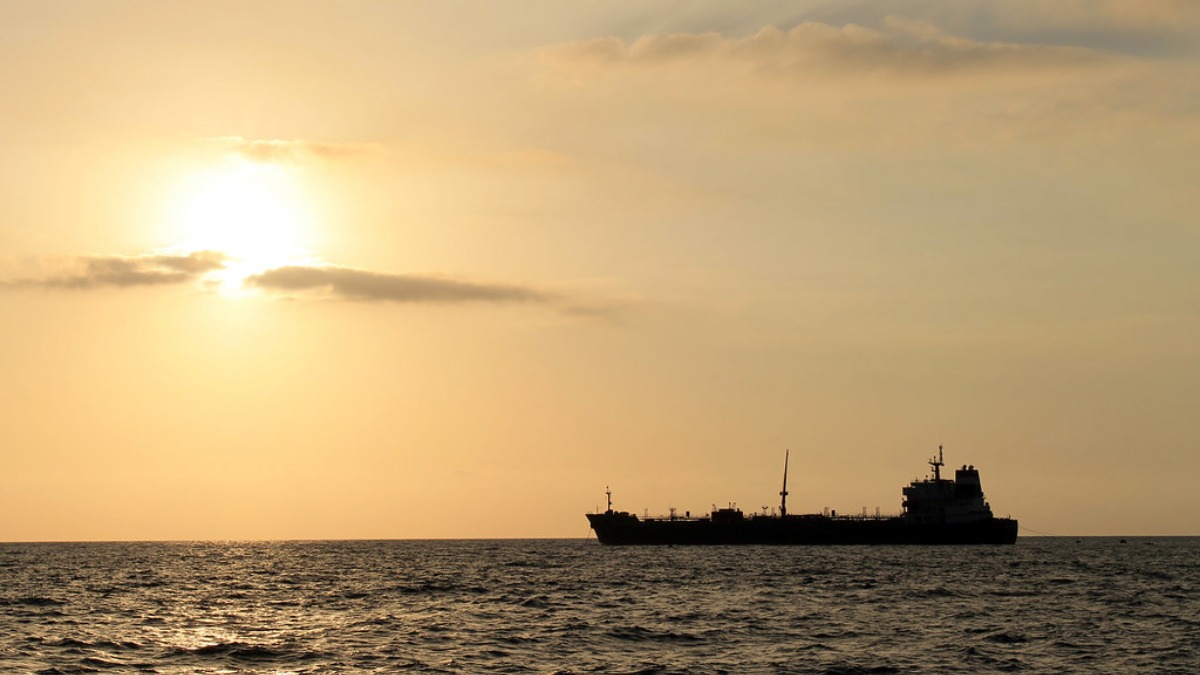

Despite President Donald Trump calling his naval blockade of Iranian ports a tremendous success, data tells a different story. Cargo tracking data from intelligence firm Vortexa shows that since the blockade began on April 13, at least 34 Iran-linked tankers and gas carriers have navigated past the blockade line. Of those, 19 exited the Persian Gulf while 15 entered, heading toward Iran.
Financial Times reports that at least six of these ships were confirmed as carrying Iranian crude oil, totaling approximately 10.7 million barrels. This has allowed Iran to generate about $910 million in oil revenue since the blockade was first enforced. The blockade was designed to target what Treasury Secretary Scott Bessent described as the Iranian regime’s primary revenue lifelines.
Bessent stated that the blockade’s intent is for the U.S. Treasury to “continue applying maximum pressure through Economic Fury to systematically degrade Tehran’s ability to generate, move, and repatriate funds.” He also warned that any person or vessel facilitating these flows “through covert trade and finance risks exposure to U.S. sanctions.”
Iran’s shadow fleet is finding ways to keep oil flowing despite the blockade
Satellite imagery reported by Bloomberg showed two fully laden Iranian vessels, the Hero II and the Hedy, crossing the blockade line on April 20. These ships were carrying up to 4 million barrels of oil combined and had reportedly turned off their transponders to avoid detection.
According to The Telegraph, Lloyd’s List Intelligence also reported that more than two dozen ships with cargo have sailed in and out of Iranian ports since the mid-April enforcement date. The Pentagon has pushed back against these reports. Spokesperson Sean Parnell explicitly denied that 26 Iranian ships had bypassed the blockade, calling the findings false.
According to The Hill, U.S. Central Command stated it has directed 28 vessels to turn around or return to an Iranian port since the blockade began. They also confirmed the seizure of one sanctioned container ship, the Touska, which was boarded by U.S. marines via helicopter.
The Touska was previously identified in China at a port known for handling materials used in missile production, though the U.S. has not confirmed the nature of the cargo found on board. President Trump remains firm in his position. In a post on Truth Social shortly before midnight on Tuesday, he claimed that Iran was “collapsing financially” and that the country’s leaders were desperate to have the Strait of Hormuz opened immediately.
Trump has also made bold claims about past conflicts, and his confidence in winning wars the U.S. previously lost has drawn widespread attention. He further claimed that Iran was losing $500 million a day because of the blockade and that some people had approached him four days ago to signal that Tehran wanted the Strait opened immediately.
Trump also announced that he had indefinitely extended a ceasefire with Iran, saying he agreed to the extension after receiving requests from Pakistan’s military chief Asim Munir and Prime Minister Shehbaz Sharif. He stated that “the government of Iran is seriously fractured” and that he was asked to hold off on strikes until representatives could provide a unified proposal.
Despite the ceasefire extension, Trump made it clear that the blockade of Iranian ports will remain in effect, suggesting that reversing it would prevent a deal from happening. Iran’s side has responded sharply.
Mahdi Mohammadi, a senior adviser to the Iranian Parliament Speaker, said the ceasefire extension “had no meaning because the losing side cannot dictate terms.” He characterized the continuation of the blockade as “no different from a bombardment” and suggested it must be met with a military response.
Meanwhile, scrutiny of Trump’s broader economic team continues to grow, with Senator Elizabeth Warren questioning Trump’s Federal Reserve nominee over his independence and other controversies. As the situation continues, approximately 800 vessels remain trapped in the Persian Gulf, waiting for a resolution to the ongoing dispute.








Published: Apr 22, 2026 09:00 am