



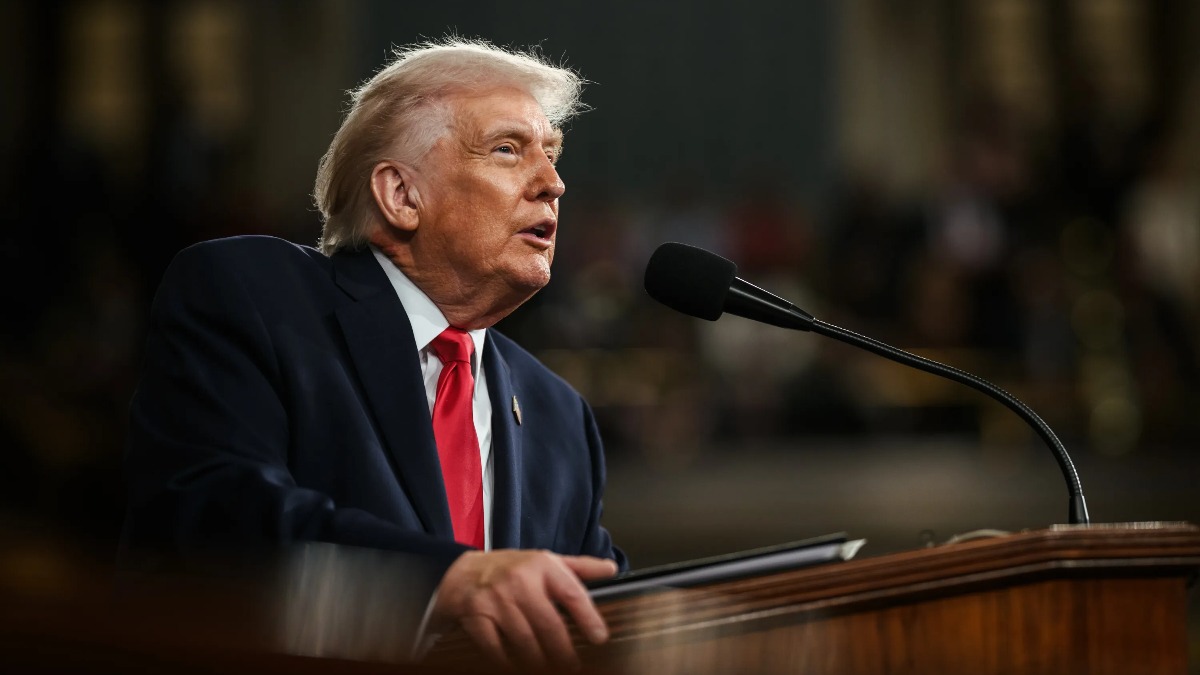

President Trump has once again taken to Truth Social to air his grievances regarding the electoral process in California, The Guardian reported. This time, the focus of his comments is the Los Angeles mayoral primary and the performance of his endorsed candidate, reality television star Spencer Pratt.
In a post made on Monday, the President expressed his clear disbelief regarding the shifting numbers in the race. He stated, “Not possible for Spencer Pratt to have lost the L.A. runoffs after the big lead he had.” This development follows a period where Spencer Pratt appeared to be holding onto the second-place spot, which would have secured him a position in the November runoff election against incumbent Mayor Karen Bass.
However, the political landscape shifted on Sunday night when City Councilwoman Nithya Raman moved ahead of Spencer Pratt by a margin of just over 3,000 votes. As the numbers currently stand, Nithya Raman holds 27.1 percent of the vote, while Spencer Pratt is sitting at 26.7 percent. Mayor Karen Bass, who is 72, secured her own spot in the runoff shortly after the election and currently maintains a lead with 34.7 percent of the total vote. Given that the race has not yet been officially called for either candidate, the final outcome remains a point of intense speculation and debate.
Trump’s gripe with California elections isn’t particularly new
In that same post on Truth Social, President Trump did not hold back in his assessment of the state of affairs in California. He explicitly labeled California a “3rd World Nation” and followed that up by declaring “Rigged Elections!” His commentary also extended to other ongoing races in the state. He asserted that “they” will now “be working on great guy Steve Hilton,” referring to the Republican candidate currently vying for a spot in the California gubernatorial race.
The gubernatorial contest has been quite tight, with Xavier Becerra already having advanced as of Friday. Steve Hilton is currently in a battle against Democrat Tom Steyer to claim the second position on the November ballot.
The frustration surrounding the slow pace of the vote count in California is not exactly new, though it certainly provides fuel for critics of the current system. California has a long-standing reliance on mail-in voting, which necessitates a significant amount of labor. Election officials must perform extensive work to verify signatures, carefully open envelopes, and process and inspect every single ballot.
This year, the situation was compounded by a large surge of Democratic voters who waited until the final moments to turn in their ballots. This influx of late submissions has further slowed down a process that was already known for its deliberate pace.
Governor Gavin Newsom has acknowledged that the extended duration of the count creates a negative impression and leaves the state vulnerable to criticism and various theories, including those voiced by President Trump. Back in May, the governor sent a formal letter to election officials across the state, urging them to find ways to speed up the process. He noted that “the longer the voting count takes, the more mis- and disinformation spreads.” Despite his plea, there has been no observable change in the speed at which the results are being delivered.
It is worth noting that other states that utilize widespread mail-in voting, such as Colorado, Arizona, and Washington, manage to report their results much faster than California. Voting experts point out that California simply has not invested in the personnel and infrastructure required to match the efficiency of those states. Because each county manages its own budget, staffing, and scheduling, there is a massive discrepancy in how quickly different regions can process their ballots.
Office space is another massive hurdle for many counties. In Yolo County, for instance, officials even had to knock out a wall in their existing building just to create enough room to store and process the growing volume of mail-in ballots. As Jesse Salinas, the registrar of voters in Yolo County, put it, “We are at capacity. I don’t have any empty space.”
Some of the larger counties, like Los Angeles and Orange, have purchased equipment to help accelerate the counting, but they are still limited by staffing hours. Smaller, less wealthy counties often take as long as three or four weeks to finish the count. Furthermore, California law allows ballots postmarked by Election Day to be counted as long as they arrive up to seven days later. This means that a significant number of ballots are not even in the hands of election officials until well after the polls have closed.
Despite the pressure, Secretary of State Shirley Weber remains committed to the current procedures. She recently emphasized that “Accuracy comes before speed,” and added that “California is the nation’s largest voting state, with millions of ballots to process and count. Taking the time to do this work correctly protects voters’ rights and ensures the integrity of our elections.”





Published: Jun 8, 2026 04:00 pm