



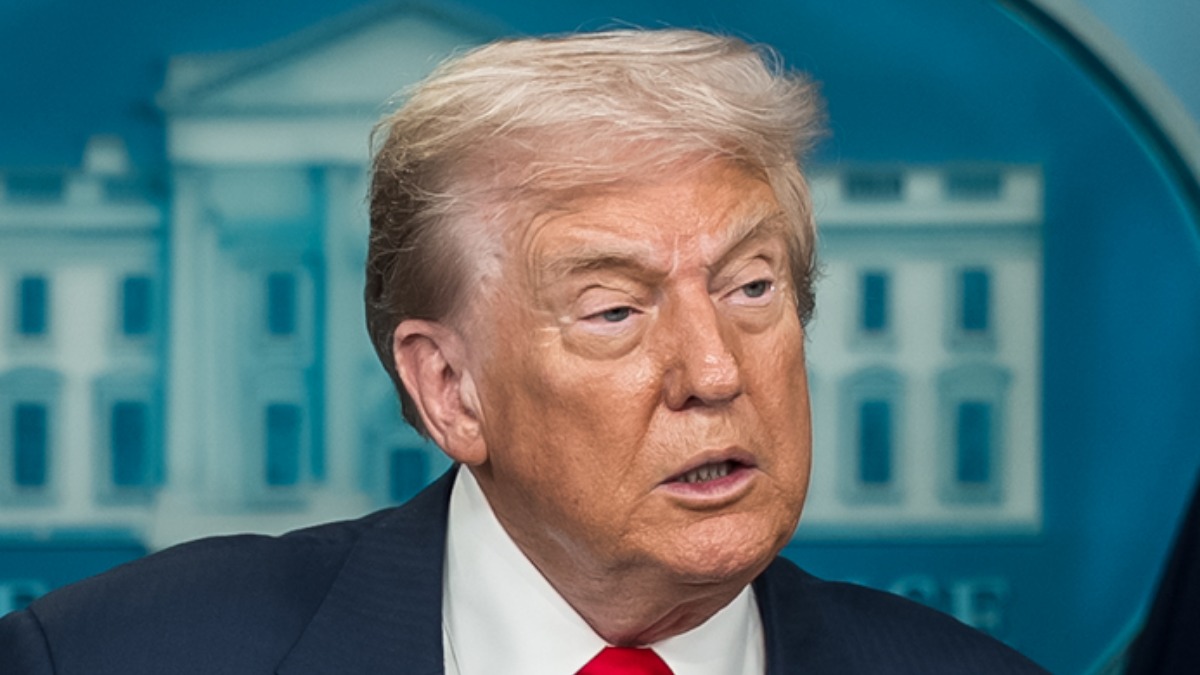

President Trump said that he has little interest in whether peace talks with Iran continue, even though he claimed earlier the same day that the discussions were moving forward quickly. He shared this sense of indifference during an interview with Eamon Javers of CNBC, saying he is not worried if the diplomatic process comes to an end.
“I don’t care if they’re over, honestly. I really don’t care,” Trump told CNBC. “I couldn’t care less. If they’re over, they’re over. If they’re not… I think [Iran] took too much time.” The president appeared frustrated with how long the process has taken.
He said the talks had lost their energy and become dull. “Frankly, I thought they started to get very boring,” he said. “They were giving us what we needed, but I think… they handled the negotiations poorly. It took too long. I thought they were tapping us along, that’s all.”
Trump weighed a ceasefire deal at a White House meeting before tensions rose in the region
This change in tone followed a meeting on Friday in the White House Situation Room, where the president met with his officials to consider an agreement. The deal aimed to extend a ceasefire, reopen the Strait of Hormuz, and create a framework for future talks about Iran’s nuclear program. Trump left that meeting without making a final decision.
The discussions came as the two sides were reportedly closing in on a memo to end the war, though obstacles remained. Tensions in the region have since grown. Earlier on Monday, Israeli Prime Minister Benjamin Netanyahu ordered armed forces to carry out strikes on Hezbollah targets in the Dahiyeh district of Beirut.
Tehran responded to these events with serious concern. Iranian Foreign Minister Abbas Araghchi said the military actions in Lebanon broke the ceasefire agreement that the Trump administration and the Iranian government reached in early April. Araghchi reportedly posted on X that “Any violation of this ceasefire on one front shall be considered a violation of it across all fronts.”
He also warned that “The United States and Israel bear responsibility for the consequences of any breach of the truce.” Earlier reports described a one-page, 14-point memo to end the war that the two governments were said to be negotiating.
The mixed messages about the status of the talks have created an unclear picture. While the president told CNBC he was indifferent to a possible collapse of the negotiations, he posted on Truth Social earlier on Monday morning that the government in Tehran was eager to reach an agreement that would benefit the United States. After his interview, he repeated that view by posting that the talks “are continuing, at a rapid pace.”
The picture is further complicated by differing claims about military activity. After his CNBC interview, Trump claimed on Truth Social that he had spoken with Netanyahu and senior representatives from Hezbollah, and he asserted that Israel would not send troops into Beirut.
Netanyahu offered a different view shortly afterward in an afternoon X post. He said, “if Hezbollah does not cease attacking our cities and citizens, Israel will attack terror targets in Beirut.” Netanyahu also stressed that his administration’s position remains firm and that the Israeli Defense Forces will continue their planned operations in southern Lebanon.






Published: Jun 2, 2026 02:15 pm