



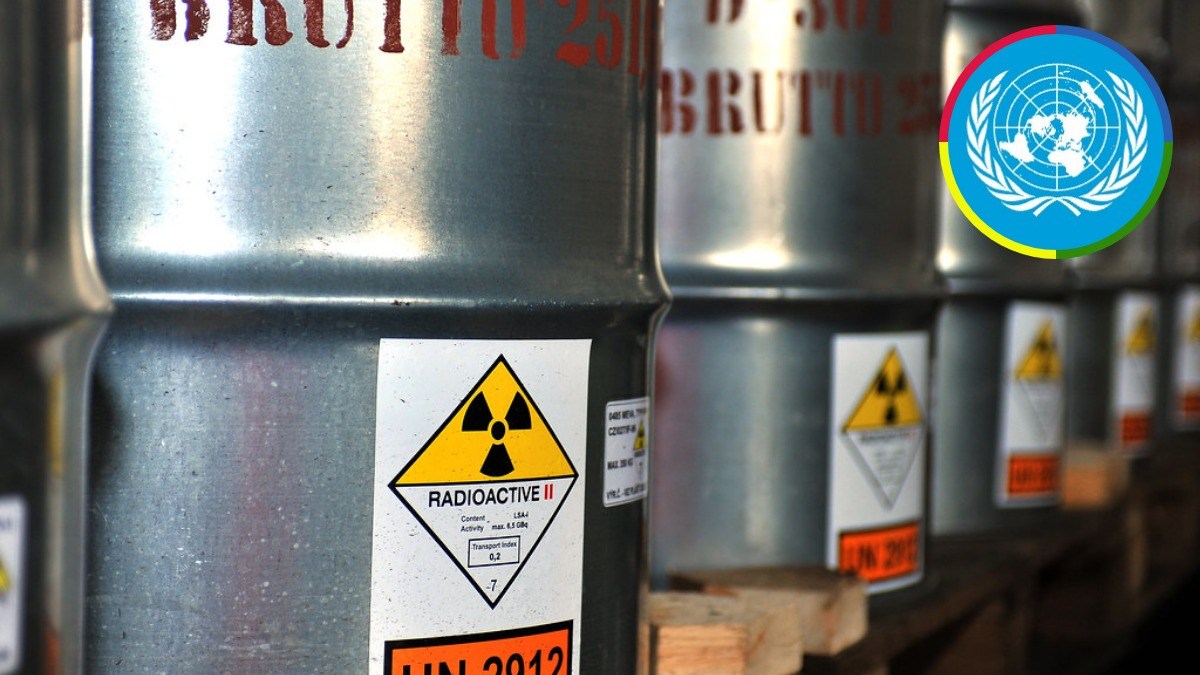

UN nuclear inspectors have successfully uncovered 73 tonnes of hidden natural uranium metal at a clandestine site in Syria, marking a significant development in the international effort to account for the former regime’s secretive nuclear ambitions. The discovery occurred after inspectors were forced to physically tear down walls and navigate through very difficult and narrow passages to access the hidden material.
As reported by The Guardian, operation follows a long period of uncertainty regarding the scope of nuclear activities conducted under the rule of the toppled leader Bashar al-Assad. The site, which had been kept secret, was reportedly revealed to the International Atomic Energy Agency through a letter sent by the new Syrian government on July 17.
The head of the IAEA, Rafael Grossi, addressed the situation after the opening of the agency’s quarterly board of governors meeting in Vienna. He noted that it was obvious that the previous government was pursuing a number of clandestine activities. According to Grossi, the officials in charge at the time clearly did not want the world to know what they were doing.
The agency has installed cameras at the location
The inspectors reportedly visited the site and encountered a chaotic scene where boxes were scattered all over the place. Now that the material is under the official safeguards of the IAEA, the agency has successfully installed cameras at the location to ensure constant monitoring.
When asked about the potential removal of the uranium from Syria, Grossi reportedly stated that this is a matter that the Syrian government will have to decide. He emphasized that the agency is not requesting them to do this or to do that, as the primary goal is simply knowing where the material is at all times until the last gram is accounted for.
This recent discovery is linked to a broader history of undeclared nuclear programs in the region. Syria was long believed to have operated an extensive program that included a nuclear reactor built with the help of North Korea in the eastern Deir ez-Zor province.
That particular facility was reportedly the target of a top-secret air raid carried out by Israel in 2007, an action which Israel officially admitted to in 2018. Following the strike, US officials in 2008 accused Syria of attempting to build a secret reactor. The reactor in Deir ez-Zor, according to Grossi, was designed with technical features that would make it very efficient in the production of fissile material.
He described the construction of such a reactor as a very important step toward the possible fabrication of nuclear weapons. During a visit to the Deir ez-Zor site in August, inspectors reportedly confirmed that the cooling infrastructure uncovered there is consistent with the requirements of a nuclear reactor.
The 73 tonnes of natural uranium metal found at the second, previously undisclosed site were discovered in the form of fuel rods with cladding. Logan Mintz, a director for nuclear materials security at the Washington-based Nuclear Threat Initiative, clarified the nature of this material.
She explained that natural uranium metal is not directly usable for a nuclear weapon, but it could be diverted to a covert weapons program that further processes it into plutonium. Regarding the future of the stash, Mintz suggested that once it is deemed safe to move, the material could be transported in certified containers to a third country.
This would allow the uranium to be safely and securely dispositioned into a more chemically stable and widely used form suitable for nuclear power plants. She also pointed out that, as with any transport or retrieval of nuclear material, this movement would require robust security from theft or sabotage.







Published: Sep 7, 2026 04:30 pm