



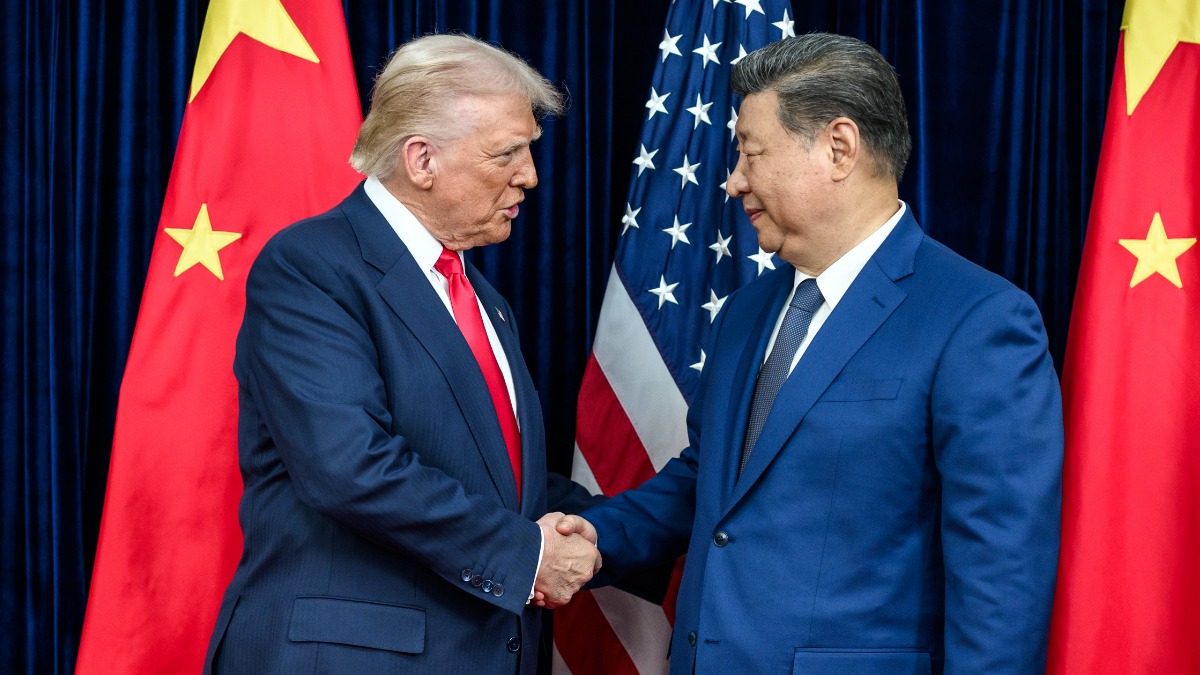

President Trump clarified that he did not ask for any favors from Chinese President Xi Jinping regarding the ongoing conflict in Iran during their high-stakes summit in Beijing this week, The Hill reported. While traveling aboard Air Force One, the president explained his perspective on international diplomacy, noting that he avoids such requests because of the transactional nature of global politics.
He told reporters, “I’m not asking for any favors because when you ask for favors, you have to do favors in return.” He further emphasized that his administration does not need to rely on those types of arrangements, adding, “We don’t need favors.”
This summit, which involved a bilateral meeting at the Great Hall of the People, brought together two leaders with very different priorities. While the president arrived with a heavy focus on trade, business, and supporting American farmers, bringing along nearly 20 top executives from major companies like Tesla, SpaceX, Nvidia, Goldman Sachs, BlackRock, Boeing, and GE Aerospace, the atmosphere was clearly defined by a mix of economic ambition and geopolitical friction.
Trump made it clear to the Chinese leadership that he expects trade and business dealings between the two nations to be totally reciprocal
The situation in the Strait of Hormuz remained a primary topic of discussion, as the U.S. has been pushing for China to take a more active role in stabilizing the waterway. The region has become a flashpoint for global instability since late February, when Iran began a de facto blockade following joint U.S.-Israeli strikes inside its borders.
With about one-fifth of the world’s maritime oil trade passing through the channel during peacetime, the stakes are incredibly high. The U.S. Energy Information Administration found that in 2025, Iran exported roughly 5.35 million barrels of crude oil and condensate per day to China, making it the largest buyer of Iranian oil. Because China purchases roughly 90 percent of Iran’s oil exports, the U.S. government hopes that Beijing can use its significant leverage to pressure Tehran into ending hostilities.
Despite these tensions, the president expressed his belief that Xi would like to see the shipping lanes opened up. He noted that both the U.S. and China appear to feel very similar about the situation, particularly regarding the shared desire to prevent Iran from obtaining a nuclear weapon.
According to a White House readout from the Thursday meeting, Xi explicitly stated that China is opposed to the militarization of the strait and rejects any efforts to charge a toll for its use. Furthermore, a White House official mentioned that Xi expressed interest in purchasing more American oil to reduce China’s future dependence on the waterway.
The Chinese foreign ministry echoed the need for stability, stating on Friday that there is no point in the war continuing due to the strain it places on global economic growth and supply chains. A spokesperson for the ministry remarked, “Now that the door of dialogue has been opened, it should not be shut again.” They emphasized the importance of reopening shipping lanes to satisfy the international community and keep global supply chains stable.
However, progress on a formal ceasefire remains elusive. Negotiations between the U.S. and Iran have stalled over the last week, specifically regarding the future of Tehran’s nuclear program. When asked about the current state of these proposals, which have been managed by Pakistani mediators, the president was dismissive of the quality of the documents. “I looked at it, and if I don’t like the first sentence, I just throw it away,” he said.
While the Iran conflict was a major point of discussion, the summit also saw the two leaders clash over the issue of Taiwan. Chinese Foreign Ministry spokesperson Mao Ning wrote on X that Xi told the president that the Taiwan question is the most important issue in China-U.S. relations. She warned that if the issue is not handled properly, the bilateral relationship will face instability and potential conflict.
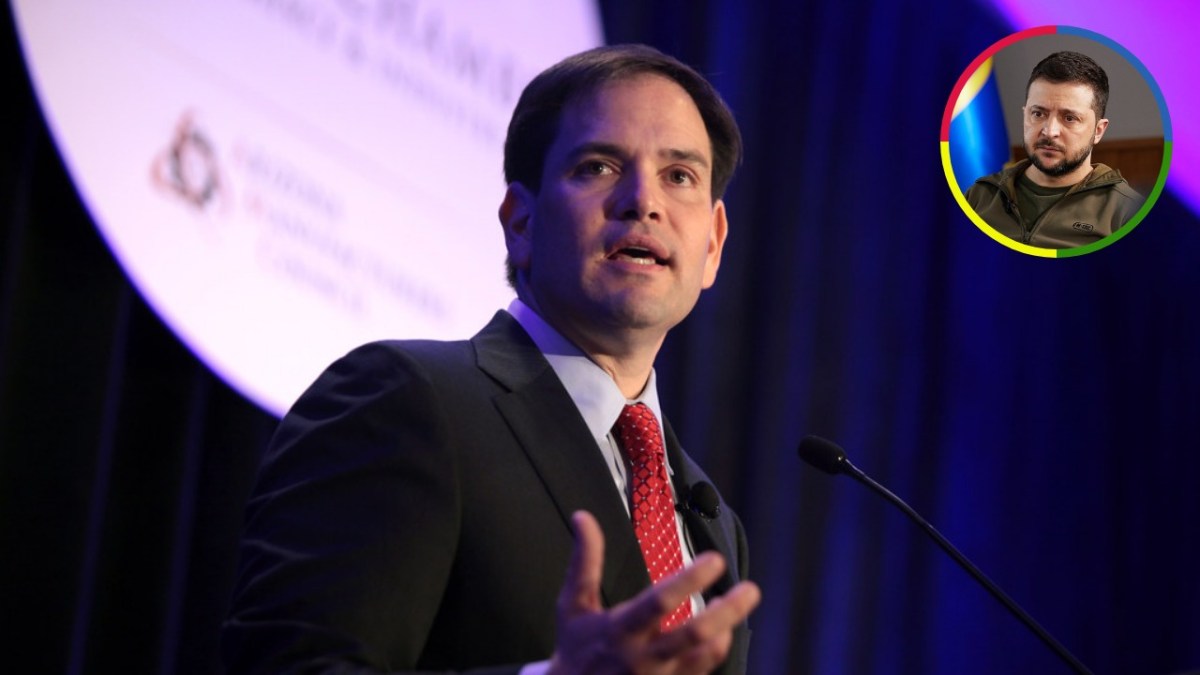
In response, Secretary of State Marco Rubio affirmed that U.S. policy toward Taiwan remains unchanged, though he cautioned that any forceful move by China against the island would be a terrible mistake. The U.S. previously approved an $11 billion weapons package for Taiwan in December, and the president is expected to approve an additional $14 billion sale following his return from China.
For the president, the trip was also about securing wins for American industry. He told Fox News that Xi agreed to purchase soybeans, oil, liquified natural gas, and Boeing jets. While experts remain divided on whether these trade commitments justify the complex diplomatic posturing, the summit has at least established a platform for future communication. American officials have indicated that the president and Xi could meet as many as four more times this year.




Published: May 15, 2026 02:30 pm